Talking telehealth: Designing a disability-centred virtual healthcare system in India
Improving access to care in large countries with rural populations, such as India and Australia, is a crucial step towards an equitable health system. With the help of rapidly-evolving new digital technologies, and the necessary systems change, it is becoming possible.
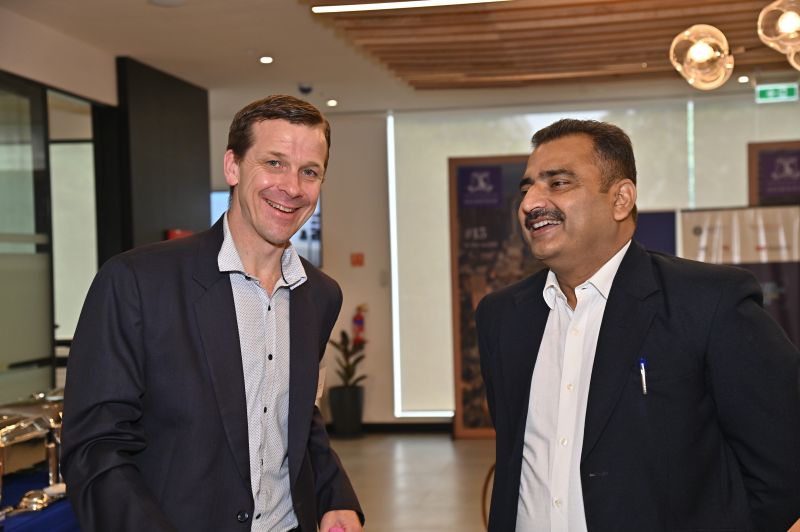
 Professor Nathan Grills, Academic Director – India, Faculty of Medicine, Dentistry and Health Sciences and Vikas Trivedi, Member Secretary, Rehabilitation Council of India at the Asia and The Pacific Outlook Series in New Delhi.
When the COVID-19 pandemic pushed clinicians further into the digital space, telehealth appointments became a routine way for patients and specialists to connect. Meanwhile, in Victoria, Australia, virtual emergency departments, treating a range of diseases and health issues, have proven to be highly effective in minimising presentations to over-stretched emergency departments and expanding care to disadvantaged groups in the comfort of their homes.
Public health researcher, Professor Nathan Grills, is now taking lessons learnt in Australia to India, to explore how telehealth and digital tools for community-based development workers can be used to meet the needs of people with disability. He is working with government agencies in India to ensure that advances in healthcare are equitable and designed for disability-inclusion, through the development of a research initiative called VirtuCare.
The VirtuCare project, with funding from DFAT’s Australia-India Council, has so far looked at the role played by telehealth during the COVID-19 pandemic, with findings to be used to inform the co-design of inclusive virtual healthcare and rehabilitation services. The Nossal-led research is being undertaken in partnership with the technology industry and government agencies, The George Institute, Public Health Foundation of India, University of Adelaide and Monash University.
While virtual healthcare offers amazing opportunities, it can also risk further entrenching existing disadvantage. For example, the health literacy and reading and writing skills required to access current systems can be a barrier to people. With this in mind, the design of virtual healthcare systems must be able to respond to the diverse needs of communities and ensure that platforms are accessible and provide timely and helpful care.
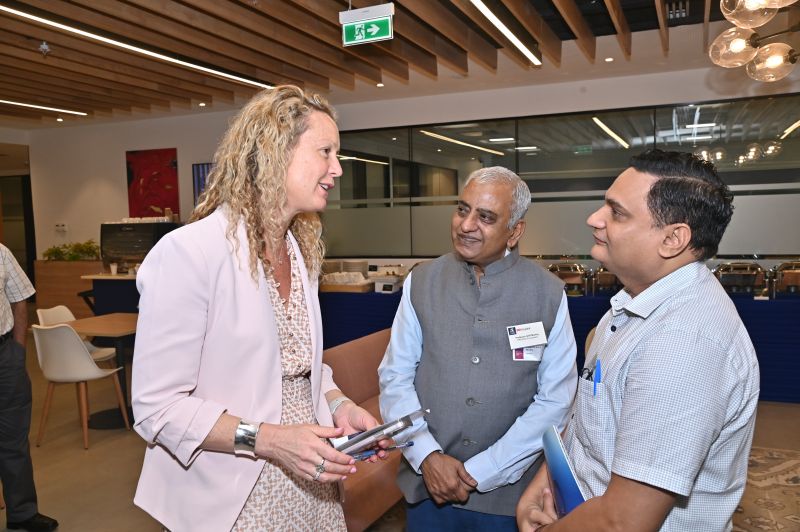
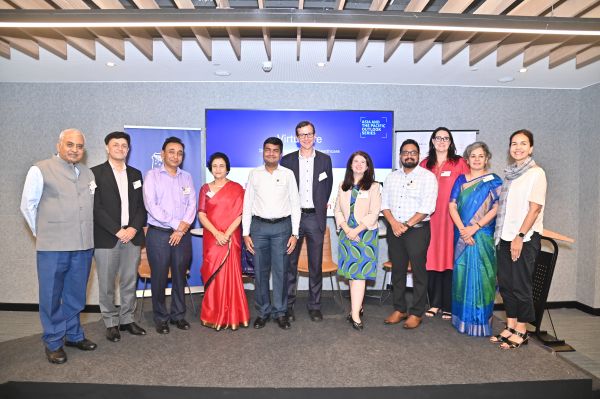
As part of a recent University of Melbourne delegation to India, Professor Grills presented at the Asia and The Pacific Outlook Series at the new Melbourne Global Centre in New Delhi.
Reflecting on developments in the research over the last two years, Professor Grills said that:
“Telehealth has amazing potential to provide healthcare to people with disability across India. But this can only happen if we design telehealth to include people with disability. If we don’t actively include disability in telehealth services then we end up passively excluding them.”
The project is already having an impact on the ground, particularly in making specific changes to better support grassroot disability workers in India.
“VirtuCare has given us information about how to optimise virtual health care in India and to make sure it includes people with disability in India. The research has already affected practice. For example, we are working with the government telehealth provider, Sanjeevani OPD, which facilitates 450,000 consults every day, to make specific changes to increase the platforms accessibility for people with disability,” said Professor Grills.
Also in attendance at the Forum was Deputy Vice-Chancellor (Global, Culture and Engagement) Professor Michael Wesley, who emphasised the significance of the VirtuCare panel discussion. "The event, hosted at our newly inaugurated Melbourne Global Centre—Delhi, is one of many examples of our University's commitment to leading on global issues and making a meaningful impact on critical shared challenges in Asia and the Pacific," Professor Wesley said.
The event brought together academics, industry, government, and community representatives from both Australia and India to discuss the challenges and opportunities of designing a disability-centred virtual healthcare system in India. The panel discussion featured experts from the Telemedicine Society of India, the Public Health Foundation of India, E-Sanjeevani Telemedicine Service, Mission Accessibility, PRASHO, and the George Institute.
Professor Grills hopes that in future the project will continue to facilitate the development of inclusive telehealth services so as to increase access to healthcare services for people with disability in India and other countries.
You can read more about VirtuCare project milestones here.
This article was first published on the Faculty of Medicine, Dentistry and Health Sciences news page