Healthy Housing and Homes
Background
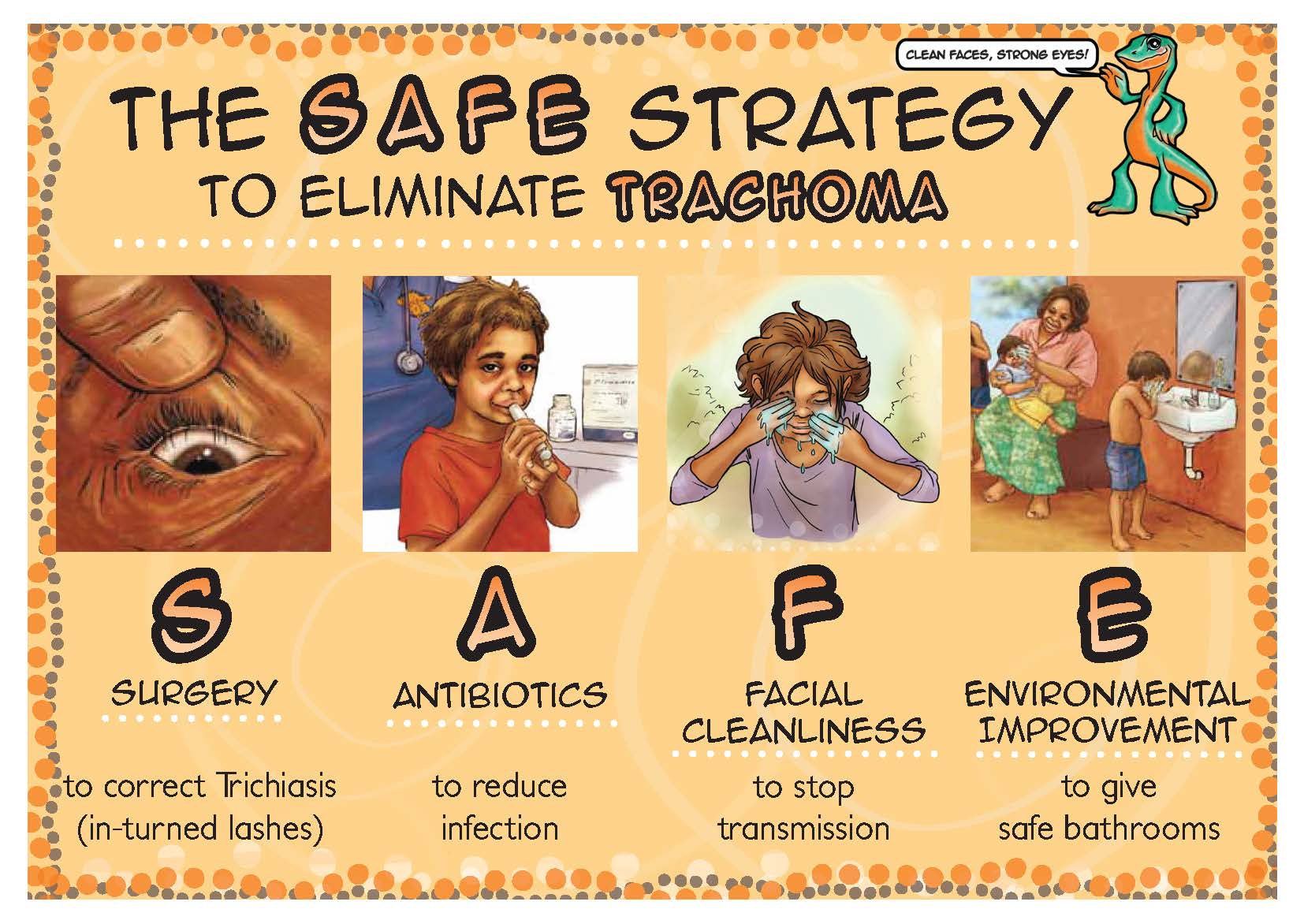
Healthy housing and homes are critical to achieving good health outcomes and are an important part of the SAFE strategy (Surgery, Antibiotics, Facial cleanliness, Environmental improvements) for the elimination of trachoma in Australia. The “E’’ or Environmental Improvements of the SAFE strategy – recognises children, families and communities need to have access to safe, functioning health hardware in order to keep faces clean and practice key hygiene behaviours, including Milpa’s Six Steps to Stop Germs. This applies not just in homes, but also in schools and early learning and community settings.
Environmental health and housing are widely recognised as key social determinants of health and wellbeing. Without access to functioning bathrooms, showers, taps, washing facilities, it is not possible to sustain good hygiene practices or prevent transmission of infectious diseases.
As former Aboriginal and Torres Strait Islander Social Justice Commissioner Tom Calma stated in 2008:
Improving and maintaining basic environmental health conditions in Indigenous Australian communities is central to securing better health outcomes. In order for there to be improvements in environmental health infrastructure and living standards, real collaboration must occur with all those working across the different areas of health and social and physical environments.[1]
This principle of collaboration and shared responsibility underpins Minum Barreng’s long standing interest in the environmental health and housing space.
The World Health Organisation agreed approach for the elimination of trachoma, the SAFE strategy includes Environmental Improvements as a key element. Because environmental health and housing sit across multiple sectors, including health, housing, education, local government, infrastructure and community services, progress requires strong cross-sector partnerships and community leadership.
For many years, Minum Barreng has worked to raise awareness of, and advocate for, the ‘’E’’of the SAFE strategy alongside the ‘’F’’ for Facial Cleanliness, emphasising both the ‘software’ (health promotion, education, behaviour change) and the ‘hardware’ (safe, functional housing and infrastructure) are essential. Clean faces alone cannot be achieved or sustained without healthy living environments.
In 2018, Minum Barreng, NIAA and CDC convened a national Environmental Health Workshop in Alice Springs, bringing together community members, Aboriginal Community Controlled Health Organisations (ACCHOs), environmental health practitioners, housing services, government and non-government stakeholders.
This workshop led to the establishment of the Central Australia Environmental Health Working Group (CAEHWG). The group’s Terms of Reference were grounded in community priorities and the need for coordinated action across sectors, and included the principle articulated by Tom Calma above.
More information about the workshop is available here:
https://mspgh.unimelb.edu.au/centres-institutes/onemda/research-group/mbiehu/news-and-events/news-events/EH-workshop
Since that time, Minum Barreng has continued to play a key role in:
- Advocating for stronger integration of environmental health and housing into trachoma elimination efforts including through national forums, sector engagement and on-the-ground projects that link healthy housing, hygiene and eye health outcomes.
- Supporting cross-sector collaboration between health, housing, education and environmental health partners, including through community-based projects and workshops with organisations such as Central Australia Aboriginal Congress (CAAC), Katherine West Health Board (KWHB) and Anyinginyi Health Aboriginal Corporation, and through active participation in environmental health networks and partnerships.
- Working with ACCHOs and community organisations to elevate local voices, experiences and solutions including supporting the work of Healthy Housing and Healthy Homes Officers at Katherine West Health Board (KWHB) and Congress/CAAC,
- Integrating environmental health considerations into health promotion resources, including Clean Faces, Strong Eyes and Milpa’s Six Steps to Stop Germs and supporting complementary initiatives such as Lesley’s Homemade Cleaning Products and Tips
- Contributing to national discussions, policy development and systems reform related to healthy housing and environmental health in First Nations communities
[1] The importance of environmental health in improving the life expectancy of Indigenous peoples. Speech delivered by Paul Endres on behalf of Commissioner Tom Calma at the international Federation of Environmental Health World Congress, Brisbane, 13 May 2008
F and E of the SAFE Strategy
Facial cleanliness “F” is the critical for the elimination of trachoma as a public health problem. Clean faces interrupt the transmission of infected eye and nasal secretions. By breaking the cycle of reinfection between children, families and households, communities can prevent the repeated 150/200 infections of trachoma as a child that leads to trichiasis and blindness as an adult. This is why health promotion in Australia has focused strongly on Milpa the goanna and the message “Clean Faces, Strong Eyes.”
However, in order for children and families to keep faces clean and practice Milpa’s Six Steps to Stop Germs, they must have access to functioning hardware, including working taps, showers, toilets, laundry facilities and safe living environments, in homes, schools and community settings. In the Australian context, the “E” of the SAFE strategy, is therefore closely linked to healthy housing and homes, infrastructure, maintenance and environmental health systems.
Minum Barreng’s approach recognises that sustainable trachoma elimination and improved eye health outcomes depend on both behaviour change and the environments in which people live, learn and grow. Our work in this space reflects a commitment to community led solutions, systems reform, and partnerships that address the underlying determinants of health.
Community Projects and Workshops
Lesley's Homemade Cleaning Products and Tips
Lesley’s Homemade Cleaning Products and Tips information sheets contain simple, easy to follow recipes made with natural, non-toxic ingredients, including plant-based oils like eucalyptus, tea tree and peppermint, most of which you can find in your kitchen or store.
Lesley Martin, an Arrernte woman and Community Engagement and Health Promotion Officer at Minum Barreng: Indigenous Eye Health Unit, has shared these homemade cleaning ideas through her engaging, hands-on sessions with communities in the Northern Territory. In each session, families learn how to make and use natural cleaning products and help reduce illness like trachoma, while supporting good hygiene and healthier homes.
For the Home
Download Lesley’s Homemade Cleaning Products and Tips: For the Home
For the Yard
Download Lesley’s Homemade Cleaning Products and Tips: For the Yard
For more information, contact:
Lesley Martin lesley.martin@unimelb.edu.au
Disclaimer
The information provided in the workshops sessions, information sheets and the resources suggested are shared for general guidance only and may not be suitable for all individuals or situations. Users are encouraged to ensure their own safety and well-being when using the suggested cleaning products. This information is not a substitute for professional medical, environmental, or cleaning advice, and the provider disclaims any implied warranties including performance, reliability and functionality of the advice.
Environmental Health Networks and Partners
Details to come.
Resources and Further Information
Details to come.