Supporting Healthy Homes Using Lesley’s Hygiene Cleaning Tips
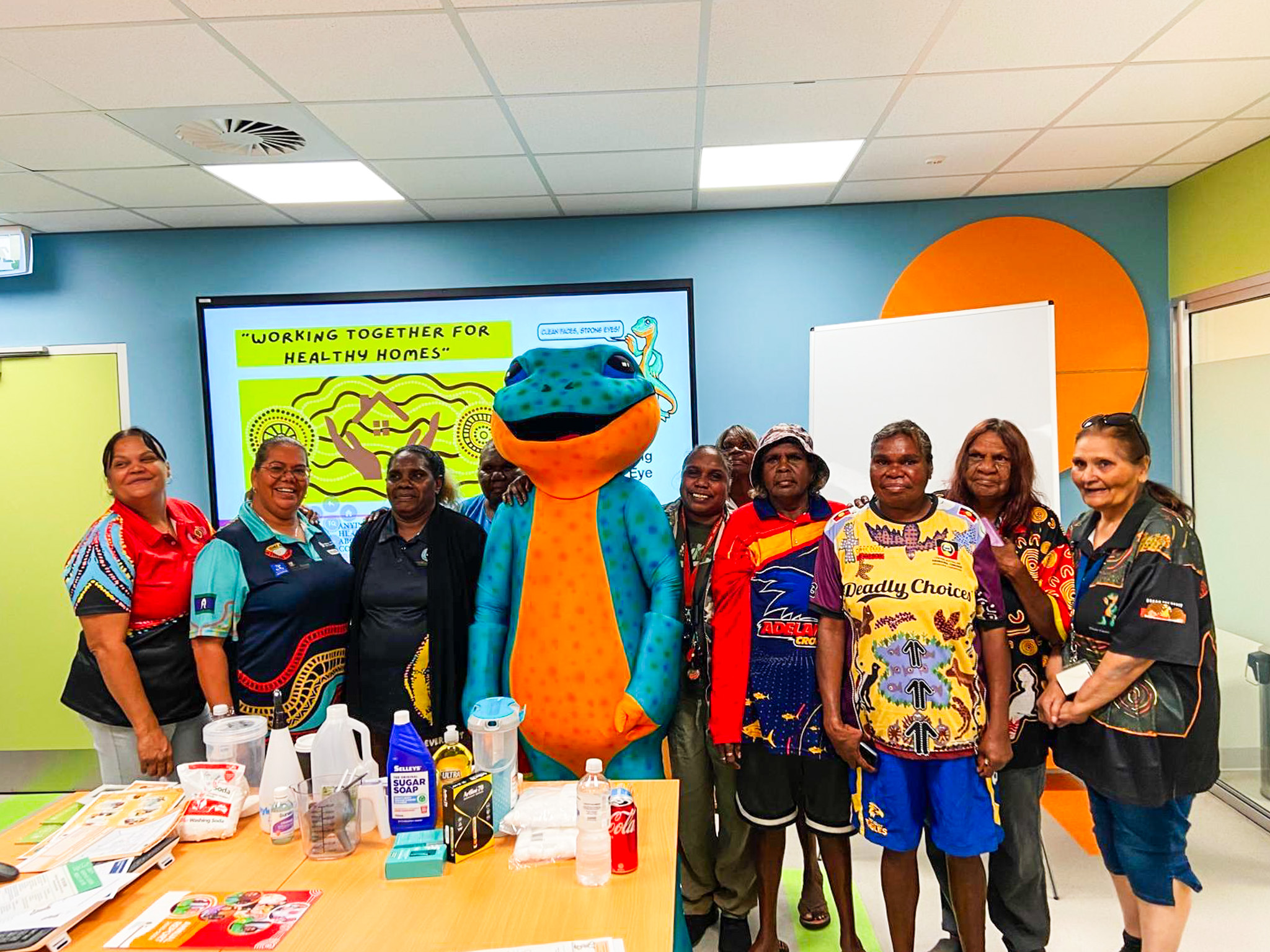
Building on the momentum of the Working Together for Healthy Homes workshop held in April this year in the Barkly region, in partnership with Anyinginyi Health Aboriginal Corporation, community members in Tennant Creek recently came together for a series of Healthy Homes & Hygiene Cleaning Tips sessions, with a particular focus on practical, hands-on learning.
The sessions were led by Lesley Martin, a Central Arrernte woman and Community Engagement and Health Promotion Officer at Minum Barreng: Indigenous Eye Health Unit. Lesley worked with local families, to strengthen hygiene practices in the home and yard and reduce the risk of common illnesses.
The sessions welcomed almost 20 participants from local groups including women and carers from the Strong FamiliesGroup for Women,Child and Family Centre /Indi Kindi and the Julalikari Family Support Group.
The sessions opened up great conversations about how small changes in daily routines can have significant impact in supporting the health and wellbeing of families. Together, they talked about how keeping the home and yard clean can help reduce the spread of illnesses, including trachoma, which is still a concern in some remote communities and is preventable with good hygiene. The discussions also highlighted the importance of basic health hardware, such as functioning toilets, taps, and showers in helping to maintain good hygiene.
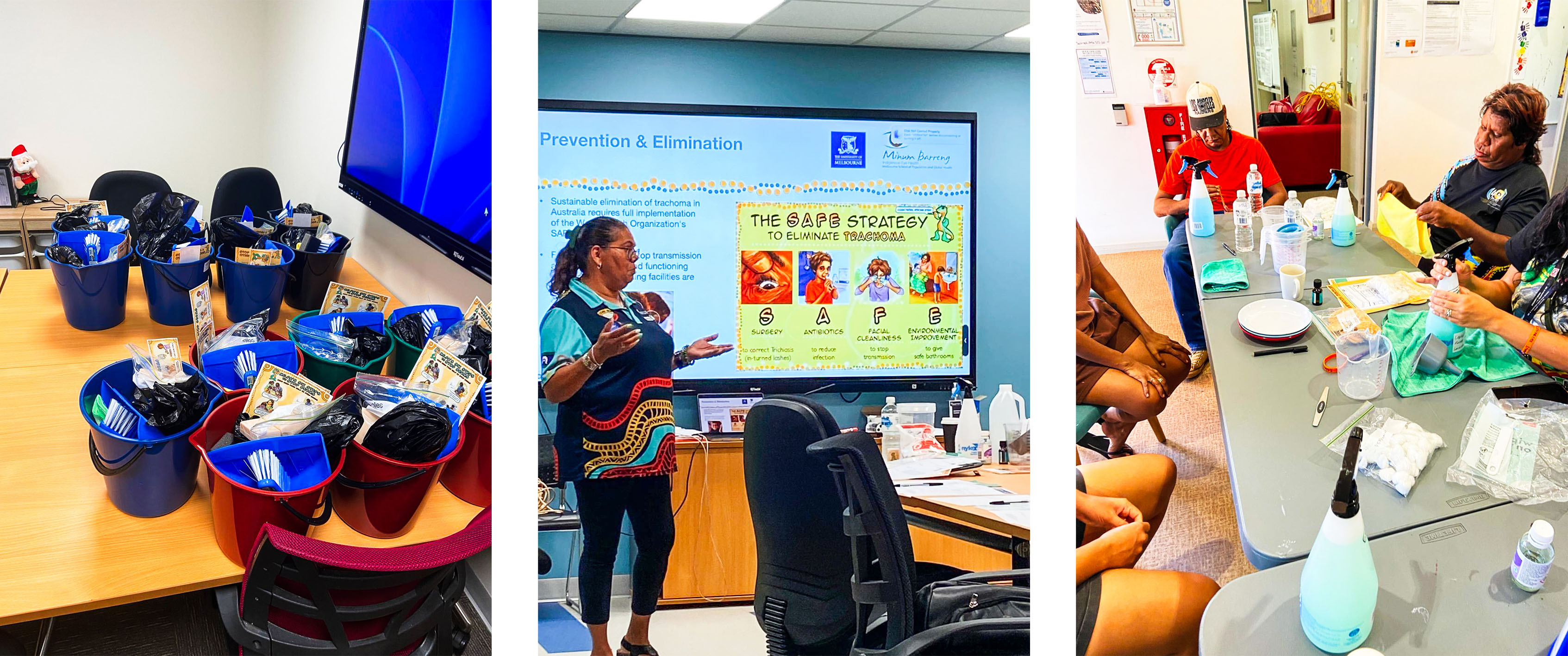
Lesley guided participants in making two simple, non-toxic cleaning solutions, using affordable ingredients, that can easily be prepared at home: peppermint cotton balls to naturally repel ants and spiders, and an all-purpose cleaner suitable for everyday household use. These simple alternatives are especially helpful in remote and regional communities where commercial products may be expensive or hard to find. The exorbitant cost of basic household items has been highlighted as a barrier to maintaining good hygiene, which can hinder trachoma prevention and broader health improvement efforts (Insight News 2022; NIAA 2025).
The natural ingredients Lesley uses, such as vinegar (acetic acid), lemon juice (citric acid), and plant-based oils like eucalyptus, tea tree, peppermint, and lavender are supported by an established body of evidence indicating their antibacterial and antiviral properties (Onguleye 2022; Muralidharan 2020). While these are not substitutes for hospital-grade disinfectants, they are broadly considered safe and effective for everyday household cleaning. Many of the ingredients, like eucalyptus and tea tree oil, have also been used for generations in First Nations communities for their cleansing, healing, and insect-repelling properties (Lassak and McCarthy 2011; Isaacs 2002).
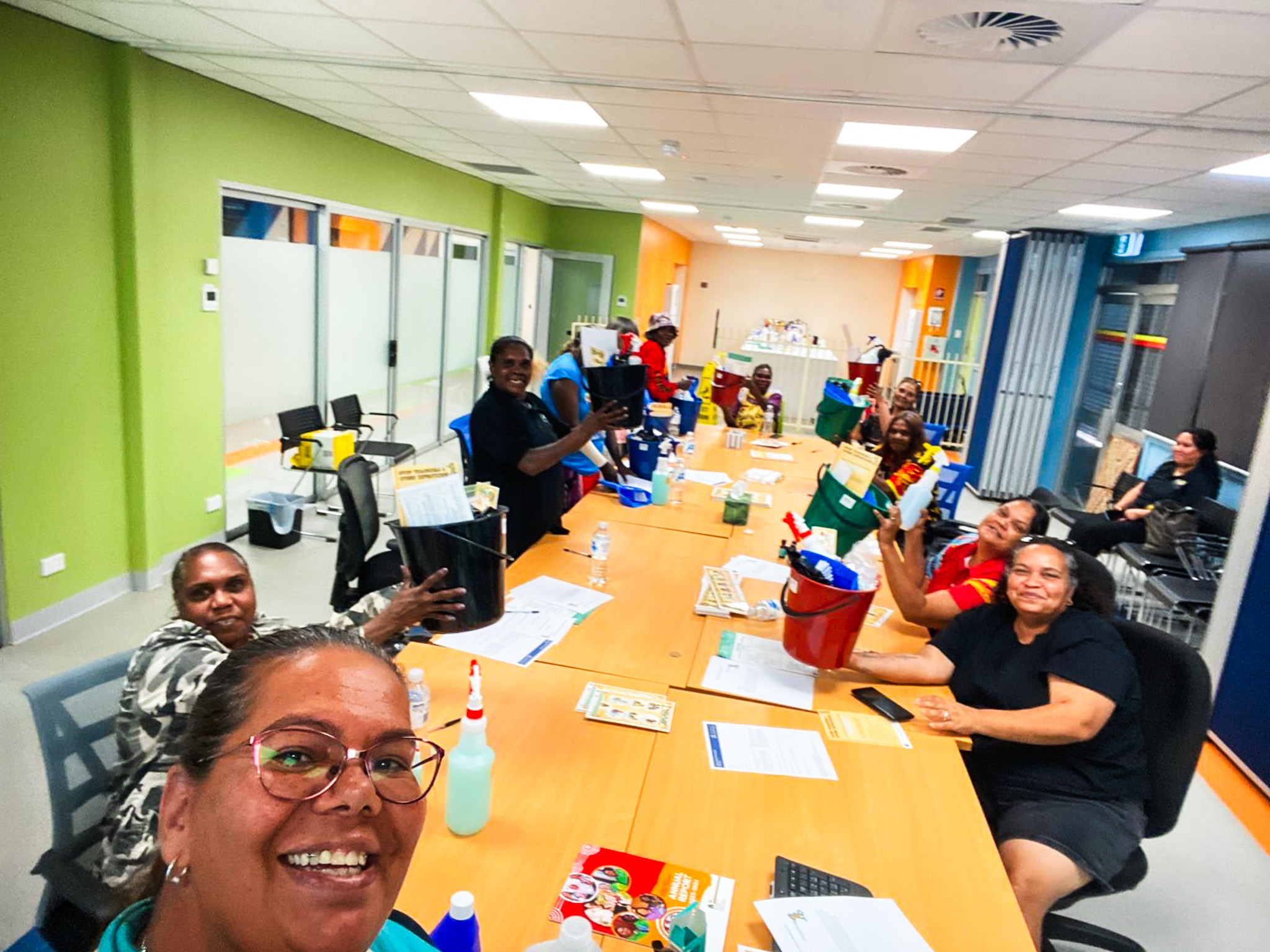
Each participant took home a bucket of cleaning supplies, a printed copy of Lesley’s Homemade Cleaning Products and Tips information sheets (now updated with new suggestions and a safety disclaimer), and Milpa’s Six Steps to Stop Germs hygiene resources. These take-home packs are designed to help families continue healthy habits beyond the workshop sessions.
The sessions were interactive, friendly, and filled with practical ideas. Participants were encouraged to share their own cleaning tips and stories, grounding the shared learning experience in local community knowledge and wisdom.
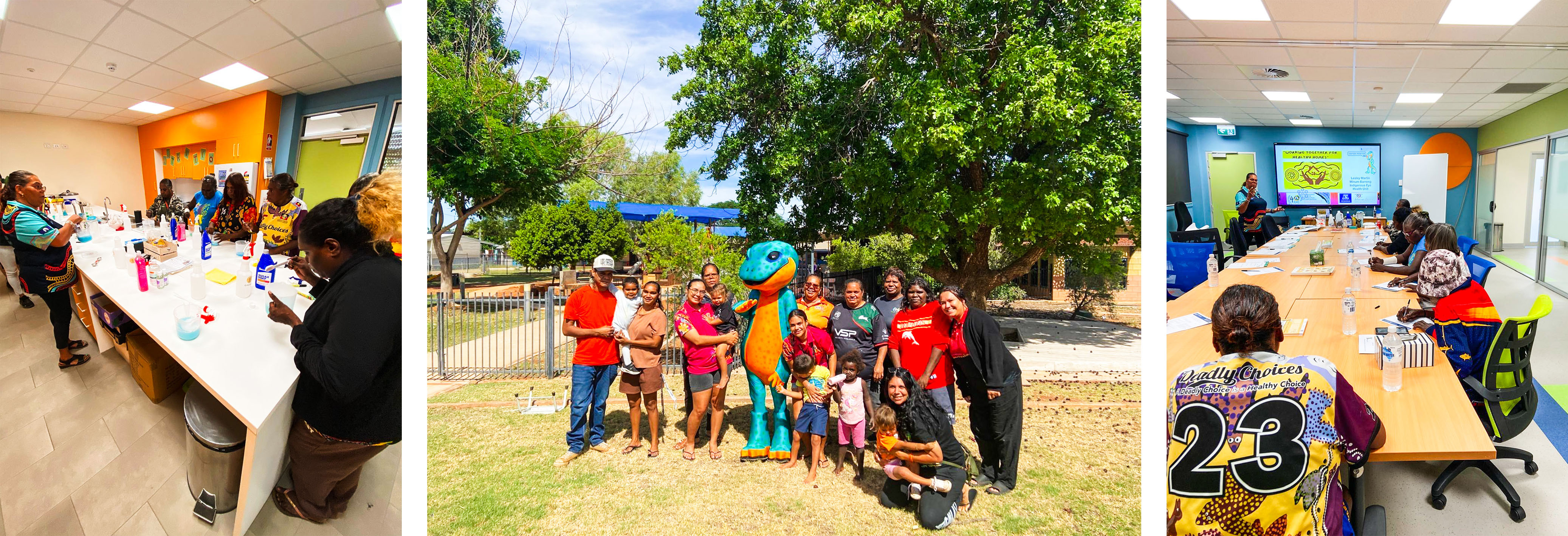
Feedback from participants was overwhelmingly positive:
‘Very well presented and easy to understand’
‘I learnt useful tips on hygiene, non-toxic cleaning, and how to keep my home healthier’
‘I haven’t used non-toxic cleaning products before, but I’ll start now’
The sessions were made possible through the valued partnership with the Anyinginyi Health Aboriginal Corporation Public Health Team and Minum Barreng, and whose support to coordinate the sessions helped bring women and families together in a safe and welcoming environment.
‘It was great to return to Tennant Creek after the Working Together for Healthy Homes workshop in April with the Anyinginyi Public Health Team’, said Lesley. ‘The sessions were fun and hands-on, and I really enjoyed hearing the tips that participants shared with each other’.
Since delivering the recent sessions in Tennant Creek, Lesley has been invited to run additional and similar sessions and is also exploring opportunities to support other communities across the Central Australian region.
To get in touch, please contact:
Lesley Martin, Community Engagement and Health Promotion Officer, Minum Barreng
Email: Lesley.martin@unimelb.edu.au
For more information:
Minum Barreng: Indigenous Eye Health Unit
Email: indigenous-eyehealth@unimelb.edu.au
Anyinginyi Health Aboriginal Corporation
Website: https://www.anyinginyi.org.au
Minum Barreng Healthy Homes & Houses Project
Learn more here
Download Lesley’s Homemade Cleaning Products and Tips
Access the resources here
Download Milpa’s Six Steps to Stop Germs Resources
Access the resources here
Disclaimer
The information provided in these workshops, information sheets and the resources suggested are shared for general guidance only and may not be suitable for all individuals or situations. Users are encouraged to ensure their own safety and well-being when using the suggested cleaning products. This information is not a substitute for professional medical, environmental, or cleaning advice, and the provider disclaims any implied warranties including performance, reliability and functionality of the advice.
References and Further Reading
Australian Institute of Health and Welfare (AIHW). (2021). Closing the Gap: Key findings and implications [online].Available at: https://www.aihw.gov.au/reports/indigenous-australians/closing-the-gap-targets-key-findings-implications/contents/overview [Accessed 1 Jul. 2025].
Australian Institute of Health and Welfare (AIHW). (2013). Community housing and health: The evidence base[PDF]. Available at: https://www.aihw.gov.au/getmedia/cfff298b-726d-477d-bf31-69f5052b6b04/ctgc-rs25.pdf.aspx?inline=true [Accessed 1 Jul. 2025].
Bailie, R.S. and Runcie, M.J. (2001). Household infrastructure in Aboriginal communities and the implications for health improvement. Medical Journal of Australia, 175(7), pp.363–366.
Bailie, R.S., Stevens, M., McDonald, E.L. (2012). The Impact of Housing Improvement and Socio-Environmental Factors on Common Childhood Illnesses: A Cohort Study in Indigenous Australian Communities. Journal of Epidemiology and Community Health, 66, pp.821–831. https://doi.org/10.1136/jech.2011.134874
Healthabitat. (1985). The 9 Healthy Living Practices – Housing for Health [online]. Available at: https://www.healthabitat.com/what-we-do/safety-and-the-9-healthy-living-practices/ [Accessed 1 Jul. 2025].
Healthabitat. (2013). Housing for Health: The Guide [online]. Available at: https://www.healthabitat.com/resources/housing-for-health-the-guide/ [Accessed 1 Jul. 2025].
Insight News. (2022). Exorbitant prices in remote communities hinder trachoma efforts. Insight News, [online] 14 November. Available at: https://www.insightnews.com.au/exorbitant-prices-in-remote-communities-hinder-trachoma-efforts/ [Accessed 1 Jul. 2025].
Isaacs, J. (2002). Bush Medicine: A Pharmacopoeia of Natural Remedies. Aboriginal Studies Press.
Lansbury, N., Memmott, P.C., Wyber, R., Burgen, C., Barnes, S.K., Daw, J., Cannon, J., Bowen, A.C., Burgess, R., Frank, P.N., & Redmond, A.M. (2024). Housing initiatives to address Strep A infections and reduce RHD risks in remote Indigenous communities in Australia. International Journal of Environmental Research and Public Health, 21(9), 1262. https://doi.org/10.3390/ijerph21091262
Lassak, E.V. and McCarthy, T. (2011). Australian medicinal plants. 2nd ed. Sydney: New Holland Publishers.
MidCoast Council. (n.d.). Create your own eco-cleaning products [online]. Available at: https://haveyoursay.midcoast.nsw.gov.au/reimaginewaste/create-your-own-eco-cleaning-products [Accessed 1 Jul. 2025].
Muralidharan, N., Jayakumar, R. and Sathish, S. (2020). Studies on the production and consumer acceptability of eco-friendly household cleaning products from locally available materials. ResearchGate [online]. Available at: https://www.researchgate.net/publication/346268439 [Accessed 1 Jul. 2025].
National Indigenous Australians Agency (NIAA). (2025). Low-cost Essentials Subsidy Scheme [online]. Available at: https://www.niaa.gov.au/sign-national-code-and-low-cost-essentials-subsidy-scheme-now#faqs [Accessed 1 Jul. 2025].
National Trachoma Surveillance and Reporting Unit. (2024). Australian Trachoma Surveillance Report 2023. Sydney: The Kirby Institute, UNSW Sydney.
Ogunleye, D. and Bamidele, O. (2022). Natural disinfectants: A review. ResearchGate [online]. Available at: https://www.researchgate.net/publication/358228131_Natural_disinfectants_A_Review [Accessed 1 Jul. 2025].
Western Australia Department of Health. (2016). How to clean your home – A guide for Aboriginal families [online].Available at: https://www.health.wa.gov.au/~/media/Files/Corporate/general-documents/Aboriginal-Environmental-Health/PDF/How-to-Clean-Your-Home-Booklet.pdf [Accessed 1 Jul. 2025].