Building the advocacy arsenal of Organisations of Persons with Disabilities
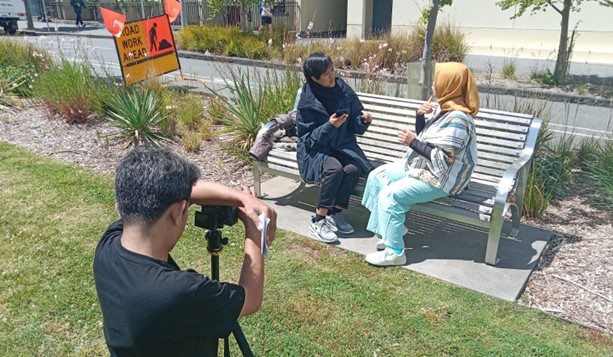
Organisations of Persons with Disabilities (OPDs) are key players in gender equality, disability, and social inclusion (GEDSI) policy advocacy in Indonesia. Ensuring OPDs have the skills, tools, and resources to lobby governments and industries on GEDSI issues using salient, high-impact messaging is important for achieving Sustainable Development Goals, including Goal 5: Achieve gender equality and empower all women and girls.
The Nossal Institute’s Disability Inclusion and Rehabilitation unit is currently implementing a DFAT Australian Awards Fellowship program to build the capabilities of Indonesian OPDs to use digital storytelling in GEDSI policy advocacy.
Digital storytelling is a powerful yet underutilised tool in grassroots disability inclusion advocacy in Asia and the Pacific. Incorporating qualitative research methods and digital storytelling techniques into the advocacy arsenal of OPDs can improve impactful, evidence-based messaging around key issues impacting on women and girls with disability.
Thanks to the Fellowship program, we are building the capabilities of Indonesian OPDs to use digital storytelling in GEDSI policy advocacy. The Fellowship builds on Nossal’s work with Sentra Advokasi Perempuan Difabel dan Anak (SAPDA), a gender-focused Indonesian OPD based in Yogyakarta, where Nossal provided training and support to produce a series of digital stories about the impacts of stigma on persons with disabilities in Indonesia.
Nossal and SAPDA have partnered to train staff from three other OPDs in digital storytelling techniques for advocacy purposes. The Fellowship is two-tiered, with Nossal supporting SAPDA staff to apply their knowledge and experience in digital storytelling and advocacy to train staff from SEHATI, DPD Gerkatin, and Permuda Inklusi Indonesia.
During a three-week workshop at the University of Melbourne, OPD staff received training in research integrity and ethics, qualitative interviewing skills, and how to plan and implement a digital storytelling advocacy project. The Fellows have returned to Indonesia to produce a series of advocacy videos on local GEDSI issues. The digital stories will address topics including expanding employment opportunities for women with disabilities, reducing stigma for women with disabilities becoming mothers, and improving support for Deaf survivors of sexual abuse.
We look forward to sharing their advocacy stories when available.
This project is funded by the Australian Department of Foreign Affairs and Trade through the Australia Awards, a prestigious programme of international Scholarships and Fellowships.
Felix Kiefel-Johnson is a Technical Advisor in the Disability Inclusion and Rehabilitation Unit at the Nossal Institute. Felix’s work focuses on understanding and promoting social inclusion and disability equity across Asia and the Pacific.
Dr Kate Neely is a Senior Technical Advisor in the Disability Inclusion and Rehabilitation Unit at the Nossal Institute. Kate’s work focuses on the human rights of people experiencing vulnerabilities.