Disability, disasters and humanitarian action
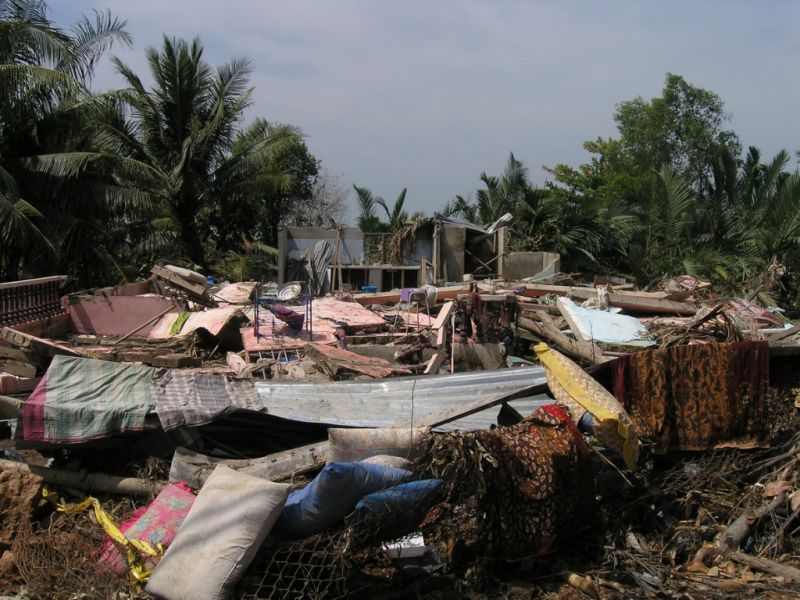
People with disability are the first to be affected by conflict and disaster. They are also the most affected. Disasters and crises create further barriers for people with disability that negatively impact safety and security, limit access to services and supports, and hinder recovery. In times of crisis and when the pressure is on, disability inclusion is often placed in the ‘too hard basket’. Too frequently, people with disability are ignored; particularly, in the early stages of a response. The assumption being that standardised ‘blanket approaches’ will reach all. This is not true.
Without deliberate targeting and modification of relief items and services and their delivery, people with disability will continue to die in crises and face long-term impacts to health and well-being. The capacity of humanitarian actors to target people with disability is further constrained by limited data preparedness and the misconception that the collection of disability data, including the identification of people with disability for inclusion in response, can wait.
The need for disability inclusion in humanitarian action is not new. We have global commitments like the Sendai Framework on Disaster Risk Reduction and Article 11 on ‘situations of risk and humanitarian emergencies’ of the Convention on the Rights of Persons with Disabilities. We now need to move the dial. We need to transform high-level aspirations into practical and sector-specific actions. In other words, humanitarian stakeholders around the world need to ensure people with disability are part of their work from planning to implementation.
Nossal’s disability inclusion team is working with long-term partners, including humanitarian organisations and organisations of people with disability, to deliver contextualised and rights-based solutions. This includes developing tailored disability guidance with Gadja Mada University for the World Food Programme; working with Elrha’s Humanitarian Innovation Fund with the Australian Red Cross and Life Haven Centre for Independent Living to improve the use of disability data in humanitarian shelter and settlements programming and with Arbeiter-Samariter-Bund to develop the Humanitarian Disability Needs Estimation Tool for use in the immediate response stage.
We are also strengthening care and support for people with serious illness in complex crises, including those requiring palliative care; evaluating inclusion in humanitarian coordination mechanisms in Ethiopia, Moldova, Ukraine and Venezuela with HelpAge International; and, with CBM, providing technical guidance to Palladium and DFAT on the prepositioning of assistive technology for humanitarian response in the Pacific.
Our applied research and technical advisories support global commitments to inclusive disaster risk reduction and humanitarian preparedness and response. More importantly, we are working to make sure those working in humanitarian crises have the tools and solutions to deliver on these commitments.
Dr Alex Robinson leads the Disability Inclusion and- Rehabilitation Unit at the Nossal Institute for Global Health. He has extensive experience of disability inclusive practice from inclusive education to livelihoods and social protection and from emergency preparedness to humanitarian response.