Palliative care in humanitarian crises
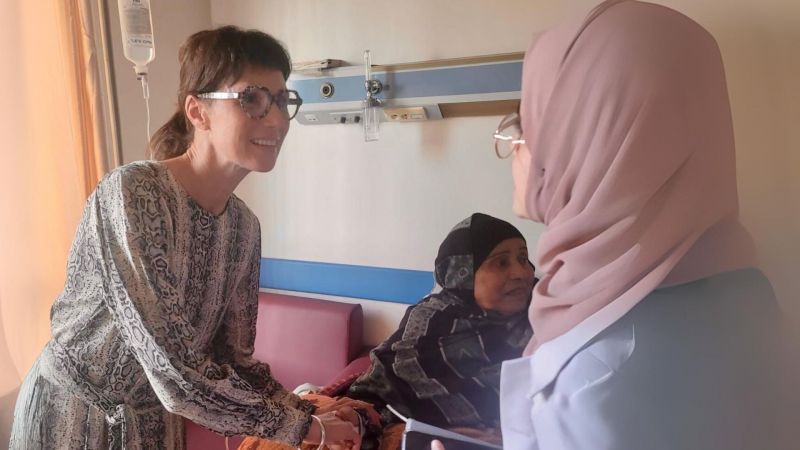
Caring in serious illness, dying, death and bereavement need to be part of everyday work in humanitarian crises – and can help us be better humanitarians.
Care and support for those with serious illness, those who are dying, and those who are bereaved do not yet receive enough attention by the humanitarian sector operating in emergencies and crises - and yet illness, dying, death, and grief are so much a part of our everyday work and lives.
Palliative care is often thought to be a novel ‘luxury’ for health systems that can afford it, where an emphasis is placed on expensive medical and specialist, and inpatient or institutionalised care that are hard to come by in most humanitarian settings. Humanitarian medical care brings a fixation on saving, curing and prolonging lives, or conversely, a mindset that nothing can be done for a dying person. There are also very real ethical and practical dilemmas of using scarce health resources on those who are chronically ill, old or dying, where services during emergency are often prioritised for, or diverted to, those with acute or curative health needs.
But care and support in illness, dying, and bereavement have existed from time immemorial, including through the worst of crises and in contexts of severe resource scarcity. At its most holistic, palliative care understands that illness, death and dying are not only medical, but also social and relational experiences. There is always something that can be done, no matter how chaotic the situation and how seemingly small or fleeting the act.
A public health approach to palliative care goes beyond individual medical interventions to recognise the central place of life stories and relationships, the role of communities and community networks in caring, and the social, political, cultural, and environmental contexts in which people live, become ill, and die. This is the approach that has the most potential to reach underserved populations, including those experiencing humanitarian crisis.
An approach to palliative care in humanitarian settings which privileges relationships, tradition, community, culture, and local context can also help us be better humanitarians.
Palliative care in humanitarian crises cannot be delivered in a vacuum without acknowledging the needs, views, agency, and rights of local people and communities, nor connecting aid and care with the social and political circumstances in which they find themselves.
Take a read of the latest paper I co-authored on palliative care in humanitarian settings.
Dr Rachel Coghlan is a Senior Technical Advisor at the Nossal Institute. She is a global leader on qualitative research and advocacy concerning palliative care in humanitarian settings.