Midwives on the Frontline: Advancing Cervical Cancer Prevention in Indonesia
The dynamic nature of health systems requires health workers to pivot towards ever-evolving health priorities and constant transitions in health technologies. This is best achieved when cycles of medical education and training are ongoing and in sync with big picture shifts occurring at policy levels.
The rapid upscale of cervical cancer prevention is a perfect case in point, with HPV-DNA testing now understood to be the highest performing test available for secondary prevention of the disease, triggering a global scale transition towards the use of this newer technology. Meanwhile, emerging evidence from South Africa has also found the potential for massive cost reductions in HPV vaccination, based on evidence that a single dose of HPV vaccination appears to have offered the same degree of immunity as double doses .
Such advancements in our understanding of how cervical cancer prevention works biologically have immediate implications for budgets, and health system inputs including for the health workers who will introduce and implement new technologies.
In the Indonesian context midwives working at the primary care level are the backbone of the nation’s cervical cancer prevention program. Through their partnership with the school-based health program (UKS) Indonesian midwifes are responsible for delivering HPV vaccination to girls attending the last two years of primary school. They are also tasked with identifying eligible out-of-school girls and providing free access to vaccination for harder-to-reach populations via primary health centres. Additionally, 103 million Indonesian women of reproductive age are currently at risk of developing cervical cancer and require access to repeat cervical screening.
Midwives are responsible for educating women and their communities about HPV, cervical cancer and the benefits of both primary and secondary prevention. Thus, midwives play critical roles in health promotion as well as service delivery. As the competencies required to undertake this work are evolving quickly, the need for updated, frequent and comprehensive medical education for midwives receiving their accreditation, as well as those who are already practicing is crucial.
From 2024, prevention of reproductive cancers was emphasised within the core competencies for the National Standards for Midwifery Accreditation, and the process of developing a comprehensive curriculum to support Indonesian midwives to achieve these competencies is in progress.
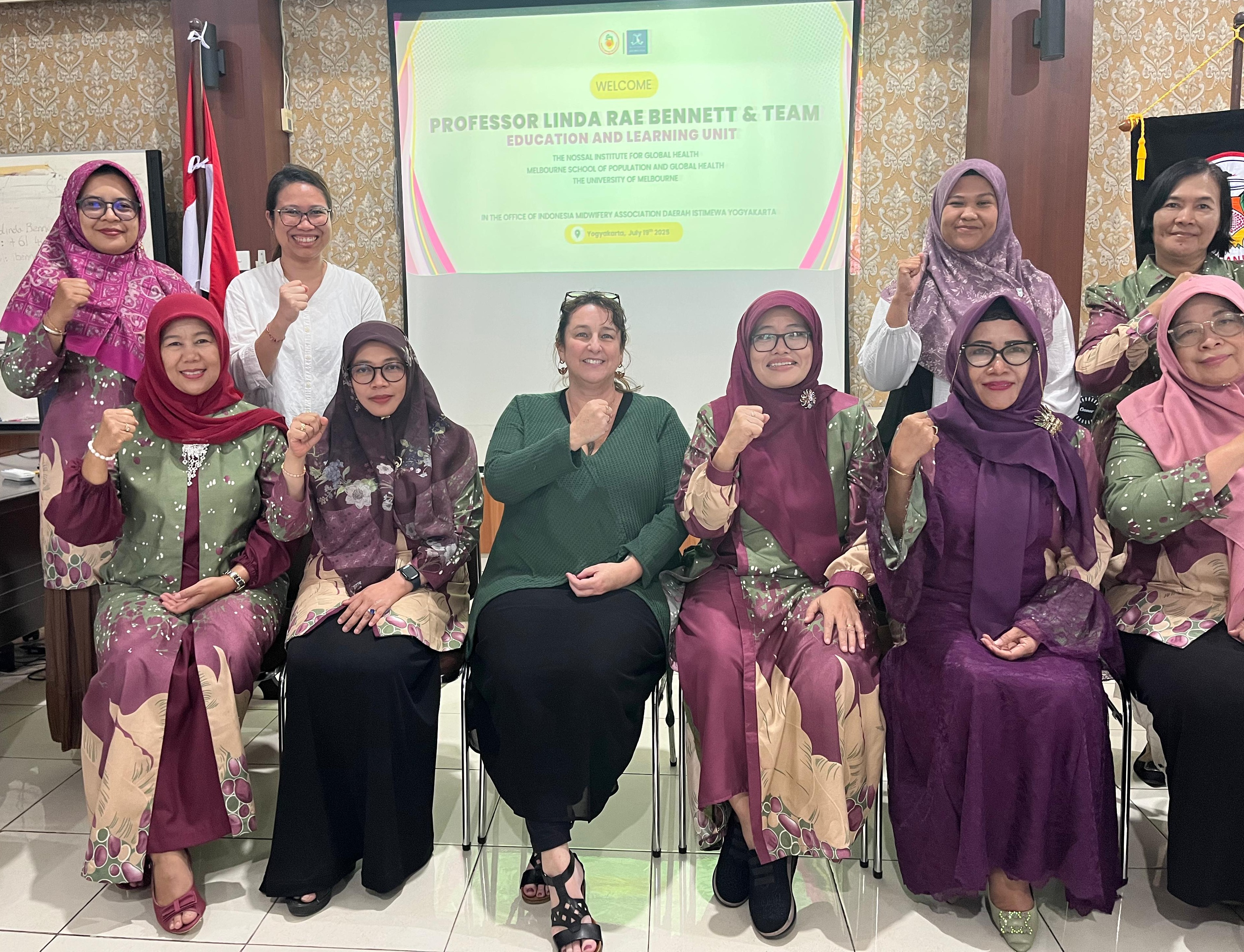
The Nossal Institute has been invited to collaborate on this process of curriculum review and co-development of midwife education specifically targeted supporting midwives to improve the effectiveness of screening, the uptake of screening and to manage the transition from visual inspection with aesthetic acid as the primary method to HPV DNA testing. Staff of the Nossal Institute’s Education and Learning Unit will begin this collaboration with the Indonesian Midwives’ Association (IBI – Ikatan Bidan Indonesia) and the Ministry of Health from October 2025, by initially co-designing and delivering one day professional development seminar. Review and revision of existing modules in line with technological advancements and new targets for cervical cancer prevention will follow.
This collaboration with the Indonesian Midwives Association builds on recent research conducted by the Centre of Reproductive Health at Gadjah Mada University and staff of the Nossal Institute that has mapped the readiness of primary health clinics for upscaling cervical cancer prevention across 13 districts across three provinces, providing an evidence base that draws directly on midwives experiences of service delivery related to cancer prevention.
Professor Bennett is a global leader in research on Sexual and Reproductive Health and Rights (SRHR) in Indonesia, and her current research includes: Indonesian women's lived experiences of cervical cancer; Indonesia's progress towards primary and secondary prevention of this disease; and understanding the intersectional drivers of health inequity among vulnerable populations in Indonesia.