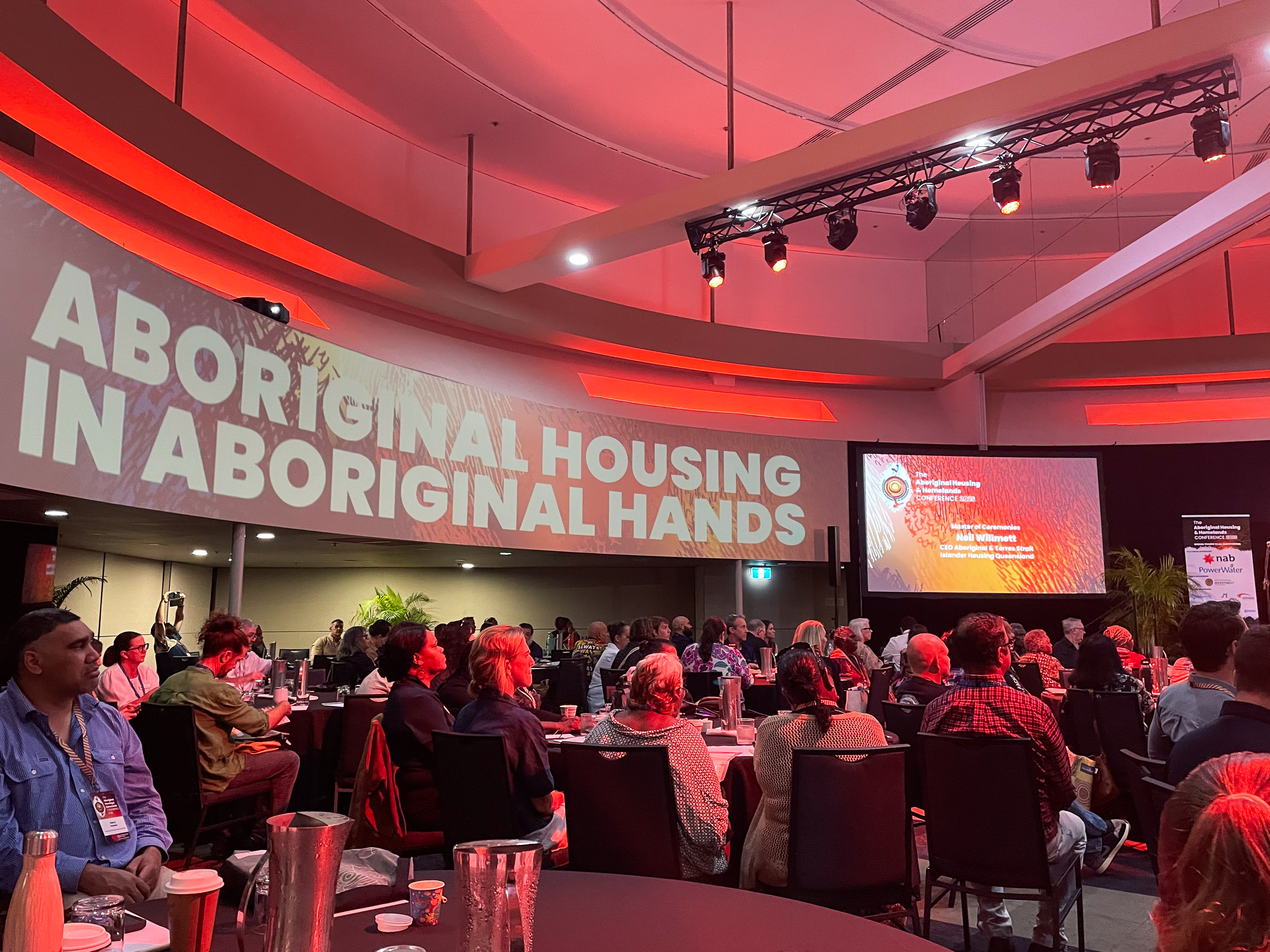
Housing: A Determinant of Health and Equity
Reflections from the Aboriginal Housing and Homelands Conference.
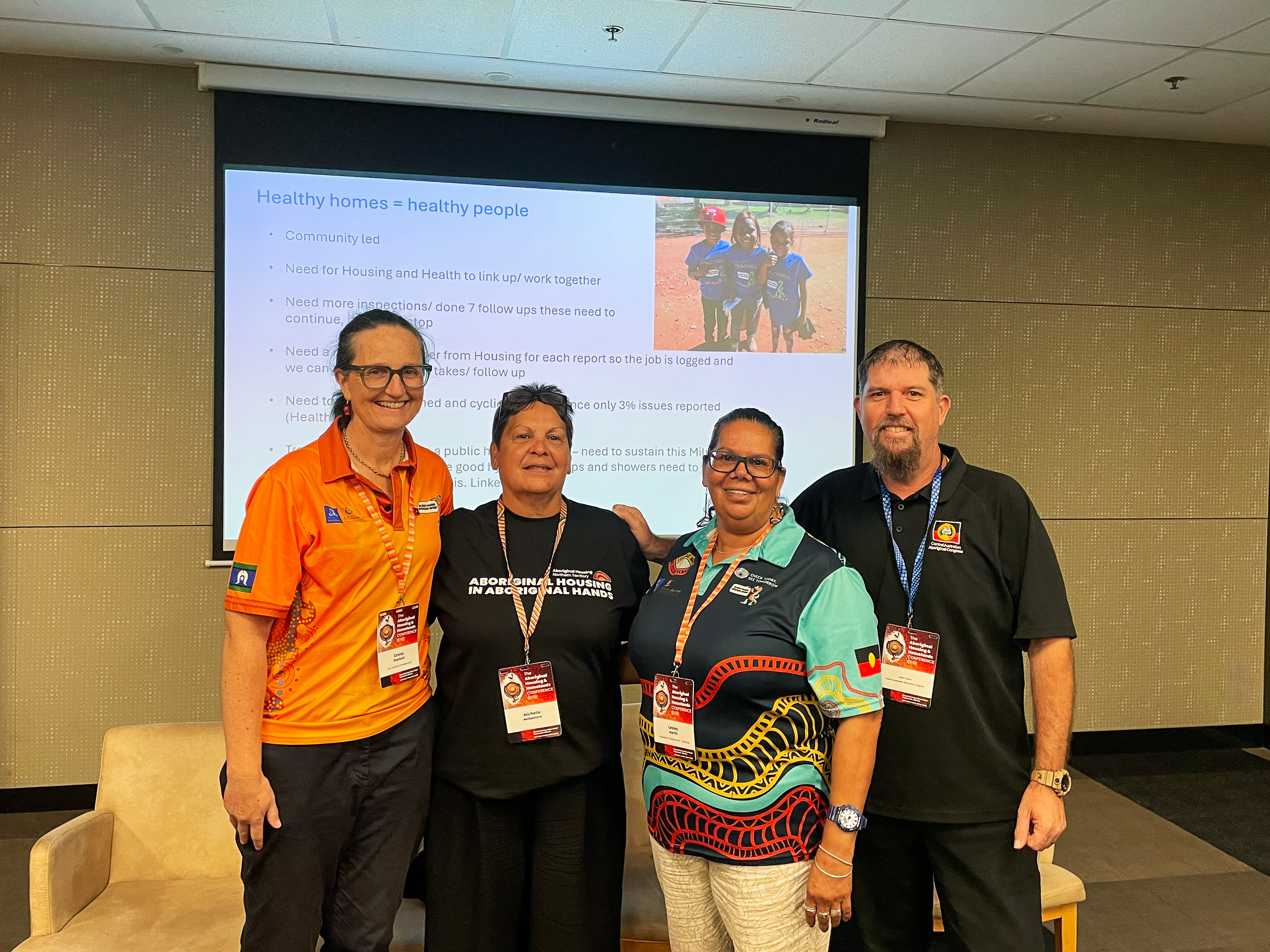
Pictured L-R: Emma Stanford, Michelle McMasters, Lesley Martin and Glenn Clarke.
In October 2025, The Lancet editorial described housing as ‘a determinant of health and equity.’ This was never more apparent than during the presentations, discussions and community stories at the recent Aboriginal Housing and Homelands Conference in Garramilla (Darwin). A consistent theme emerged: housing is fundamental to health, wellbeing, cultural connection and justice. For Aboriginal and Torres Strait Islander communities, access to safe, functional and culturally appropriate housing remains one of the most important opportunities to improve health outcomes and reduce inequities.
On 20th and 21st May, Lesley Martin and Emma Stanford attended the Aboriginal Housing and Homelands Conference in Garramilla. Their presentation ‘Working together for Healthy Homes in remote communities’ was delivered in the final session on the last day alongside Michelle McMasters, Healthy Housing Officer from Central Australian Aboriginal Congress.
Aboriginal Housing NT (AHNT) is the peak body for Aboriginal Housing and homelands in the NT. This annual conference provides an important opportunity for information sharing, networking and advocacy across the housing, health and community sectors. In her opening message in the AHNT Strategic Plan 2026-2029, CEO Leeanne Caton highlighted the ongoing challenges of housing shortages, overcrowding and ageing infrastructure. “All those factors combine to limit health, education and employment prospects. For example, preventable diseases like trachoma and rheumatic heart disease persist in Aboriginal populations. Their prevalence is directly linked to poor housing including overcrowding.” (Leeanne Caton, AHNT Strategic Plan, June 2025)
There was a strong emphasis on lived experience throughout the conference. Larrakia Elder Mary Williams opened the event with a Welcome to Country and spoke about the importance of housing in providing “dignity, safety and cultural connection.” She shared her own experiences and advocated for community voices to be heard, respected and included in the decisions and policies that affect people’s lives. It was a powerful and poignant start to the conference.
Many presentations highlighted the real impacts on families when housing is unavailable, overcrowded or in poor condition. Discussion throughout the conference highlighted links between housing and a range of preventable health outcomes, including skins infections, acute rheumatic fever, rheumatic heart disease, respiratory infections, kidney disease and trachoma. Poor housing conditions, overcrowding and a lack of functioning health hardware continue to contribute to preventable illness in many communities.
For Minum Barreng, these issues are closely linked to our Healthy Homes work and prevention of trachoma and other infections. As part of the World Health Organisation SAFE strategy for eliminating trachoma as a public health problem, the E stands for Environmental Improvements. In Australia, this is often understood through the lens of healthy homes and functioning health hardware.
Milpa’s Six Steps to Stop Germs promotes key hygiene actions to prevent trachoma and other infections. However, families can only put these actions into practice when housing supports them to do so. Access to clean running water, working taps and showers, washing facilities and effective wastewater systems remains fundamental to good health. Housing infrastructure enables families to maintain hygiene practices that help prevent trachoma, skin infections, acute rheumatic fever and other preventable conditions.
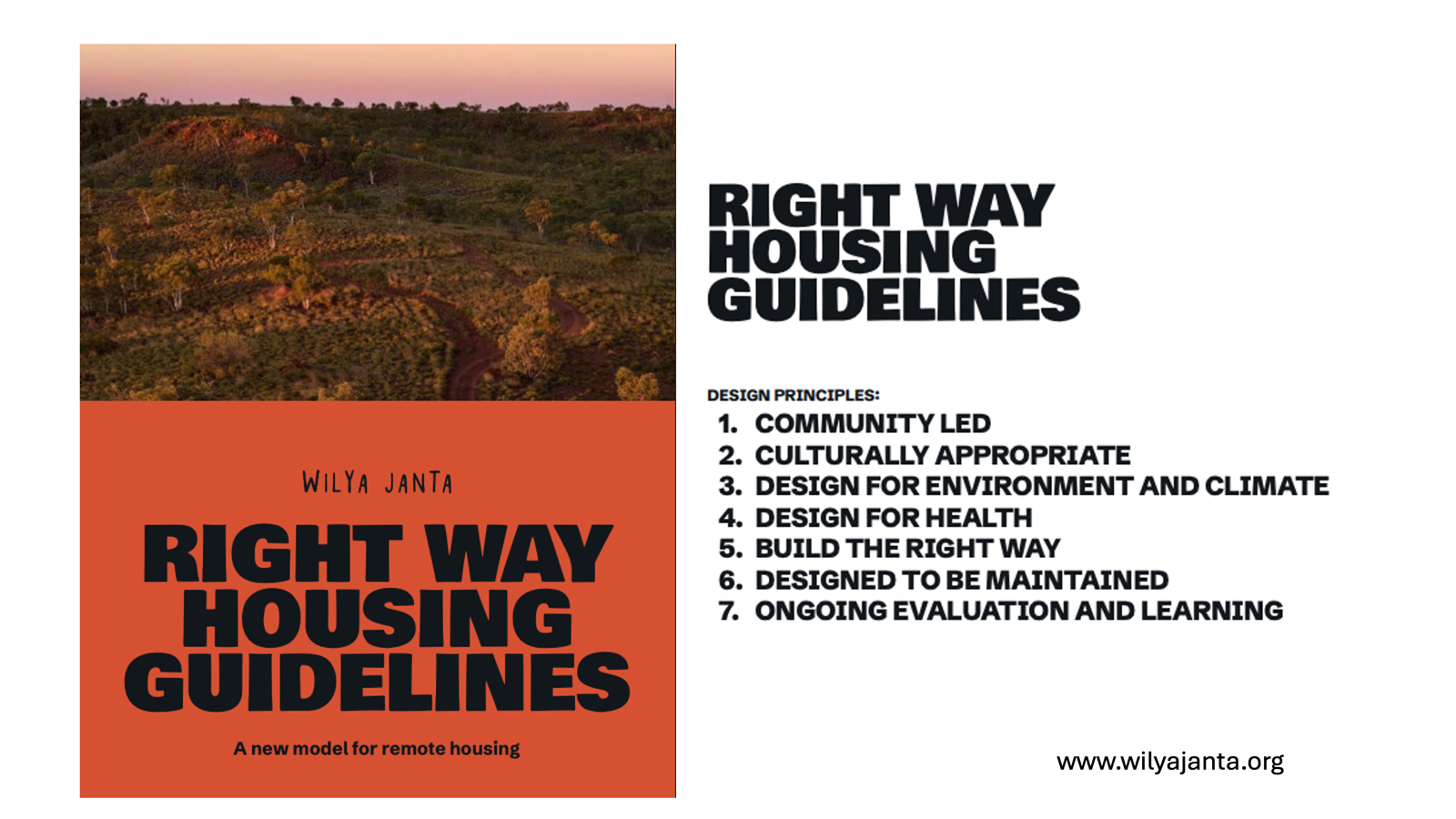
While there is no doubt about the significant housing challenges facing the NT the conference was equally focused on solutions. Speakers shared practical examples, community led initiatives, data and evidence that demonstrate how housing can better meet the needs of Aboriginal communities and respond to local climate and cultural requirements. One excellent example of this is the work of Wilya Janta and we included this slide in our presentation to showcase their Right Way Housing Guidelines.
It was encouraging to hear Tom Leeming, CEO of the Department of Housing, Local Government and Community Development discuss the move towards planned and cyclical maintenance. This is particularly important given the data from Healthabitat in the NT showing that only 3% of the repair and maintenance issues are being reported. Waiting for families to identify and report repairs is often insufficient when many issues go unnoticed or unresolved. As Tom noted, approx. 82% of the tenants in NT Housing are Aboriginal people making Aboriginal housing a central part of government core business.
During our presentation about healthy homes, data was shared on the health promotion and community engagement as well as the role of the Healthy Housing Officer in supporting families to report repairs and maintenance issues to Housing. Michelle’s work demonstrates how practical support can improve access to functional health hardware and enable families to follow everyday hygiene practices.
The conference demonstrated the strong leadership, expertise and practical solutions that already exist within Aboriginal communities and organisations. Continued investment in housing, environmental health and community-led approaches will be essential to improving health outcomes and maintaining gains made in preventing infectious diseases.
There is no doubt the role of housing as a social determinant of health and wellbeing and its fundamental infrastructure for health, wellbeing, education, and cultural connection. The voices heard throughout the conference made it clear that improving housing remains one of the most powerful opportunities to advance health equity and support Aboriginal and Torres Strait Islander families to thrive.