Field Work in Yirrkala
Fieldwork in Yirrkala: Strengthening Indigenous Research Capabilities and Preserving Cultural Archives
Between 11–22 August, a team from the University of Melbourne travelled to Yirrkala in Northeast Arnhem Land to support the digitisation and preservation of a nationally significant archive housed at the Yirrkala School’s Literature Production Centre (LPC).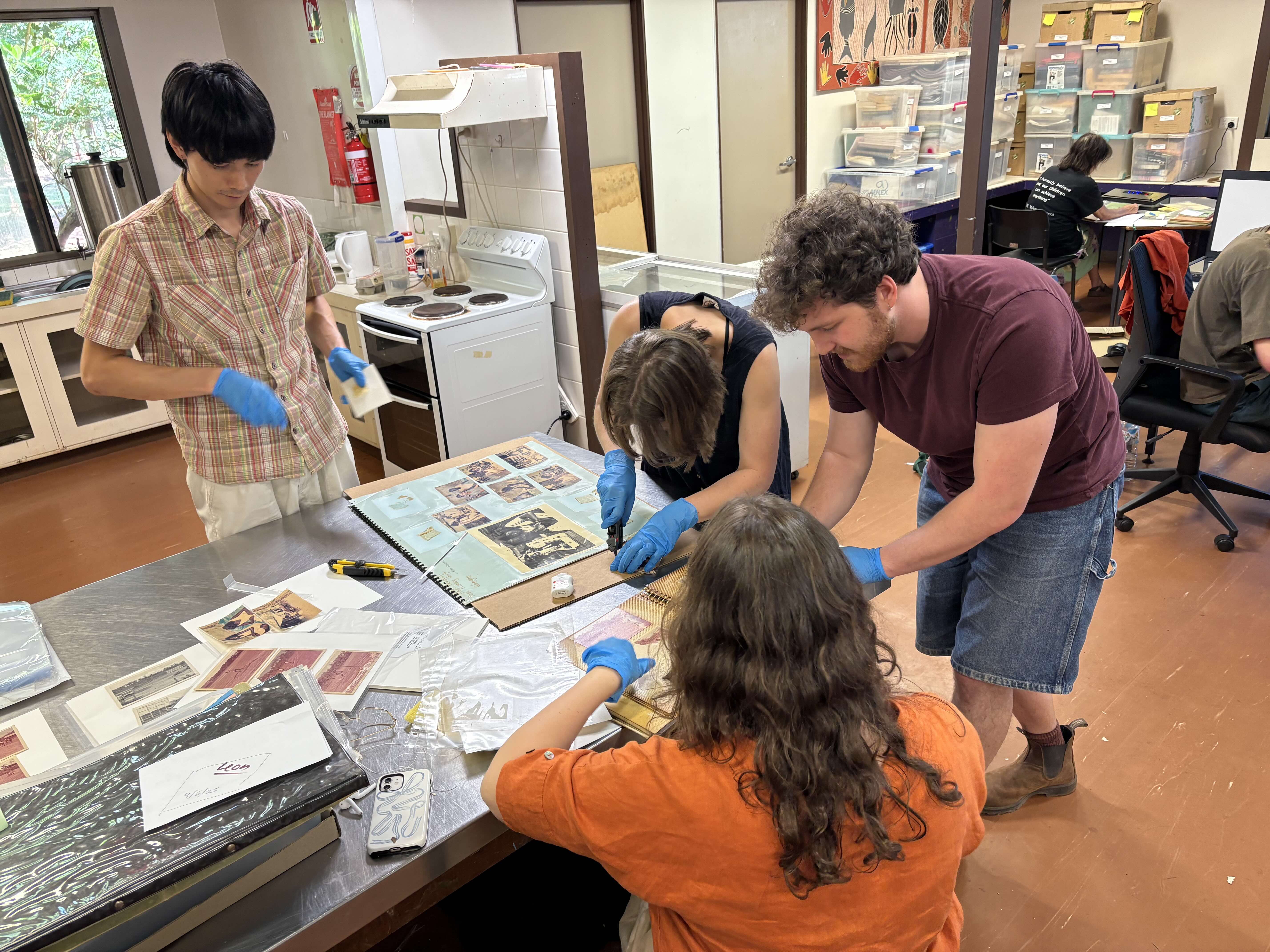
The visit was part of the Improving Indigenous Research Capabilities project and was led by Associate Professor Kristen Smith, Research Director of the Indigenous Studies Unit, with project team members including Bern Murphy (Faculty of Education), Joy Chen (Indigenous Studies Unit), and Casey Haseloff (Indigenous Intern, ARDC/IDN). The team also included two volunteers (Ruby Langton-Batty, Amber Wright), and five postgraduate students (Felix Kimber, Molly Franzke, James Chan, Daniel Weber, Clara McCleod Goodman) from areas including linguistics, education and archives, participating in a tailored internship program developed by the Indigenous Data Network (IDN).
The team was guided by Professor Yalmay Yunupiŋu, the project’s instigator and former teacher linguist at the LPC, where she worked for over 40 years. A highly respected Yolŋu educator, linguist, and cultural leader, Professor Yunupiŋu was named Senior Australian of the Year in 2024 in recognition of her lifelong contributions to bilingual education and cultural preservation. Her leadership and vision continue to shape the direction of the project, which responds to concerns she raised about the deterioration of the LPC archive and the unauthorised use of Yolŋu knowledge.
The LPC archive contains more than fifty years of bilingual education materials, Yolŋu Matha translations, cultural resources, photographs, videos, audio recordings, and rare publications. These materials represent the intellectual and cultural contributions of multiple clan groups across the region and are at risk due to environmental conditions and limited infrastructure. The fieldwork focused on digitising and cataloguing these materials in collaboration with Yolŋu educators and knowledge holders, using tools and metadata models developed by the IDN to support culturally responsive data practices.
Yirrkala School has long been recognised as a site of educational innovation and political activism. It was one of the first schools in Australia to implement a bilingual education program, led by Yolŋu educators and community leaders who advocated for the inclusion of Yolŋu Matha and cultural knowledge in formal education. The school has also played a central role in broader movements for land rights, cultural preservation, and Indigenous self-determination. The LPC archive reflects this legacy, containing materials that document decades of community-led teaching, curriculum development, and advocacy.
Importantly, the digitisation work is not only about preservation; it is also about enabling access and reuse. By creating a searchable, well-catalogued digital archive, the project supports Yolŋu educators in revitalising and reusing historical materials in contemporary teaching and curriculum development. It also opens pathways for future generations of Yolŋu people to engage with their cultural heritage in dynamic and meaningful ways, both within the school and beyond.
For the postgraduate interns and volunteers, the experience provided hands-on training in digitisation, cataloguing, and ethical research practices, while deepening their understanding of Indigenous knowledge systems and community-led research priorities. The volunteers supported logistics and documentation, contributing to the smooth running of the fieldwork and the development of training materials for future cohorts.
This initiative reflects the Indigenous Data Network’s commitment to respectful collaboration, cultural preservation, and capacity building. It also highlights the importance of community-led research and the role of universities in supporting Indigenous data governance and cultural heritage protection. The project team will continue working with the Yirrkala School and other local partners to develop sustainable data infrastructures and training programs that support Yolŋu educators, researchers, and future generations.
