Reflections on the Garma Festival 2025 by Makkaillah Ridgeway
Makkaillah Ridgeway is a proud Worimi / Biripi / Gamilaraay woman. She works as the Administrative Officer at Minum Barreng: Indigenous Eye Health Unit and is currently undertaking a Master of Public Health at the University of Melbourne on the lands of the Wurundjeri.
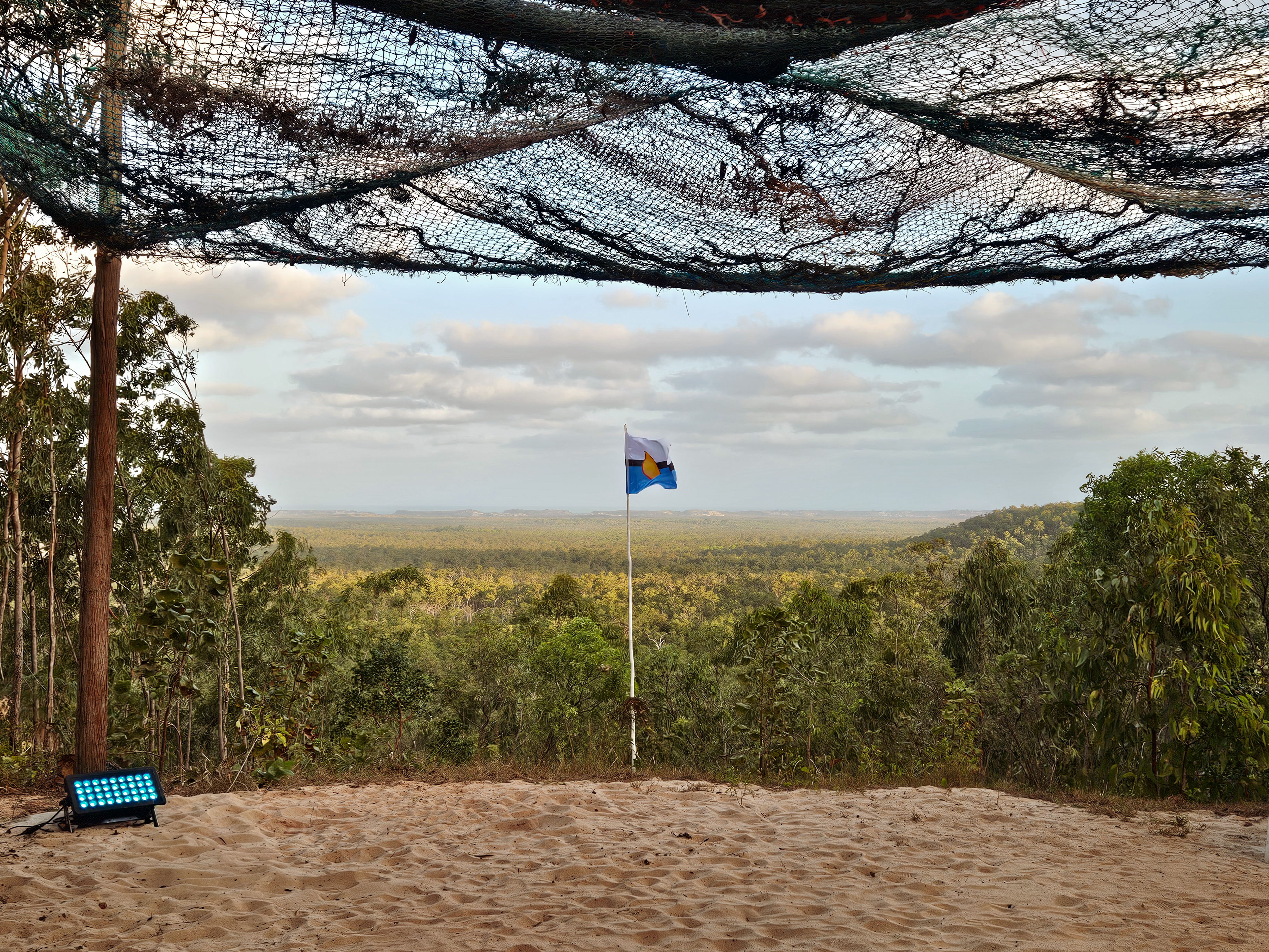
Lookout at Gulkula
If you mention the Garma Festival to anyone who has been, the first thing that you hear from them is how much of a lifechanging experience it is. The second thing you will hear them say is that they would love to go again if they ever get the chance. With a little research and a quick study of the program, you can easily understand why. This festival really has something for everybody; music, film, art, culture, nature and key political forums are abundant over each of the four days.
This year marks the 25th anniversary of the Garma Festival, which marks 25 years of the Yolngu people inviting others onto their lands and sacred ceremonial sites to share their culture, traditions, knowledge and worldview. The Garma Festival has become a platform for important political discourse, so that is 25 years of open discussions on self-determination, governance, nationhood, global Indigenous affairs, land rights, and truth telling. As you can imagine, that was just about all the convincing I needed to embark on what I so often heard would be a once in a lifetime experience.
My journey began at sunrise on Wurundjeri land in Narrm and ended at sunset on Yolngu land in Nhulumbuy, at the top of East Arnhem land. Sunrise to sunset was due to a layover in Cairns, I’m sure people have spent longer in the domestic terminal in Cairns, but 5 hours was long enough for me. In hindsight, I should have made my way into town and browsed shop windows. The issue with Cairns domestic terminal 2 is that there is almost nowhere to take in natural light, I say ‘almost’ because I did manage to find a small row of 5 chairs near the Qantas Lounge that you would really have to be poking around the airport to find. This is where I was fortunate in finding my first fellow Garma Festival attendees, Melody and Caitlin were also first timers and excited for the days ahead of us. I should note that I was travelling alone to Garma, so making friends along the way was a must, I’m also glad to say that these two women featured strongly throughout the rest of my experience of the festival and that I could not be more grateful, they also introduced me to the rest of their lovely team at AIATSIS.
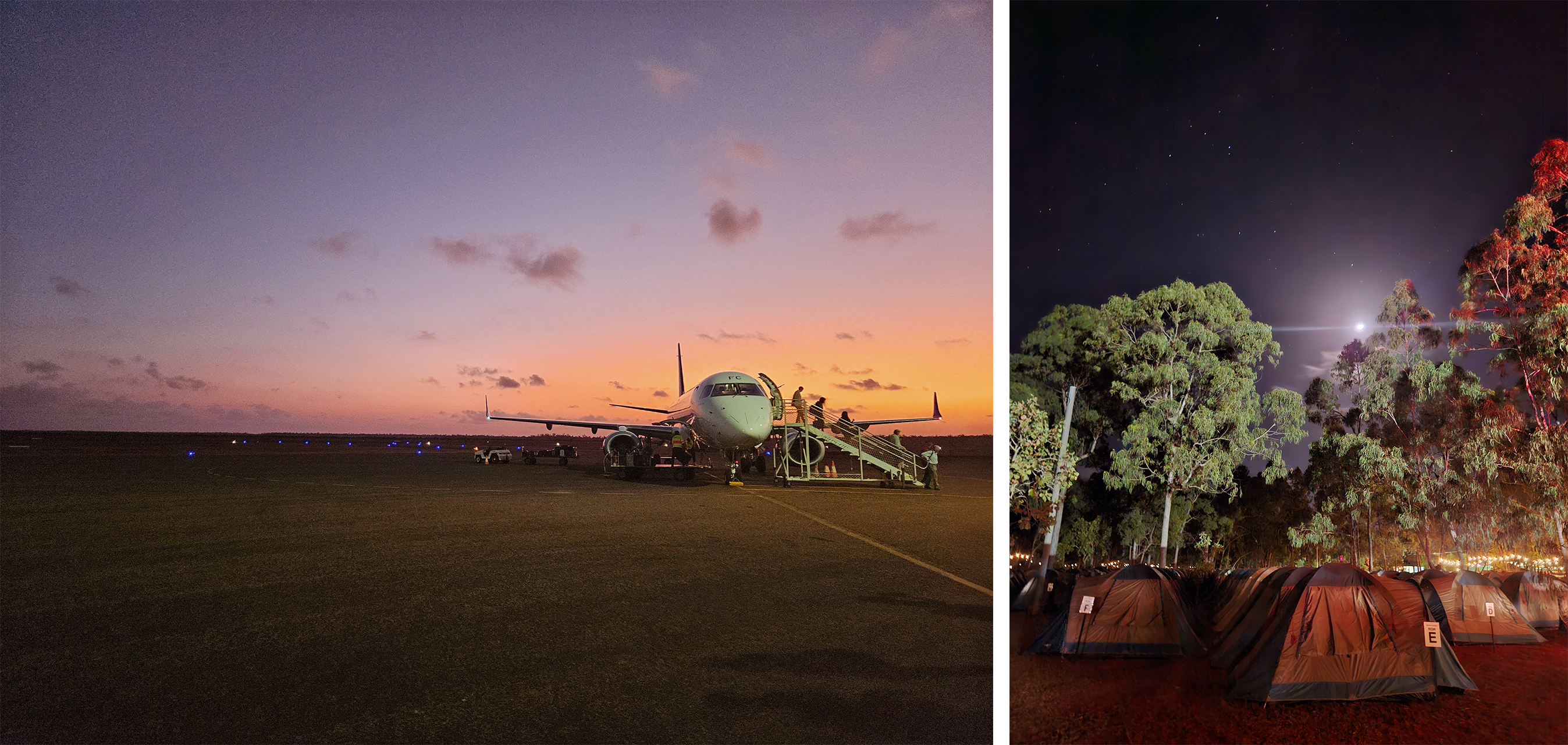
L: Sunset at Nhulumbuy Airport. R: Tents at Garma
Arriving on the festival grounds I was met with an open starry sky, the smell of earth and eucalyptus, a warm humid heat and a general buzz of anticipation in the air. After a quick feed, I made my way back to my tent and fell asleep to a band running soundcheck in the distance.
Day 1
I can’t begin to express the level of comfort that waking to the distant sounds of clapsticks and the scent of eucalyptus smoke in the air bring. This would be a recurring experience and a highlight throughout my memories of Garma.
My first order of business was to pick up a coffee and get in line at the merch stand for a T-shirt. To attend Garma is to queue. This is one of the first lessons I learned, and I’m sorry to say that if you don’t have the patience to arrive early and stand in line, you might just miss out on some of the most unique things the festival offers.
The morning’s key forum sessions spoke on ‘Lifelong Commission’ for Yolngu people and their responsibility to past, present and future. It explored two-way learning in local schools and how the community has worked to build local capacity and integrate cultural knowledge into the school curriculum, ensuring that Yolngu children are taught their languages alongside English. Implementing this, and the success of it, is underpinned and strengthened by having two teachers in classrooms: one being a Yolngu educator.
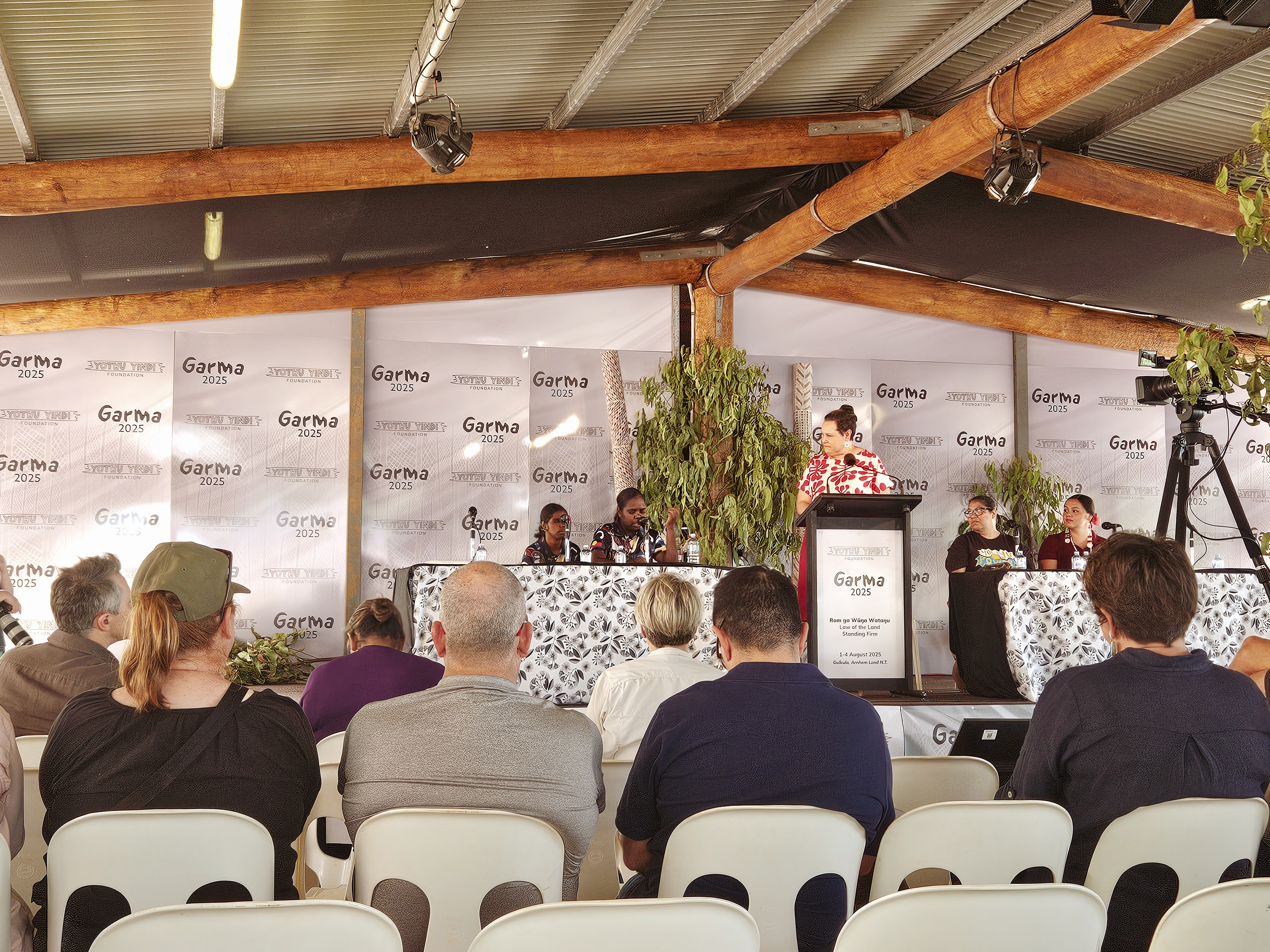
Girl Power Session, L-R: Latisha Baker, Jasmine Yunipingu, Natalie Ahmat, Rosalee Pearson and Toshina Red Hawk.
This was followed by a session on Girl Power and was facilitated by Natalie Ahmat (NITV). The panel was led by three local women Jasmine Yunupingu (Yalu Girl Power), Litisha Baker (Yalu Girl Power), Rosalee Pearson and Tashina Red Hawk a Sicangu Lakota Oyate woman from South Dakota in North America. They discussed their paths, why they do what they do, connection to culture, matrilineal power, the importance of supporting young women and girls’ education, and the impact that their work has had on instilling confidence in and empowering young Indigenous women and girls.
The afternoons ‘Garma Dialogue’ session was a discussion between Selena Uibo (Territory Labour – Leader of the Opposition and Shadow Minister of Police; Defence NT; Territory Coordinator; Mining and Energy; Renewables; Treasurer; Alcohol Policy; Essential Services; Trade, Business and Asian Relations; International Education, Migration and Population; Advanced Manufacturing) and Steve Edgington (Country Liberal Party – Minister for Health; Mental Health; Alcohol Policy; Aboriginal Affairs; Housing, Local Government and Community Development; Essential Services) and was moderated by Matt Cunningham (Sky News). This was a lively one, I’m always a fan of a good debate, and this one did not disappoint. My knowledge of territory politics grew immeasurably throughout this session.
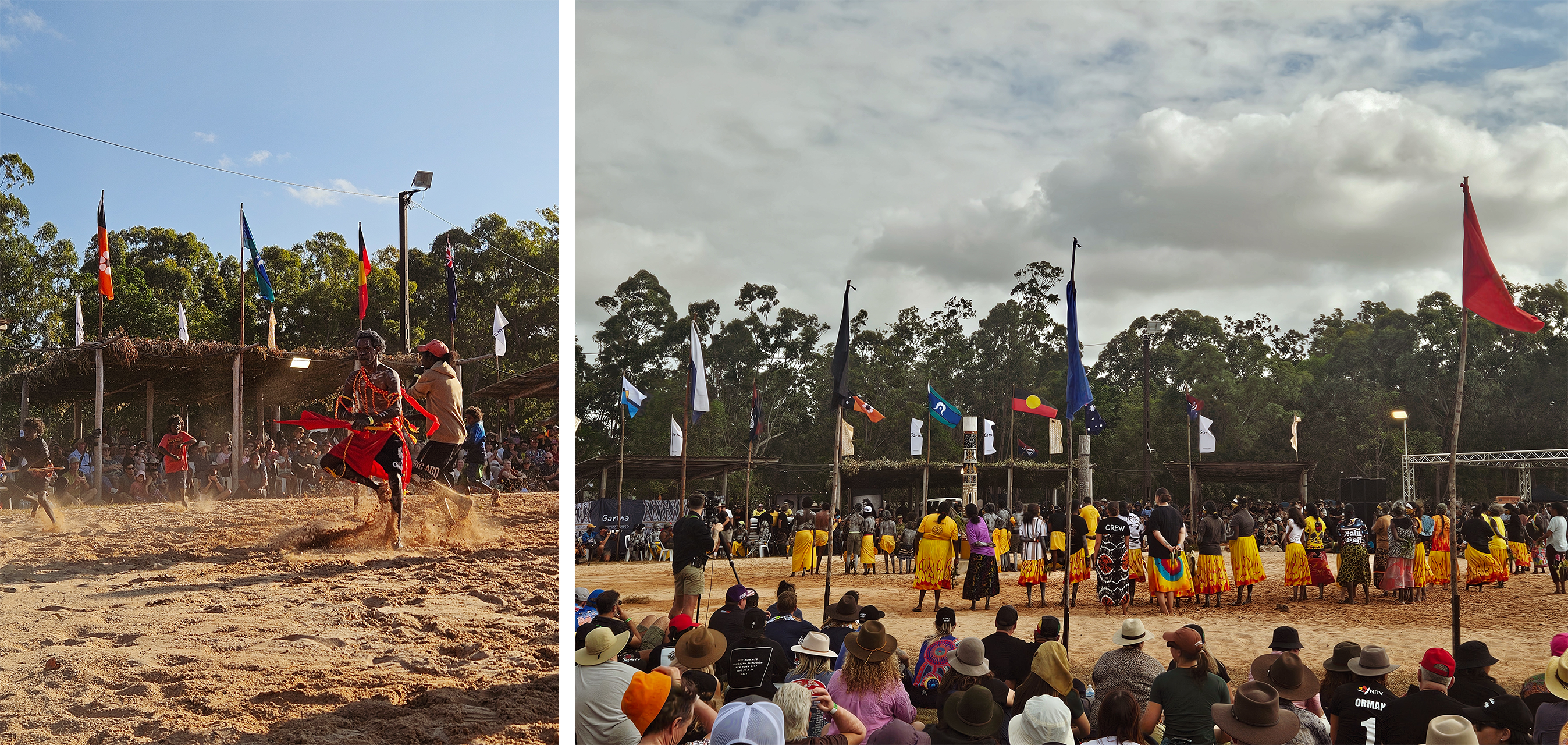
Dancers at the main ceremony grounds for the opening ceremony
At 4pm, the Festival was officially opened by the Gumutj Clan on the main ceremonial grounds. They welcomed guests and performed ceremonial dances with neighbouring clans until sunset, and on a few occasions, guests were invited to get up and dance.
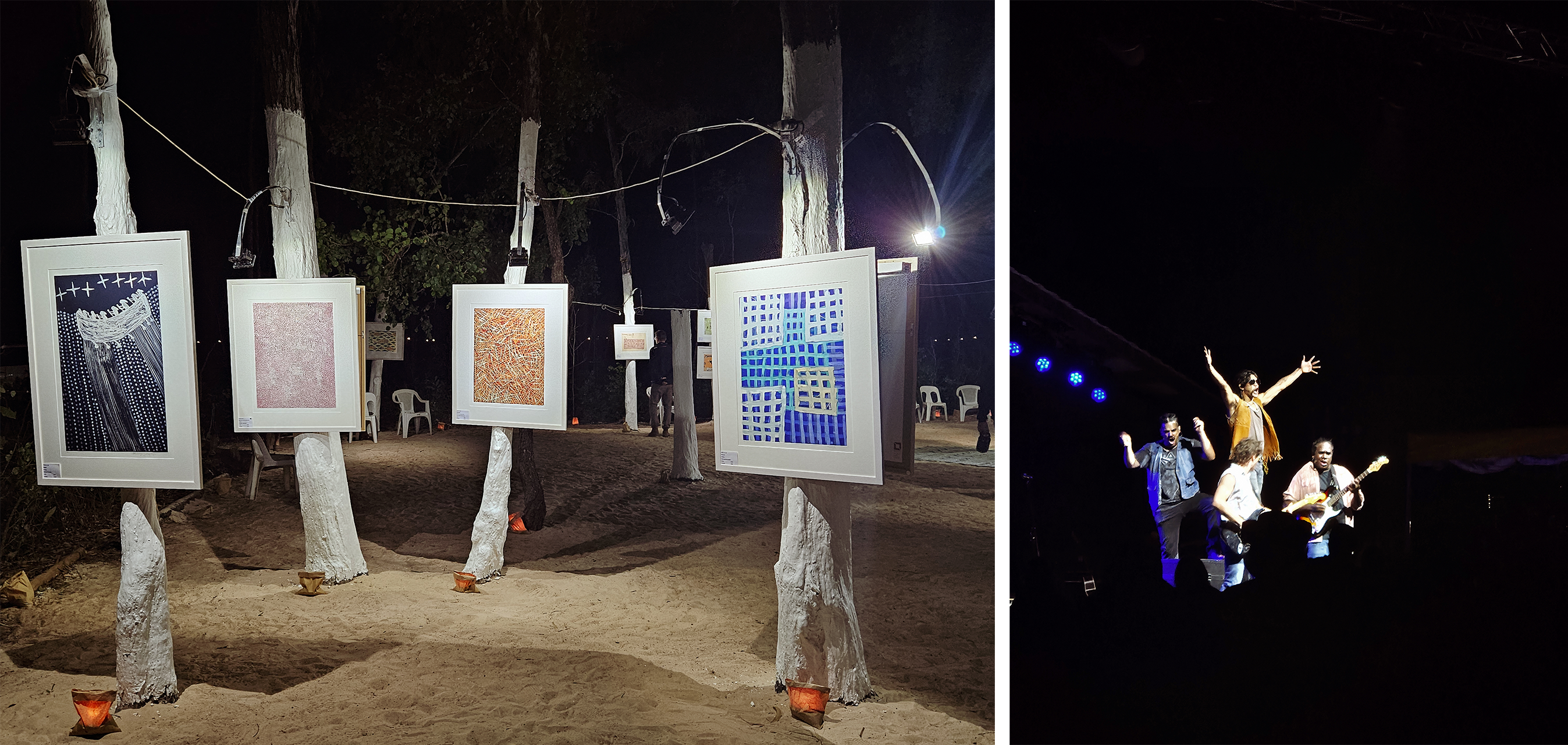
L: Gapan Gallery. R: Big Names, No Blankets
The evening kicked off with introductions and yarns over a feed and was followed by more yarns with a cuppa around a campfire. We then made our way over to the Gapan Gallery opening, and later down to the main stage to see ‘Big Name, No Blankets’ perform until the moon hung low over the treetops, around 11pm.
Day 2
This was easily one of the biggest days if you were attending for the political discourse, as it was the day of the Prime Minister’s address. However, before that, I sat down and listened to Mr Djawa Yunupingu give the YYF Chairman's Address: 'Rom ga Wäŋa Wataŋu - Standing Strong'. He shared the history behind the creation of the Garma Festival, which was established as a place of honesty, exchange, and ceremony. He spoke on the broken promises of the 1988 treaty process, reminding us that in Yolngu lore, the words of promises are sacred. He expressed his disappointment in the outcome of the referendum but said that we must keep looking to the future; highlighting the recent High Court decisions recognising Aboriginal and Torres Strait Islander connections to Country and the Commonwealth’s liability to native title compensation, and how this decision will support the development of a strong, self-sustaining economy in Arnhem Land; moving away from welfare economy.
After morning tea and catching up with new friends, we all went over to see Anthony Albanese give the ‘Garma Keynote Address’, a few notable highlights were funding for native title and increasing the rollout of free TAFE in the NT. To be honest, I found his speech quite lacking; nothing on the current state of treaty, the incarceration rates of Indigenous people or the findings of the latest Closing the Gap Report. In other words, safe, especially in comparison to his previous announcements and commitments made at Garma.
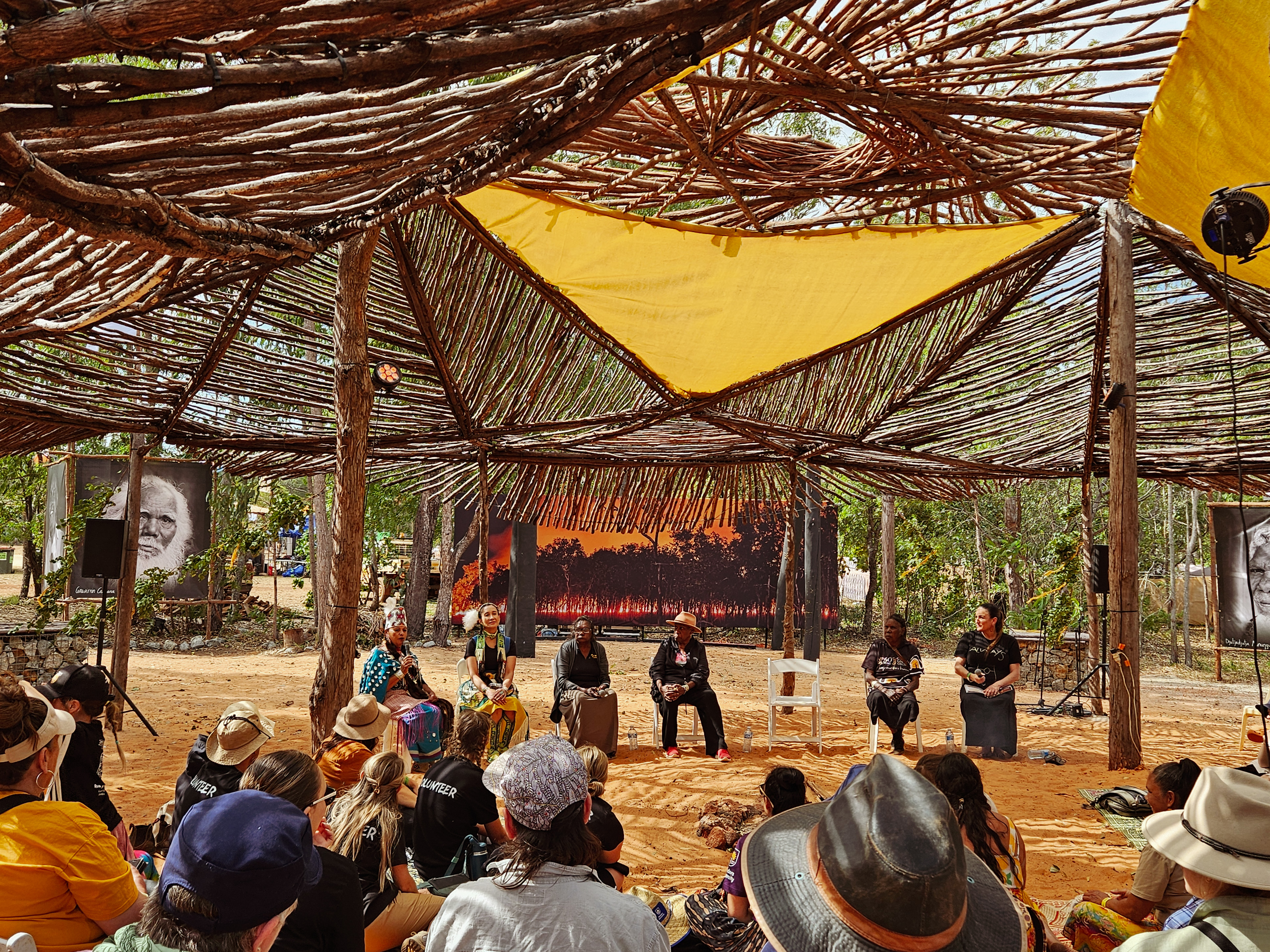
'Our Voice: in Conversation with ' L-R: Noella Red Hawk, Melonie Matthews, Dela Yunupingu, Gail Mabo, Valarie Napaljarri Martin and Shelley Ware.
The next talk I attended was very much at a different pace. ‘Our Voice: in Conversation with’ was a very touching and powerful session, facilitated by Shelley Ware the panel was made up of 6 women; Valerie Napaljarri Martin, Warlpiri elder; Gail Mabo, Piadram language group of the Torres Strait; Noella Redhawk, Sicagu Lakota; Melonie Mathews, Pueblo / Navajo; and Dela Yunipingu, Gumatj Clan. They discussed their lived experiences as Indigenous women, their wins as well as their hardships and challenges, their journeys towards accepting leadership roles and filling the shoes of those that had come before them, the role that strong men have in raising strong daughters and their experiences of motherhood and raising children who are proud of their culture and identity. This session filled me with a sense of duty to the next generation that I hadn’t been able to grasp before; that is not to say that I hadn’t previously understood the importance and intrinsic value of it, just that my role in it had not been so clearly defined before. Listening to these women talk was a gift that I know I’ll continue to revisit and reflect on for years to come.
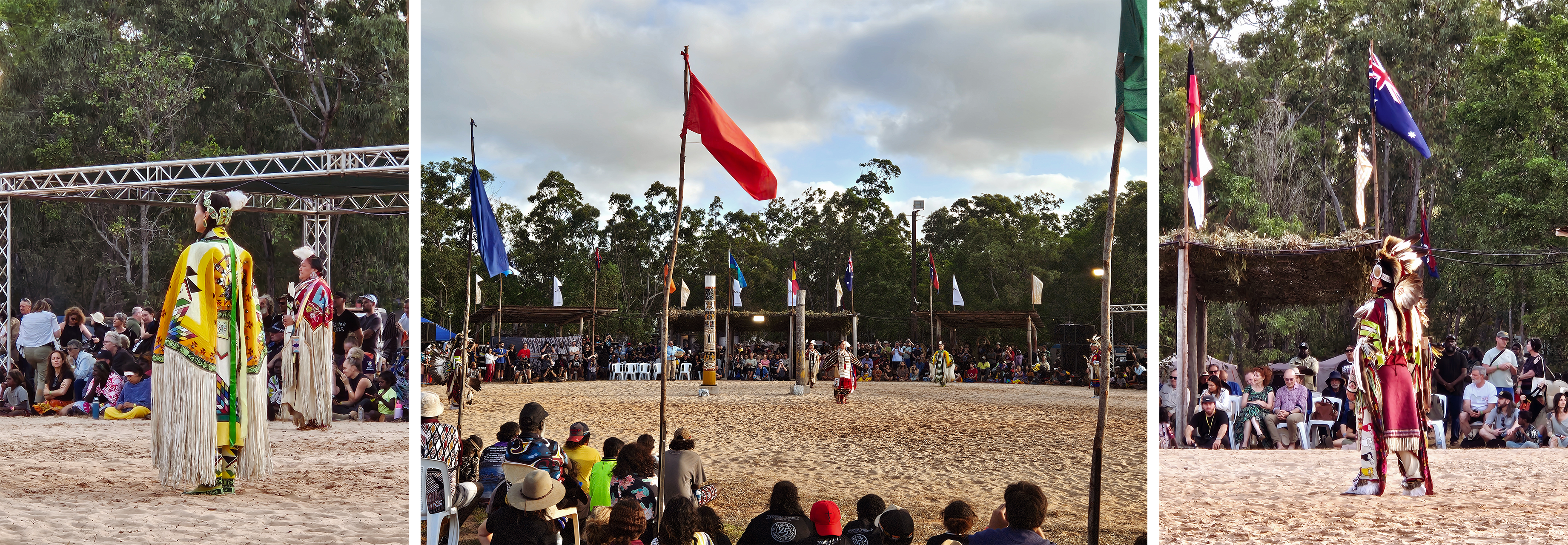
Native American dancers performing on the ceremonial grounds
After a well-timed rest, I ventured over to the ceremonial grounds to watch our Native American brothers and sisters share their dances, the stories behind them and their culture. To say that their ceremonial clothing is beautiful would be an understatement. They shared the meanings behind some of their ceremonial dress and the involved process that goes into making them. Some of the women’s beadwork is contributed to over a lifetime, which further signifies their seniority and the cultural wisdom of the wearer. Sharing international experiences of Indigeneity and nationhood was another highlight of Garma for me. The global connection of shared colonial experiences, of dispossession and fighting for land rights, of self-determination and fighting for the rights of our people, of fighting for the preservation of our culture for future generations, of our environmental responsibilities as caretakers of country; these stories are often quite similar and there is always a lot be learned in these yarns and exchanges.
For me, the days discussions ended with the Garma Dialogue. This session was moderated by Britget Brennan (ABC) and was a discussion with Senator Larissa Waters (Leader of the Greens party) and Kyam Maher (Attorney-General of SA). I found this talk insightful, Kyam spoke of the treaty process in South Australia and how they have managed to implement a ‘voice’ to parliament at a jurisdictional level. There were further discussions on treaty, native title and the idea of moving towards an era of economic revolution for Indigenous people was teased out.
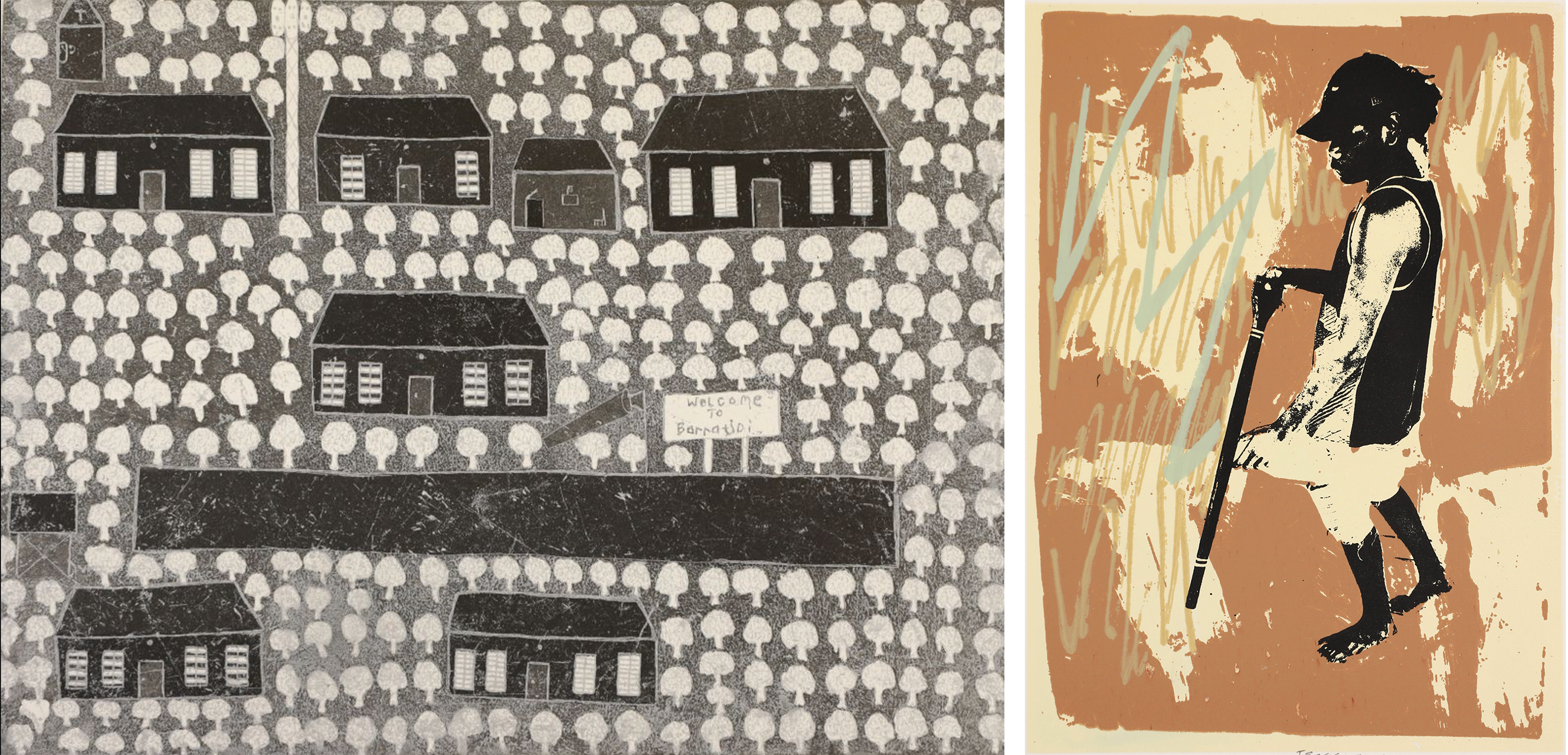
L: ‘Welcome to Barratjpi’ by Balwaldja Wanapa Munuŋgurr. R: ‘Young Power’ by Isaac Munuŋgurr
I cleared my mind listening to the evening singing at the lookout before going to the Gapan Gallery to learn about the exhibiting artists, their works and the history of art in East Arnham Land. After the talk, I ended up buying two prints, ‘Welcome to Barratjpi’ by Balwaldja Wanapa Munuŋgurr and ‘Young Power’ by Isaac Munuŋgurr.
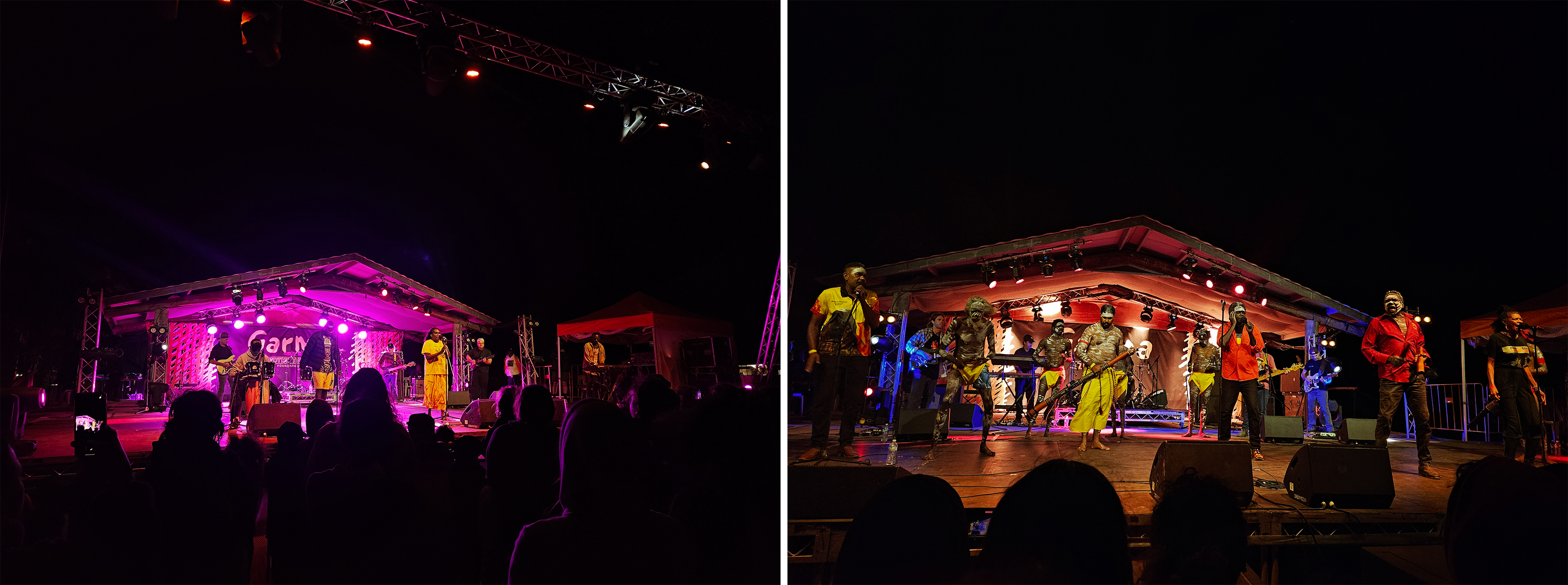
L: Dhapanbal Yunupingu on the main stage. R: Yothu Yindi on the main stage
I wrapped the evening up by watching a documentary under the stars about the Yirrkala bark petitions (One Mind, One Heart, 2024) and catching a deadly performance by Dhapanbal Yunupingu and Yothu Yindi on the main stage with Melody and Caitlin. As you can probably guess, they finished their set with ‘Treaty’, a powerful end to a powerful day. I went to bed with a swelling sense of pride, gratitude and insight. The returning theme of deep listening was with me today and continued to frame the rest of my time at Gulkula.
Day 3
In comparison to Day 2, this was a recuperative day. I started the morning early, queueing for Women’s Healing, which I went to that afternoon. Mind you, it wasn’t as early as those who attended the early morning activities like the dawn crying ceremony, Yoga or listening to the sounds of Arnhem Land. Women’s Healing was just what I needed and just as restorative as everybody had told me it would be. Afterwards, I spent some time basking in the sunlight, which put me in the right mood to head back to the info booth and get in line to book astronomy for that evening; one hour later, I was all signed up and strolling to catch the next forum dialogue.
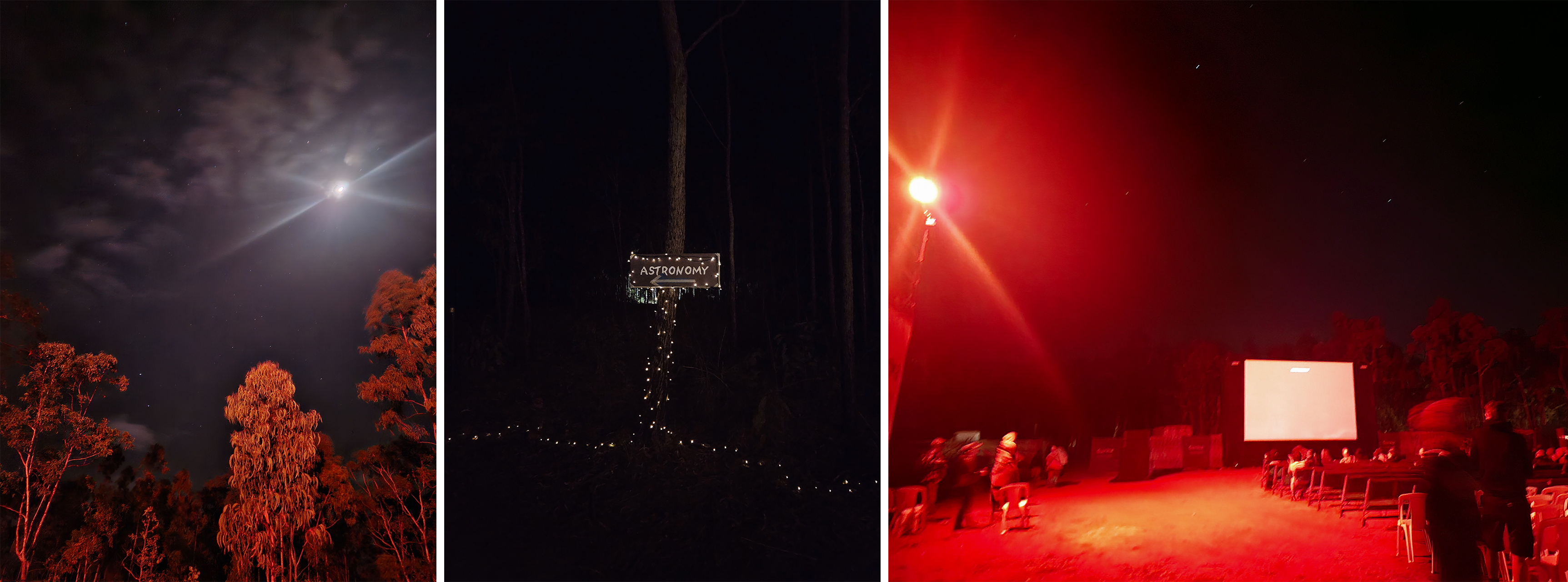
L: Stars. C: Astronomy sign. R: Cinema under the stars
While waiting for our astronomy guide, I made a few new friends and watched the final quarter of the Carlton vs. Fremantle Dockers game with a couple of Dockers fans huddled around an iPhone; It never ceases to amaze me how people come together over sports. Then off we went, Ian Maclean (Night Sky Secrets) and Rosanne Reitze pointed out the constellations and how to read them; they also set up a few telescopes, and I got to view the ‘Jewel Box’, a star cluster that I had been hoping to see before signing up. They answered crowd questions, but I mostly enjoyed hearing about how the stars were used to navigate and the Dreamtime stories about them. Songlines are truly amazing; hearing different iterations of Dreamtime stories up here that my mother had told me as a child down in NSW is not lost on me.
After astronomy, I watched a documentary at the cinema on the burial of David Gulpilil back in his homeland (Journey Home, 2025). If you know me at all, you know that I wept during the screening. This film graced me with another profound realisation on my relationship to identity, culture and the future. Being in an environment that surrounds you with and celebrates resilience and culture is so conducive to subconscious ruminations; this may be down to the fact that I had no reception, but I found Garma a very safe space to engage in deeper reflections that I don’t ordinarily make time for. That being said, I think a lot of what you get out is based on what you put in; I can easily see how I could have completely different takeaways had I come at a different stage of my life.
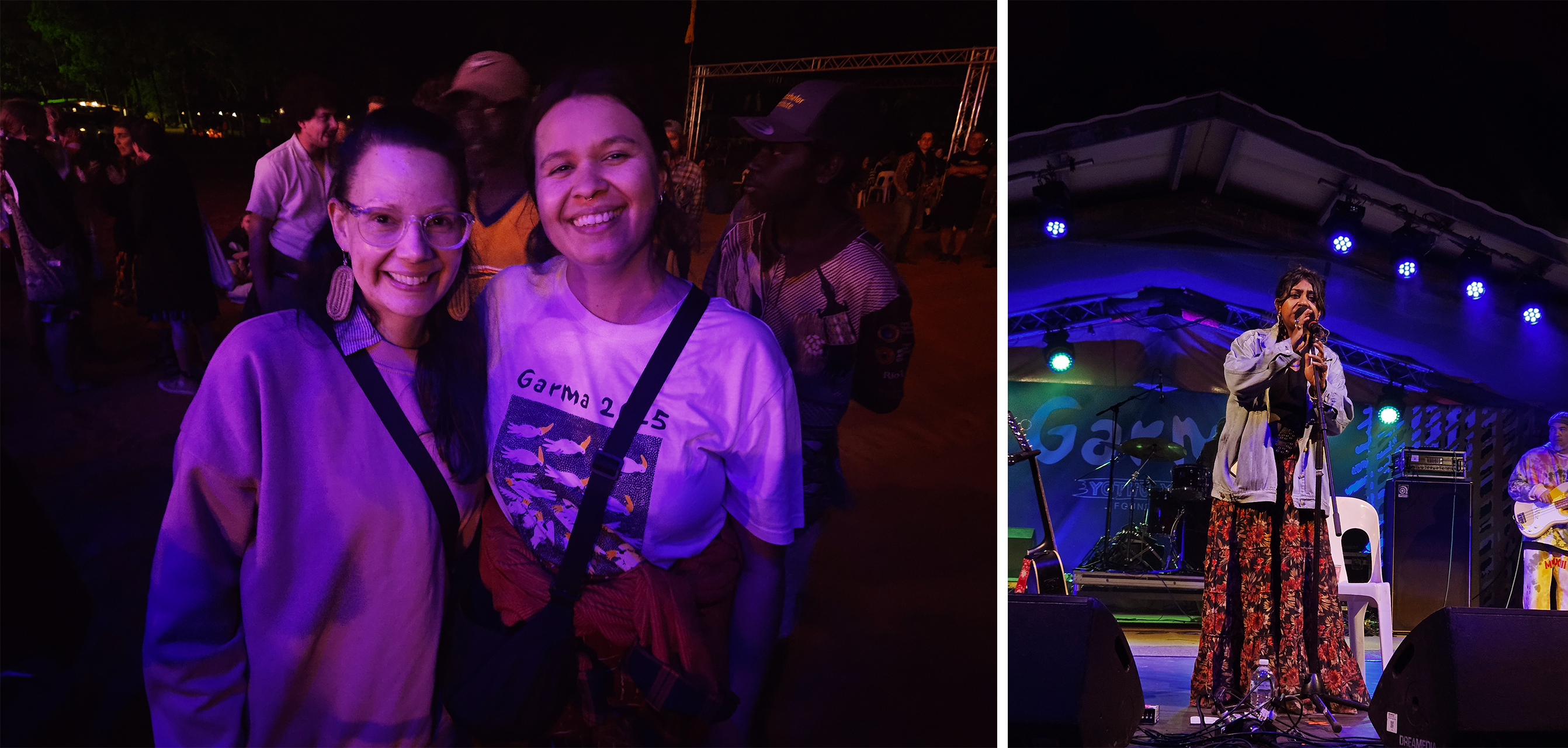
L: Melody Broome and Makkaillah Ridgewa. R: Emily Wurramara on the main stage.
The documentary finished just in time for the last part of Xavier Rudd’s set on the mainstage. I made it for the last song and as the crowd dispersed, I spotted a few familiar faces, and we caught up before Emily Wurramara took the stage. Emily was incredible and has such a powerful voice, and not just vocally mind you; between performing songs she spoke about mental health, family, motherhood, culture and politics. After her last song, we made meaningful farewells and reflected on the joy of connecting and forging friendships over such a magical experience.
Day 4
Another early morning of queuing secured me a spot on an afternoon bush walk; I had learned my lesson from the day before and brought a book along to pass the hour. The walk was beautiful, we dipped down into the valley and the rangers taught us about the local bush medicine and which plants are used to make tools, didgeridoos and weapons.
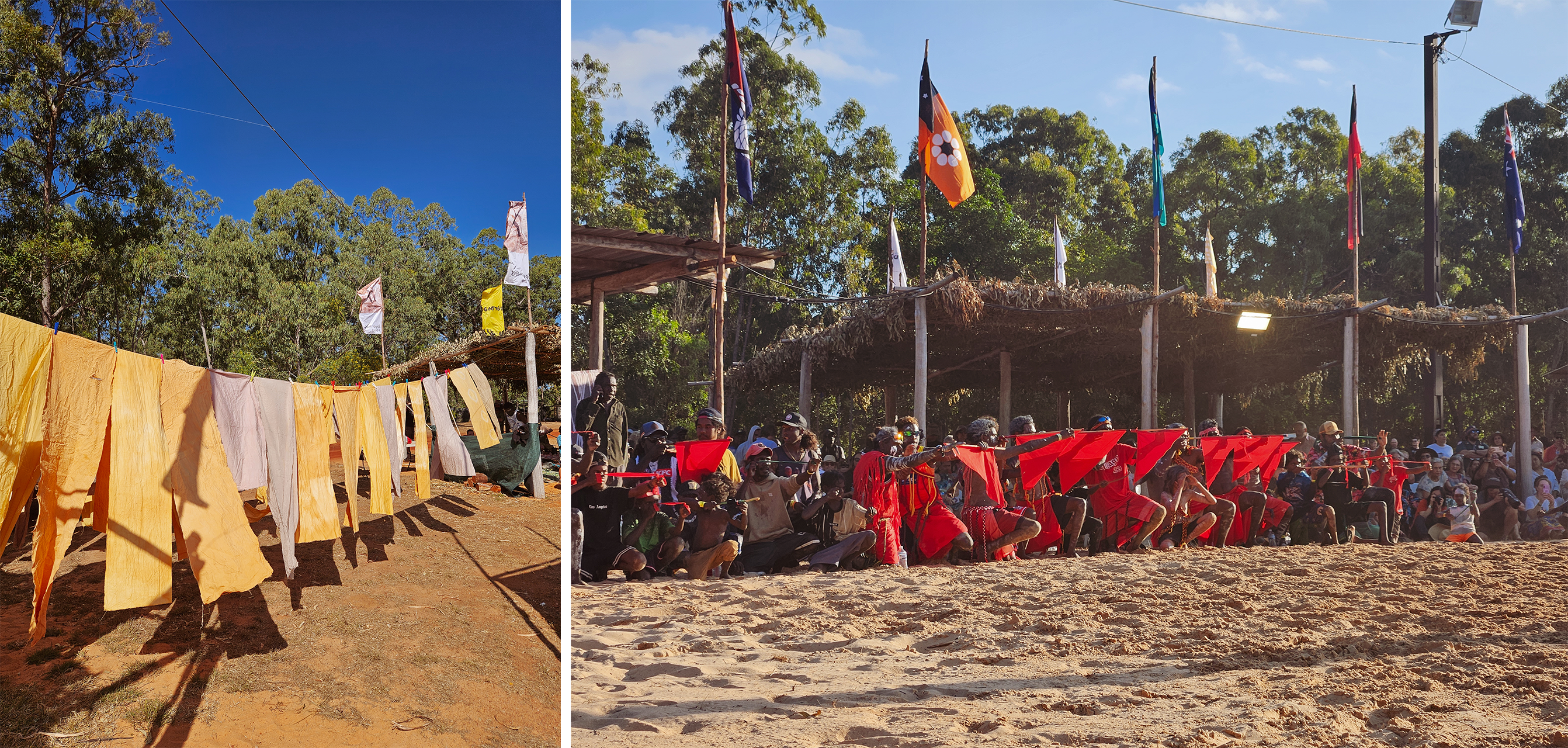
L: Dyed fabric drying in the sun. R: Closing Ceremony.
The walk was followed up by a lap around the ceremonial grounds, which were lined with a number of cultural activities where you could sit down and paint, create, dye fabric or learn about local foods and bush medicine. I started with jewellery making and worked on a shell and seed necklace under the guidance of an Aunty, she had gathered all the shells from down on the beach and was piercing them with a nail so that they could be threaded onto earrings, bracelets and necklaces. I ended up spending a while here yarning with Aunty, helping her pierce shells and teaching others how to start their pieces. At midday, I listened to a talk on bush medicine and tried a few new foods. After the talk, they handed out stringybark tea and gave head massages using the ’big leaf’. The next stall was teaching how to dye fabric with plants and proved to be another great activity to sit down and yarn as you knotted your fabric; the two colours to choose from were a vibrant yellow and a rich brown. Once dyed, the material was hung out in the sun and took little to no time to dry in the heat.
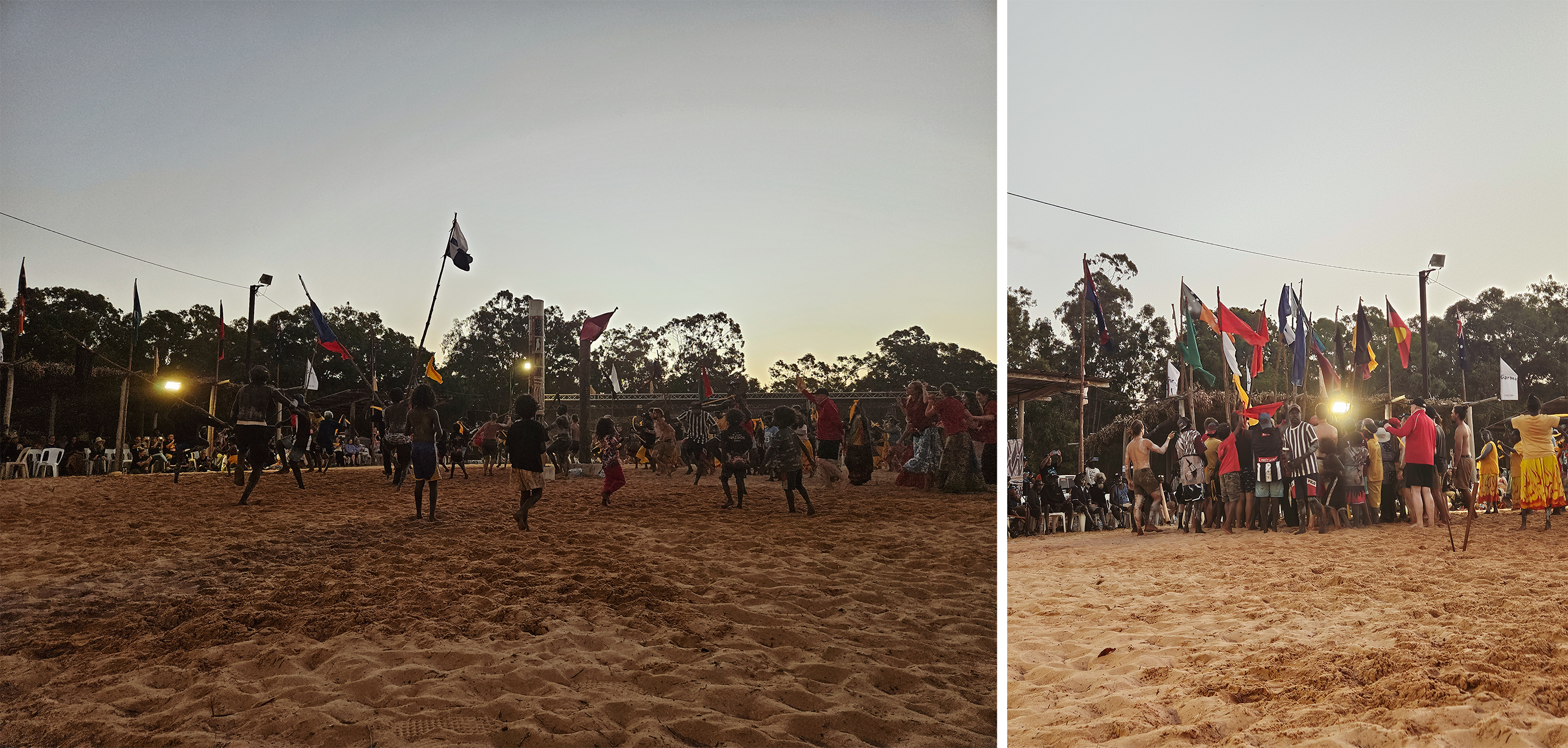
Flags coming down at the Closing Ceremony
4pm rolled around, and it was time for the closing ceremony. We watched and participated in a few dances, and towards the end, as the sun was setting, the clan flags were taken down, bringing the performances to a close.
‘Big Name, No Blankets’ performed again, and the crowd loved it. Many people had left earlier that day, so the audience was mostly local mob and maybe a fifth of the festival attendees from the previous days. If you ever get the chance to see this show live, I highly recommend it! It details the story of the Warumpi Band and is heartfelt, deadly funny and moving. The frontman of the Wurumpi band was George Burarrwanga, a Yolngu man who grew up on Elcho Island. I was lucky to have met the stage manager, and she shared how special it was to be finishing their show run up here for Yolngu people and the family members of Burarrwanga. The stage performers and band were amazing; the lead guitarist and drummer were both sons of Sammy Butcher (founding member of the Wurumpi Band).
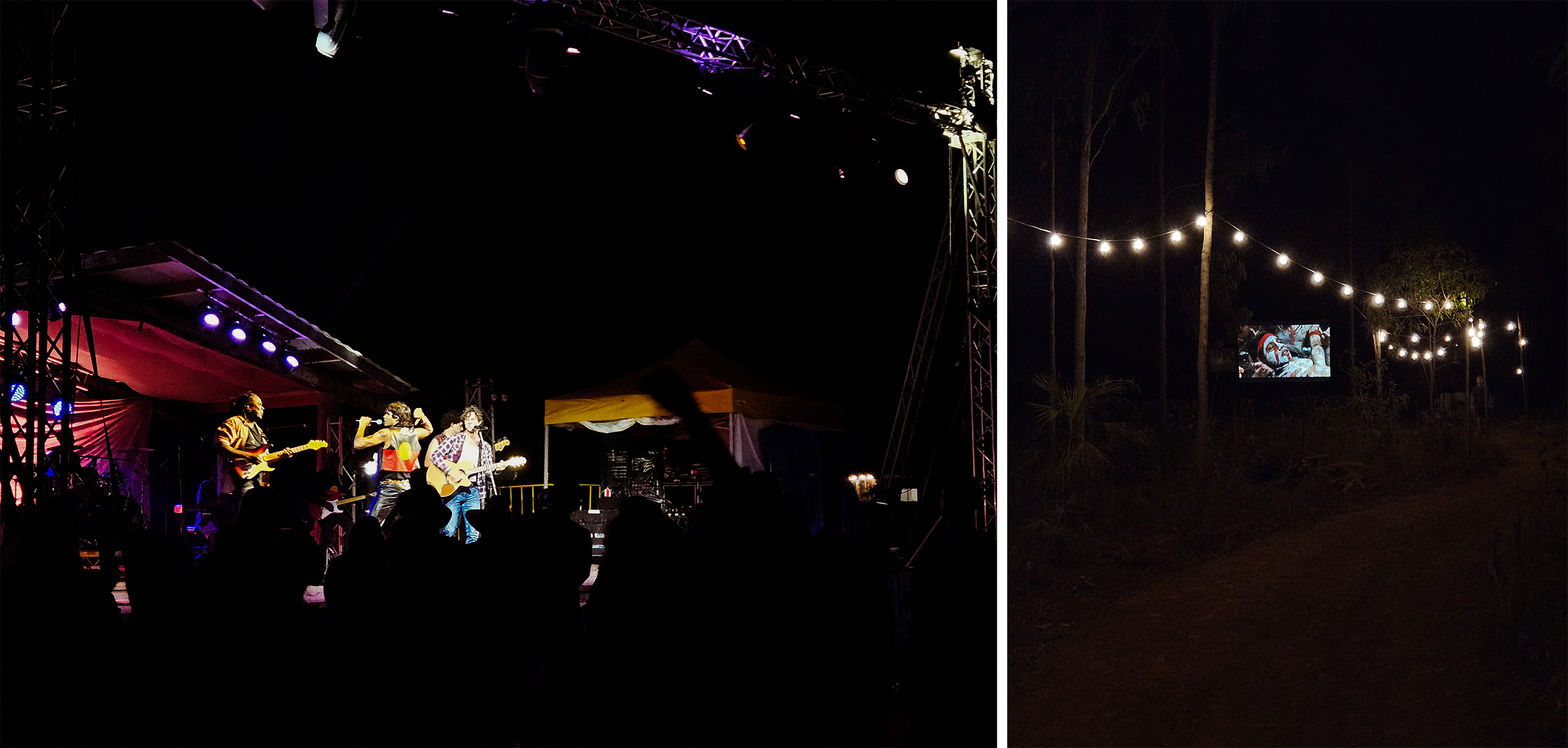
L: Big Names, No Blankets on the main stage. R: Cinema under the stars.
The cinema was screening a few short films and a feature (Black As, 2016), so I happily made myself at home there for a while before heading back to my tent to pack for the journey back home in the morning.
Conclusions
Travelling back home was relatively quick, with a short stopover in Cairns; I was saddened to be returning to the cooler weather of Melbourne, but also incredibly grateful to have had the experiences of the last 5 days. When people say that you should go to Garma if you ever get the chance and that it is a lifechanging experience, my verdict is that you should take their advice. I can wholeheartedly say that attending this festival was one of the best things I have had the opportunity to do in my career so far, and that I think it will be exceptionally hard to top.
The Yolngu are a strong and powerful people, and spending time on their country and learning about how they manage the challenges that face them, what self-determination looks like for them, and how generous they are in sharing their culture is inspiring. Being immersed in song, dance, art, stories and language throughout each day is unlike anything I have ever experienced. As an Indigenous woman, this constant throughout my time at Garma nurtured a welcoming space where I could contemplate how these learnings could be applied in my life and my work as a public health practitioner; specifically in empowering and building long lasting equity for our mob to enjoy greater health outcomes and to thrive in our connections to culture, community and country.
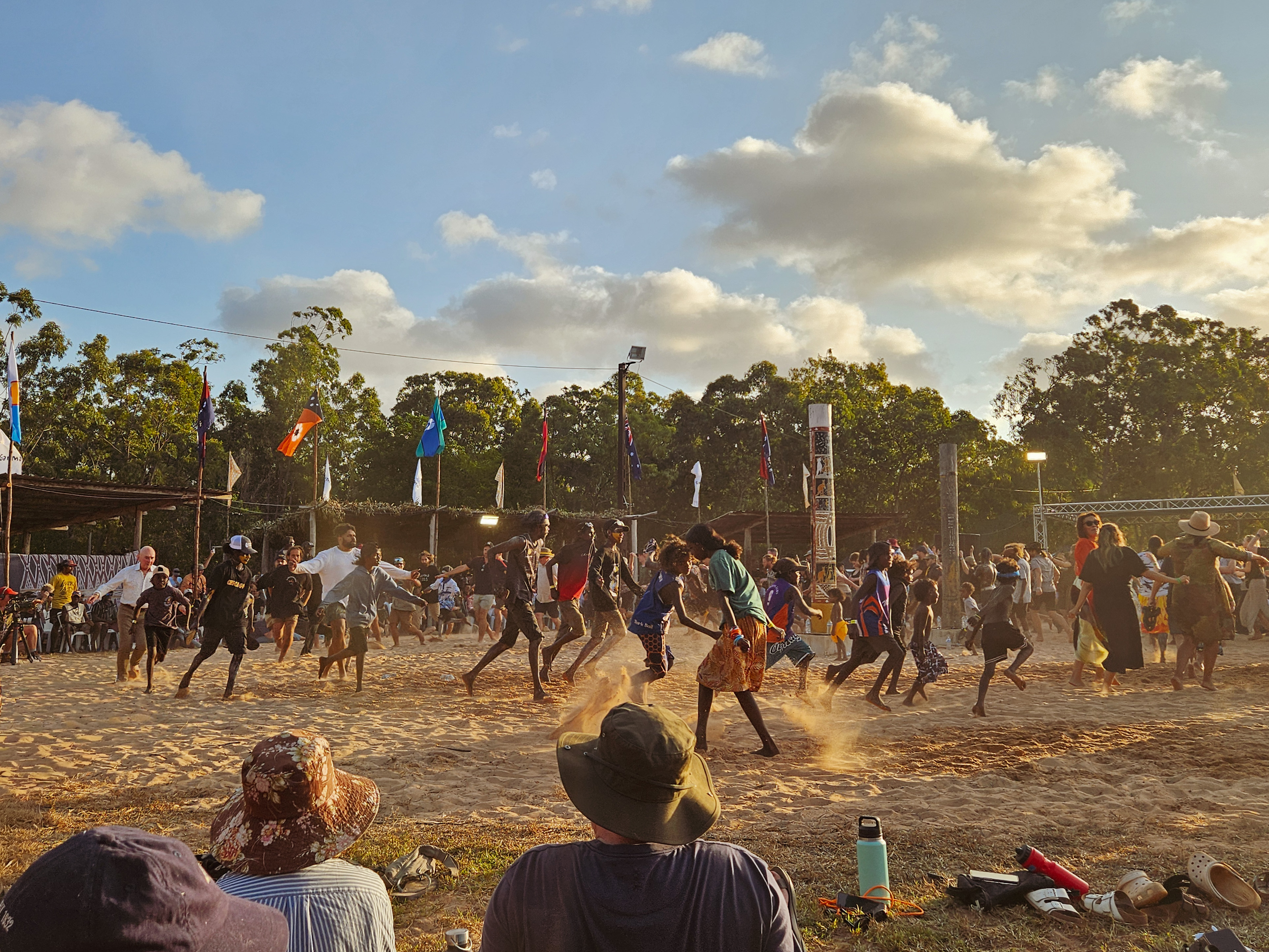
Aeroplane dance on ceremonial grounds
This trip was made possible by funding awarded through the University of Melbourne's 2025 Indigenous Student Success Grant and Minum. Barreng.