Deadly Vision Centre, supported by Minum Barreng, spotlights eye health at NAATSIHWP Symposium 2025
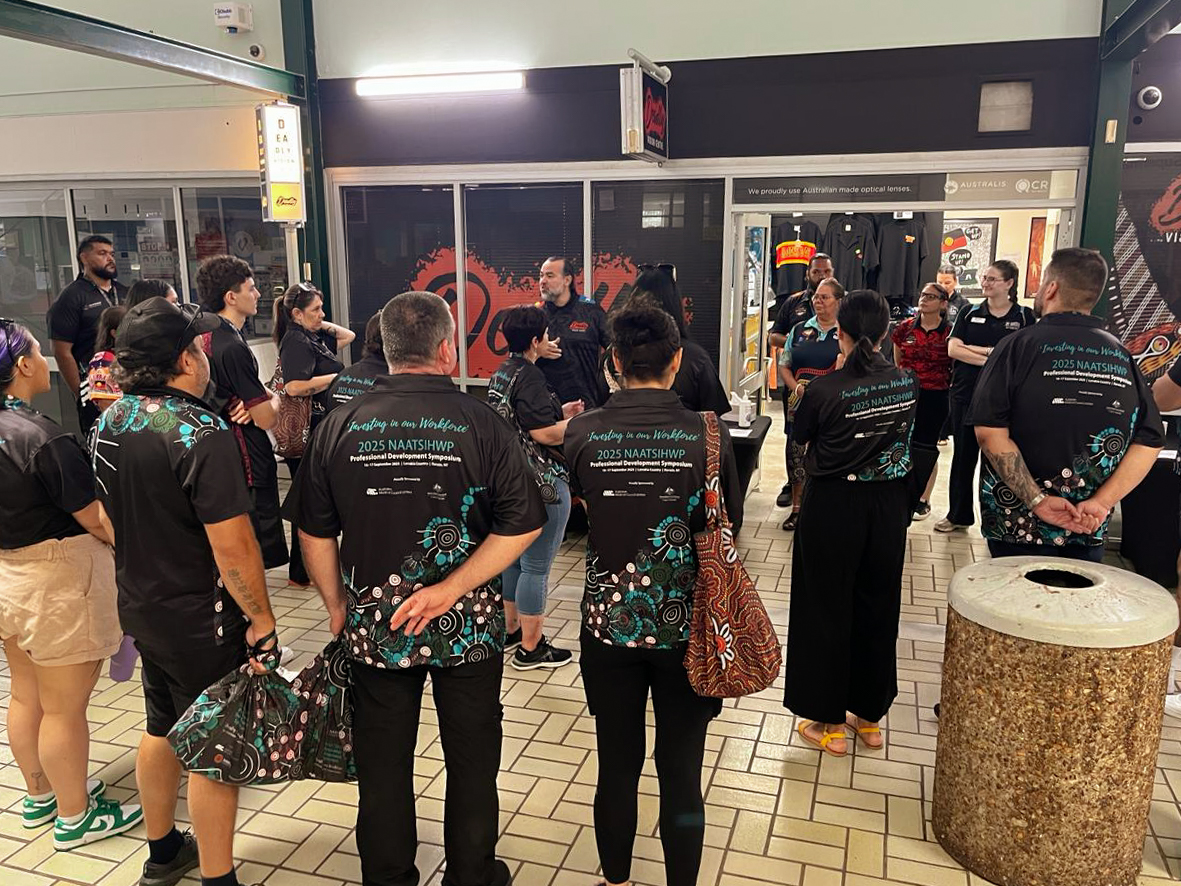
Shaun Tatipata speaking to NAATSIHWP Delegates outside the Deadly Vision Centre
The 2025 NAATSIHWP Professional Development Symposium, Investing in our Workforce, brought together over 130 Aboriginal and Torres Strait Islander Health Workers and Practitioners (ATSIHW/Ps) from across the country at the Darwin Convention Centre on Larrakia Country from 15 - 17 September.
Held every two years, the symposium limits delegates to enable a strong workshop focus. This year, four interactive workshops were offered - vision and eye health at the Deadly Vision Centre, point-of-care testing, wound care, and ECG. All delegates rotated through each session, making for two days filled with fun, learning, and sharing. ATSIHW/Ps came away inspired to do more in eye health, while two University of Western Australia (UWA) optometry students built confidence in their knowledge and skills just in time for exams!
The Deadly Vision Centre, Australia’s first Aboriginal-owned optical and eye care provider, was established under Shaun Tatipata’s leadership and stands as a strong example of the role ATSIHW/Ps play in eye health. With more than 20 years’ experience as an Aboriginal Health Practitioner, Shaun continues to provide leadership and inspiration through the Centre’s work.
Delegates were bused from the Convention Centre to the Deadly Vision Centre in Winnellie (next door to the much-loved Salty Plum shop!), where Minum Barreng: Indigenous Eye Health Unit’s Lesley Martin and Mitchell Anjou joined the incredible Deadly Vision Centre team led by Shaun, to deliver Deadly Vision: Leading Eye Health in Our Communities. This hands-on workshop equipped delegates with practical skills to assess vision, screen for diabetic retinopathy, carry out basic optical dispensing, and promote eye health within their communities.
The workshop featured five interactive stations:
- Visual acuity - measuring distance and near vision, and interpreting results
- Retinal photography 1 - explaining diabetic retinal screening and how often patients with diabetes should have an eye check
- Retinal photography 2 - capturing retinal images and recognising normal anatomy on fundus images
- Optical dispensing - performing basic frame adjustments and measuring interpupillary distance (PD)
- Health promotion and 715 eye checks - identifying and using resources to explain eye conditions and support the delivery of eye checks in routine care
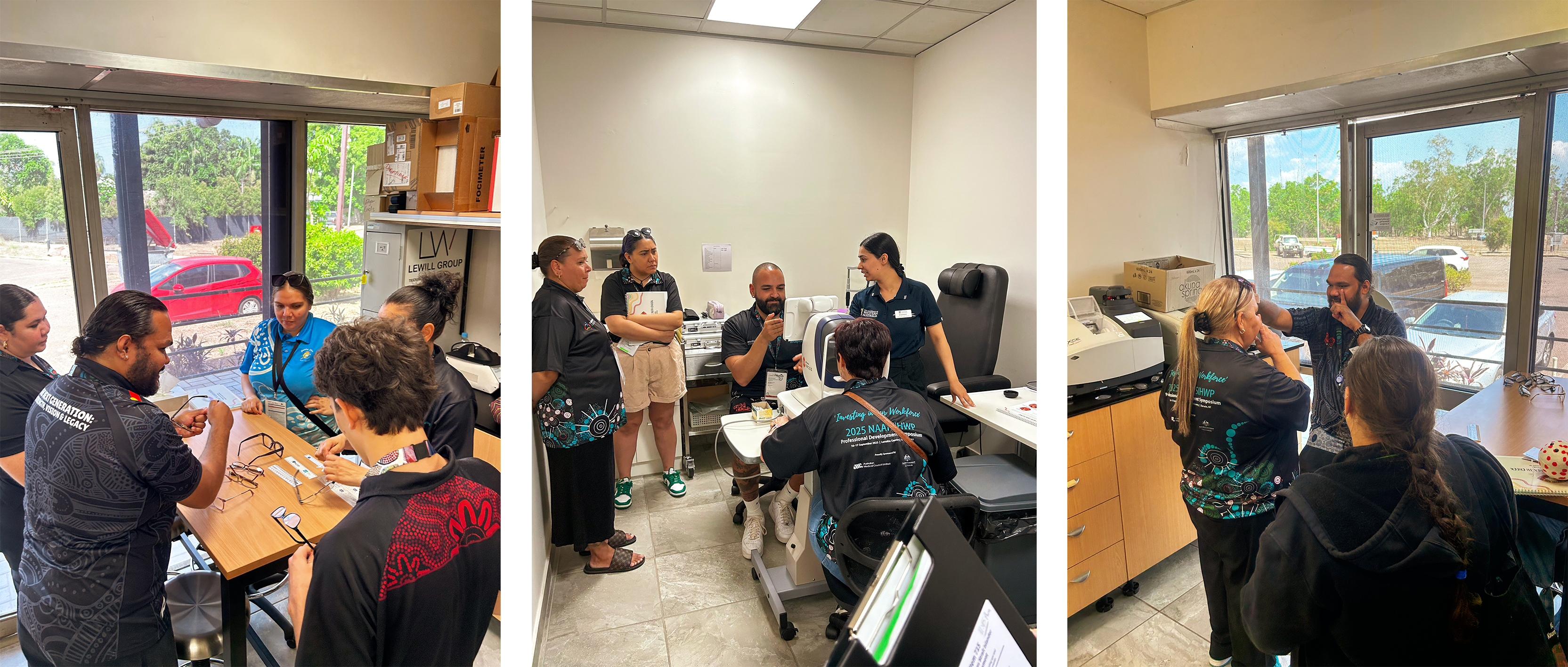
L: Anthony Lyons speaking to delegates about frame adjustment. C: Shahnaz Rind demonstrating retinal camera use. R: Anthony Lyons showing inter-pupillary distance measurement (PD). (Image Sources: The Deadly Vision Centre)
The stations were delivered by a strong, multidisciplinary team including Shaun Tatipata, Kat Cox (Aboriginal Eye Health Worker), Anthony Lyons (Aboriginal Eye Health Worker), Nicola Anstice (Professor and Optometrist), Belinda Tatipata (Executive Officer) and Shahnaz Rind and Julia Dymond (UWA optometry students) alongside Minum Barreng’s Lesley Martin (Health Promotion and Community Engagement Officer) and Mitchell Anjou (Associate Professor and Optometrist).
Shaun’s vision was to create a service that not only delivers culturally safe and socially responsive eye care but also inspires and strengthens the Aboriginal and Torres Strait Islander health workforce. The interactive stations at the symposium reflected this vision in action. The Deadly Vision Centre works to provide access to affordable, appropriate and fashionable (Deadly) eyewear and to improve coordination of care and system navigation for Aboriginal and Torres Strait Islander people at risk of vision loss. Today, it operates both as a trusted community service hub and a training ground for the next generation of practitioners and leaders.
The Deadly Vision Workshop was designed to put practical, hands-on eye care skills directly into the hands of Aboriginal and Torres Strait Islander Health Workers and Practitioners. It’s about equipping our community workforce with the tools and confidence to lead the way in protecting our Mob’s sight
- Shaun Tatipata, Director and Aboriginal Health Practitioner, Deadly Vision Centre
A key feature of the Health Promotion and 715 eye checks station, led by Lesley and Mitchell, was the new ‘Your Eyes and 715 Health Check’ flipchart - a practical tool developed by Minum Barreng to support ATSIHW/Ps in embedding eye care into the annual MBS 715 Health Check.
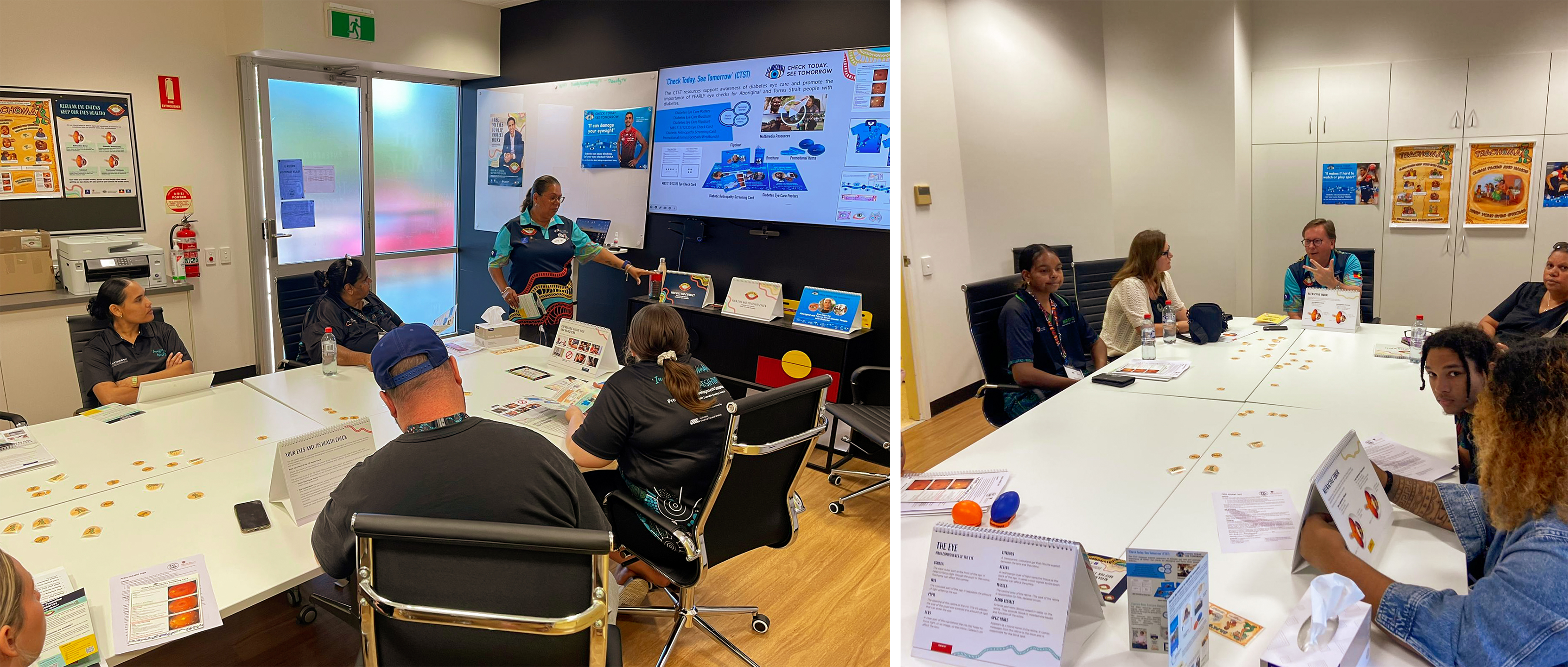
L-R: Lesley Martin and Mitchell Anjou speaking about health promotion resources.
Delegates also received practical tools from Minum Barreng to take back to their communities, including the flipchart, diabetic retinopathy screening cards, and MBS 715/12325 quick reference cards.
Delegates explored how to:
- Explain the importance of eye checks as part of routine 715 Health Checks
- Identify the signs and symptoms of the four main eye conditions that require referral - refractive error, cataract, diabetic retinopathy and trachoma/trichiasis
- Make use of health promotion resources and recognise opportunities for ATSIHW/Ps to strengthen eye health promotion in their communities
There was strong enthusiasm for the flipchart, with participants recognising its value in everyday consultations and its ease of use to ask simple but important questions: Can you see clearly at both near and far distances? Do you have diabetes? Are your eyes comfortable? The tools supported efficient vision assessments - from measuring visual acuity to checking for signs and symptoms of the main eye conditions.
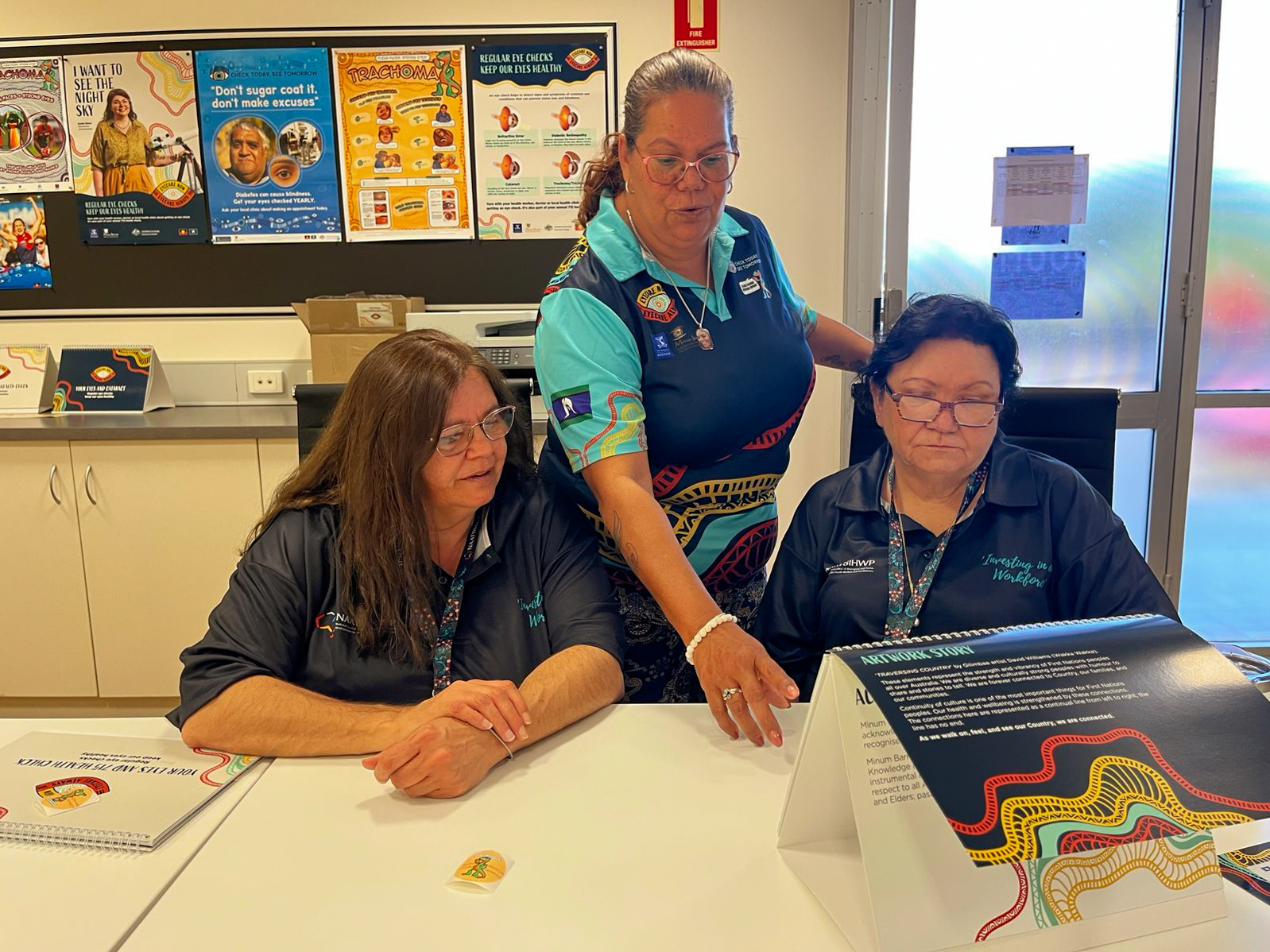
Lesley Martin yarning with delegates about the new ‘Your Eyes and 715 Health Check’ flipchart
The new flipchart is easy to use and helps Health Workers talk about eyes, check vision, and know when someone needs to see the eye doctor. It was great to see everyone so interested in it
- Lesley Martin, Health Promotion and Community Engagement Officer, Minum Barreng
Delegates came from across Australia, including Indigenous Allied Health Australia (IAHA) trainees and students. Many expressed enthusiasm not only for the clinical skills but also for the free health promotion resources, which they already integrate into their roles as ATSIHW/Ps.
As NAATSIHWP highlighted on their social media: ‘Sessions like the Deadly Vision Centre, led by Shaun Tatipata, are integral to building the skills of Aboriginal and Torres Strait Islander Health Workers and Practitioners across clinical and community care’.
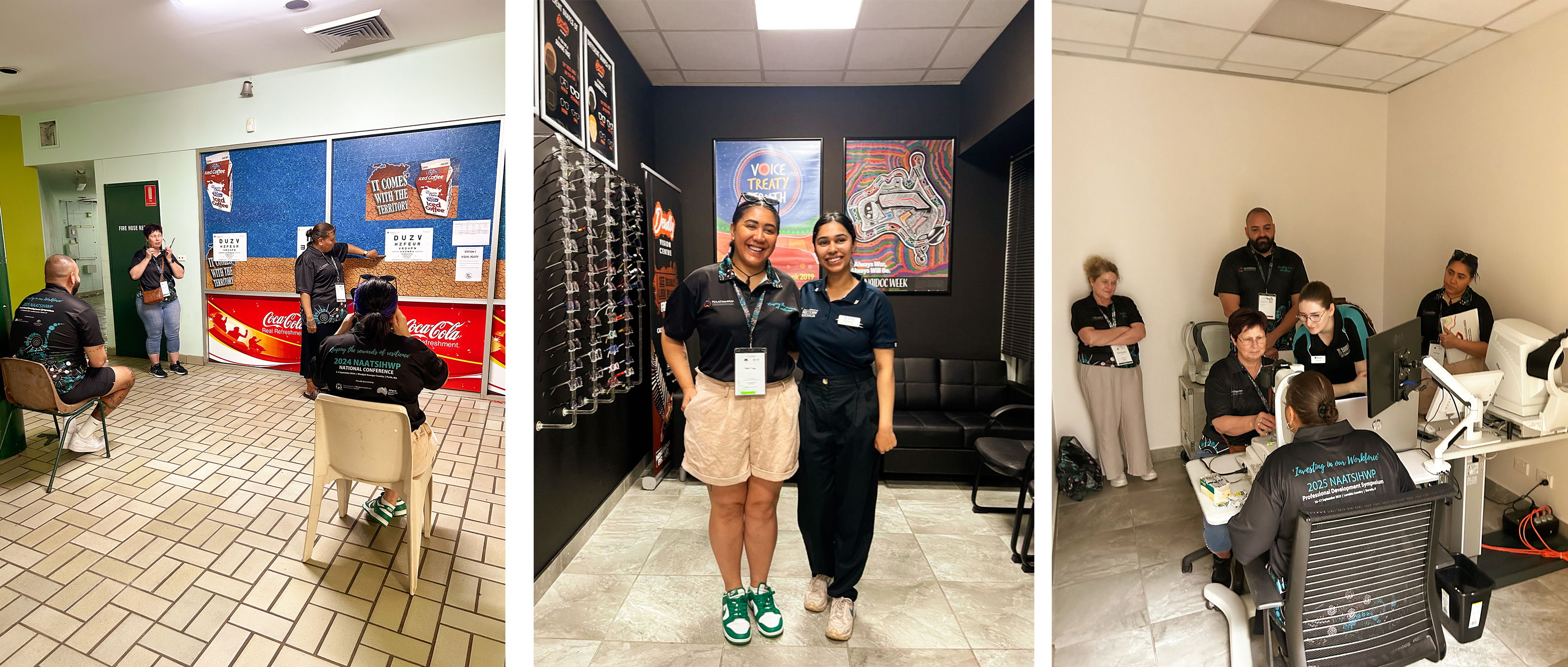
L: Delegates practising visual acuity measurement. C: Shahnaz Rind and delegate in the Deadly Vision Centre. R: Julia Dymond instructing delegates in retinal camera use. (Image Sources: The Deadly Vision Centre)
By combining visual acuity testing, retinal photography, optical dispensing, and culturally relevant health promotion, the sessions reinforced the power of Aboriginal and Torres Strait Islander workforce-led care. The spotlight on the Your Eyes and 715 Health Check flipchart showed how simple, effective resources can help focus efforts and strengthen the delivery of eye care within primary care.
Well done to everyone involved - a Deadly team effort!
For more information about the Deadly Vision Centre, visit https://www.deadly.health or email Shaun Tatipata (Director and Aboriginal Health Practitioner) at shaun@deadly.health.
To order free health promotion resources and tools, visit Minum Barreng: Indigenous Eye Health Unit here or email Indigenous-EyeHealth@unimelb.edu.au.