Australia Eliminates Trachoma as a Public Health Problem
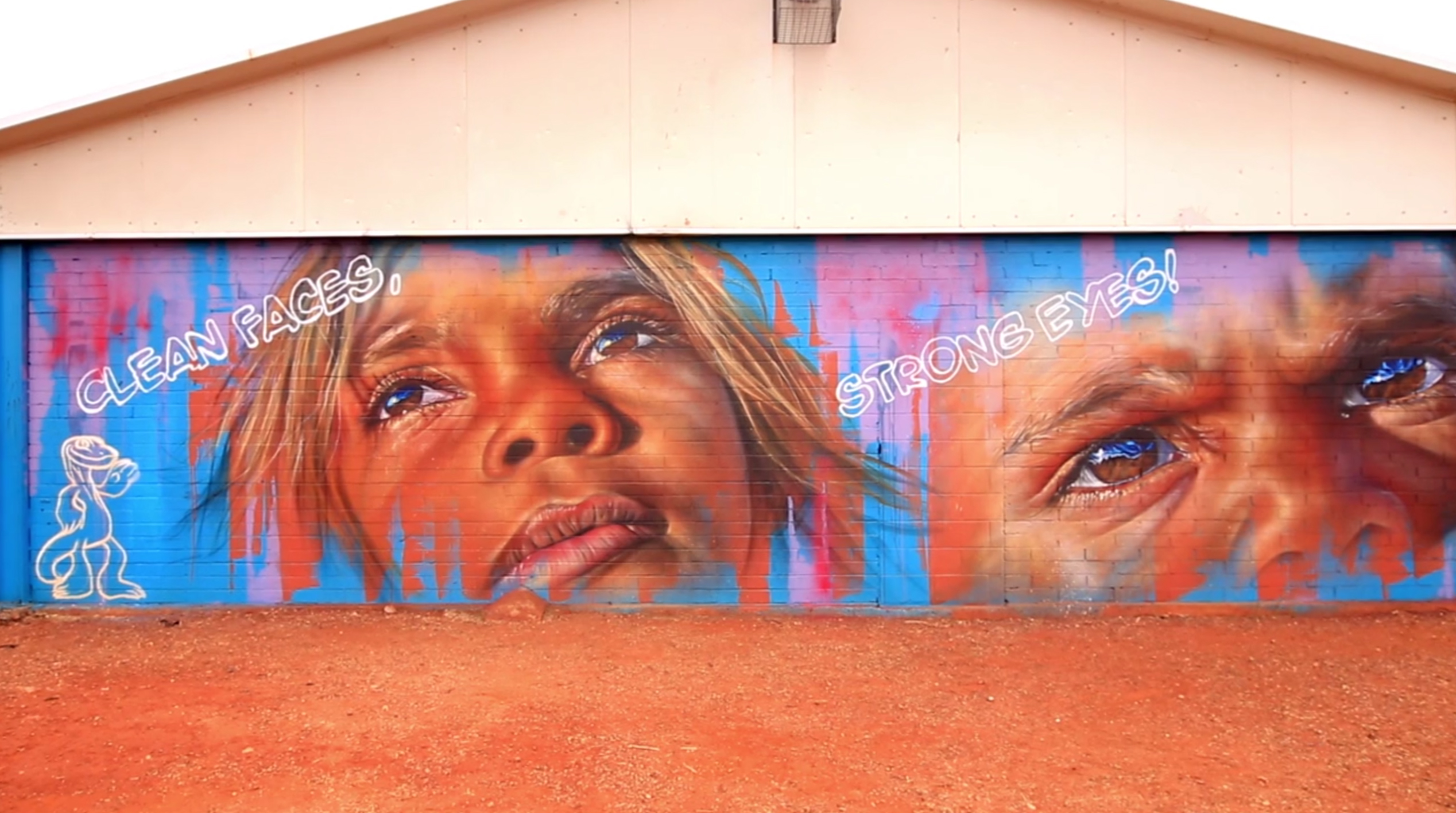
Community mural "Clean Faces, Strong Eyes" by Adnate, Warburton, Western Australia, 2016
Minum Barreng is delighted to share the recent announcement (29 April 2026) from the World Health Organisation (WHO) that trachoma has been eliminated as a public health problem in Australia.
This milestone celebrates Australia as the 30th country globally to have eliminated trachoma. Trachoma remains the leading cause of infectious blindness in the world, is endemic in 29 countries and responsible for the vision impairment or blindness of about 1.9 million people.
WHO validation of elimination as a public health problem does not mean that trachoma has disappeared in Australia. Ongoing prevention remains critical to ensure that it does not return above WHO thresholds. As such, a continued focus on the successful SAFE strategy (S for surgery; A for antibiotics; F for facial cleanliness; E for environmental improvements) is essential.
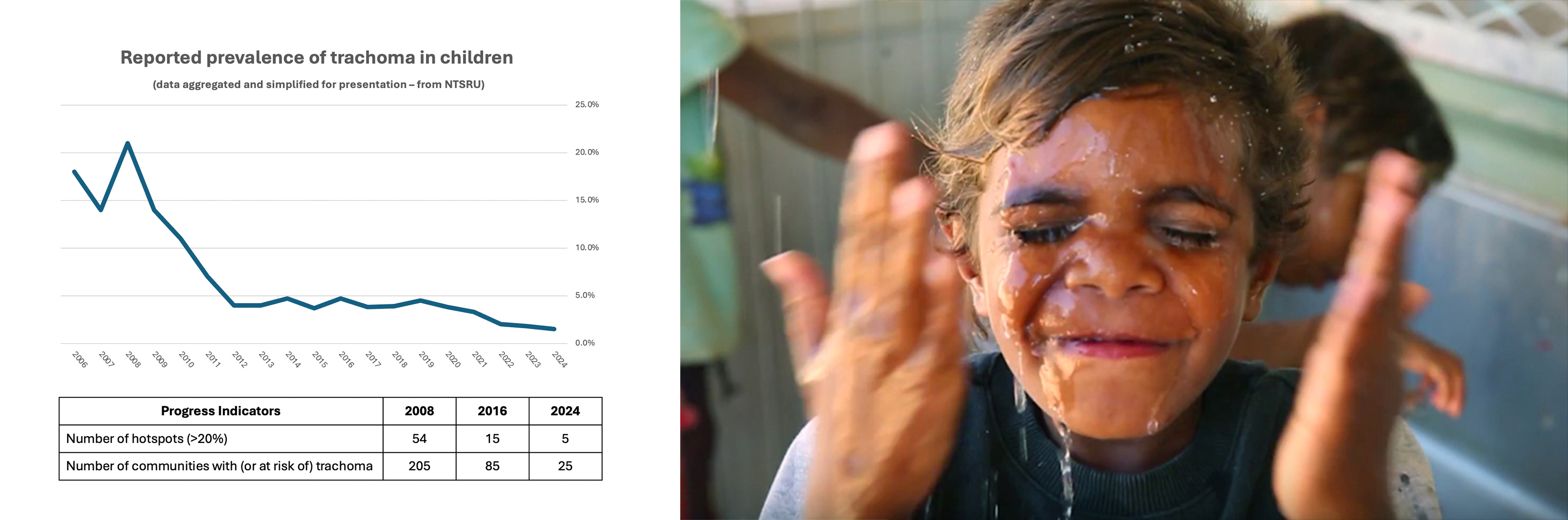
L: Reported prevalence of trachoma in children from 2006-2024; R: Face washing, Oak Valley, South Australia, 2016
The achievement belongs first and foremost to Aboriginal and Torres Strait Islander communities, whose leadership, knowledge and commitment have driven change over many years. Community-controlled health organisations, governments and partners have worked alongside communities to strengthen systems, reinforce the importance of community-led approaches and support the conditions needed for good health. The focus now turns to sustaining these gains – through prevention, surveillance and continued investment in environmental health and primary care.
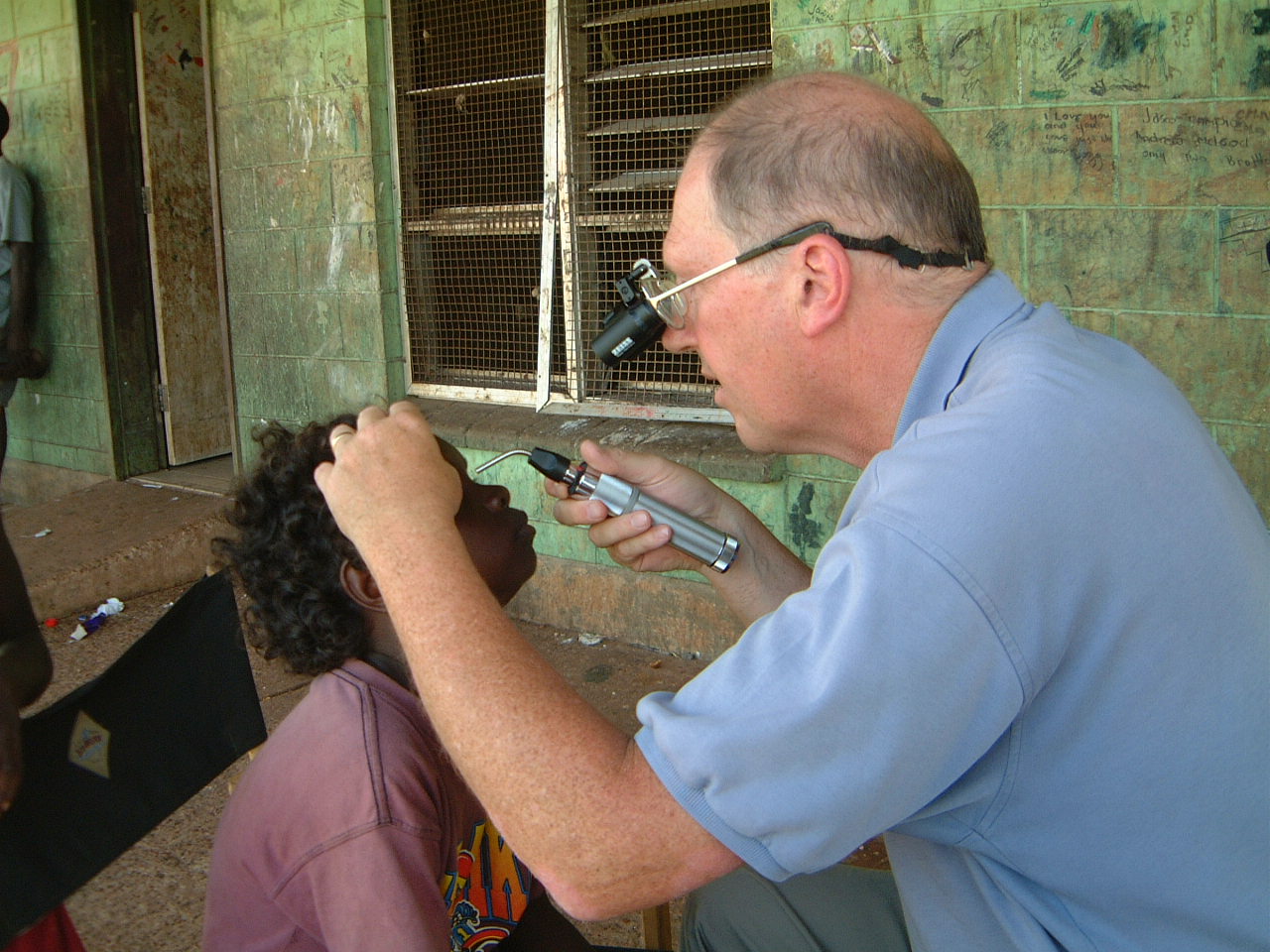
Prof. Hugh Taylor examining a child for trachoma, Katherine region, Northern Territory, 2008
Professor Hugh Taylor who established and led Minum Barreng: Indigenous Eye Health Unit from 2008 to 2022 and was the CEO of Centre for Eye Research Australia for the early national trachoma surveys and reports (2006 to 2008) has provided a brief reflection on trachoma in Australia to mark this milestone. Hugh has been a champion of Australia’s trachoma elimination efforts and has been a significant contributor to trachoma elimination worldwide for over 50 years.
What a great achievement for all those involved and for the communities themselves. The way ahead now requires ongoing monitoring of the potential recrudescence of trachoma, the possible need for more antibiotic treatment and the detection and referral of any cases of trichiasis. Most importantly of all will be the maintenance of high rates of facial cleanliness and the availability of safe and functional washing facilities and bathrooms - Prof. Hugh Taylor
From the early days in 2008, Minum Barreng’s health promotion work in trachoma was supported and guided through community engagement and voice. The Katherine West Health Board Aboriginal Corporation and the Ngumbin Reference Group played a critical role, advising us to ‘tell it straight’ - to be clear and direct about trachoma, its causes, and how to prevent it. This guidance helped shape the national health promotion resources Clean Faces, Strong Eyes.
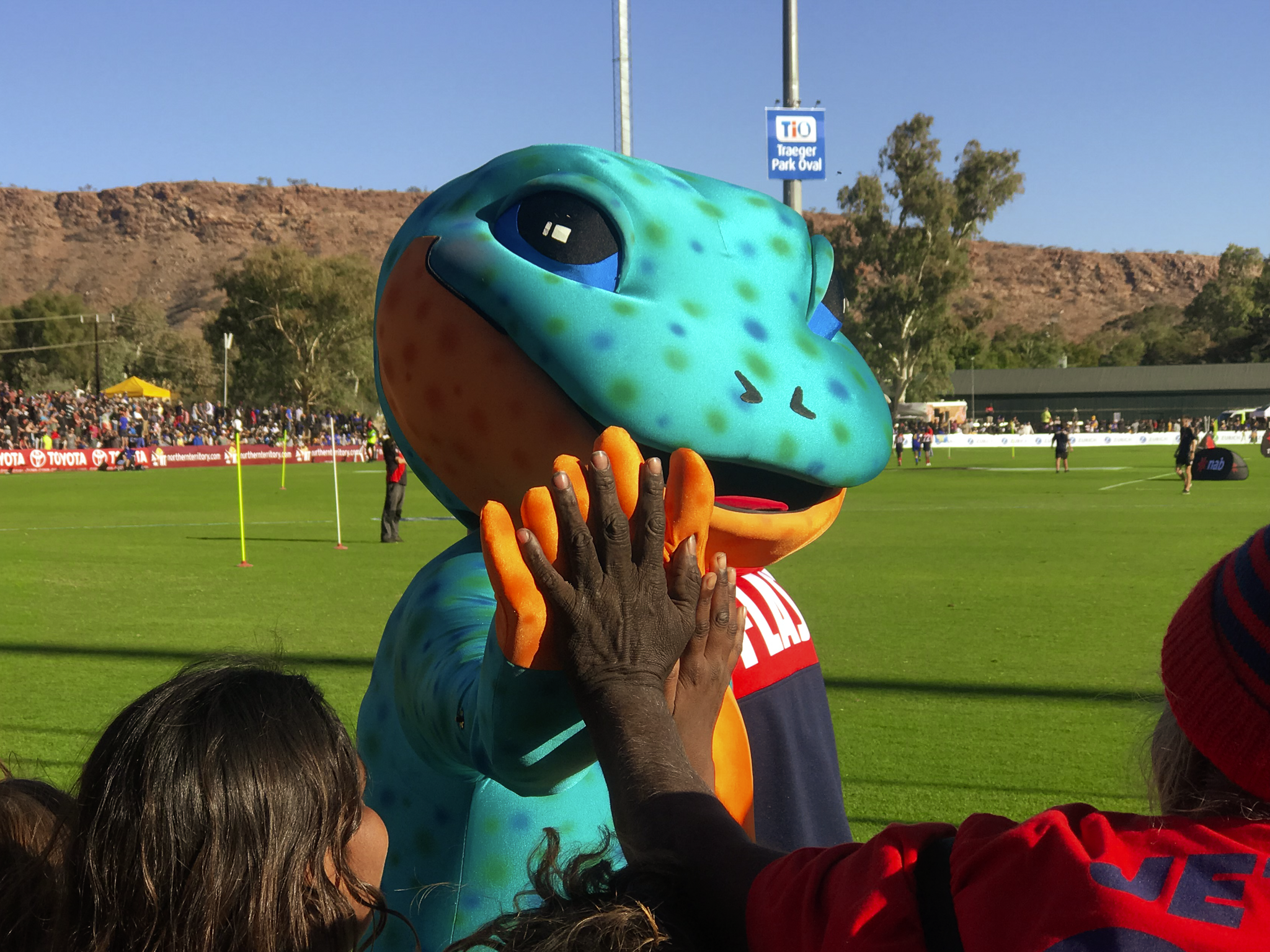
Milpa high-fives at Melbourne Football Club (MFC) match at Traeger Park, Alice Springs, Northern Territory, 2019
A defining feature of Australia’s trachoma response has been Milpa, centred around a much-loved goanna and the messages within: Clean Faces, Strong Eyes, and later, Milpa’s Six Steps to Stop Germs. Milpa has become part of community life.
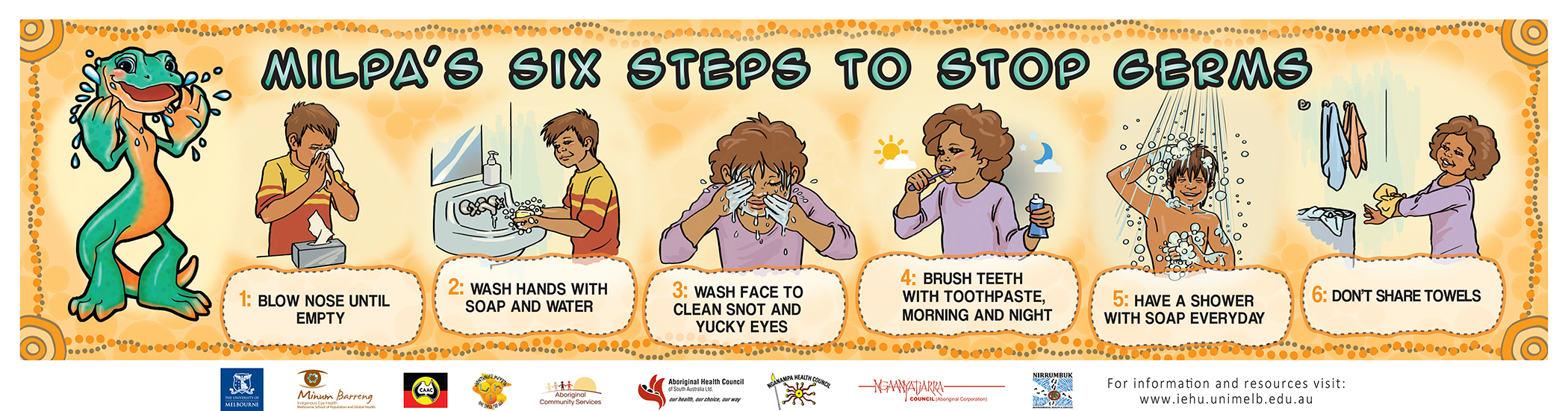
Milpa's Six Steps to Stop Germs Resource
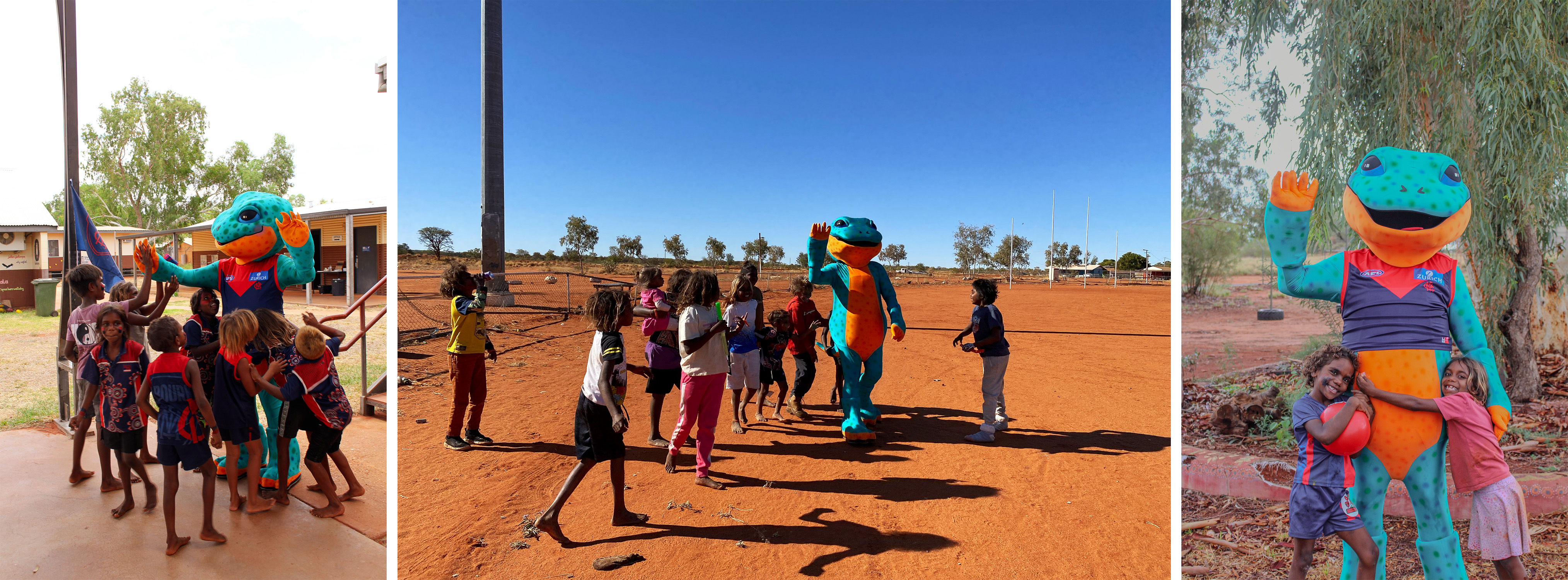
L: Milpa with the kids visiting with MFC, Nyirripi, Northern Territory, 2024; C: Milpa in Community, Yuendumu, Northern Territory, 2022; R: Milpa with the kids visiting with MFC, Nyirripi, Northern Territory, 2025
Through posters, radio and TV ads, murals, music videos, school activities, football clinics, and community events, Milpa helped bring important health messages into everyday settings. These messages were also shared widely through trusted media and partnerships, including community television with IMPARJA, ICTV and radio through CAAMA Radio. Community engagement with Milpa was further strengthened through partnerships such as the Melbourne Football Club, connecting health messages with sport, culture, and young people. Rotary and the Fred Hollows Foundation have also been important partners.

L: Lesley Martin with the kids in Papunya, Northern Territory, 2026; C: Nick Wilson, Lesley Martin and Walter Bathern, Mutitjulu, Northern Territory, 2022; R: Milpa and Lesley Martin, Nyirripi, Northern Territory, 2024
Lesley Martin, Community Engagement Officer employed at Minum Barreng since 2019 (and before that with Australian Trachoma Alliance), reflects on her experiences in community supporting trachoma elimination efforts.
As the Milpa car arrives in community, children would run up asking ‘Where’s Milpa?’…I’ve seen a big change in kids and families. Kids are smiling. They get excited when they see Milpa, and so do the adults. Families have grown up with Milpa and know those messages around Clean Faces, Strong Eyes. I tell the kids best way to look after yourself is to follow Milpas Six Steps by blowing your nose, washing hands, washing faces, brushing teeth, having a shower every day and not sharing towels - Lesley Martin
For Minum Barreng, this milestone represents the culmination of long-term collaboration between communities and agencies and partners, with the support of philanthropy, the University of Melbourne and the Australian Government. Minum Barreng’s trachoma elimination activities have also been funded by BB and A Miller Foundation, MML Australia and Cybec Foundation, and previously the Harold Mitchell Foundation and Ian Potter Foundation. This support has enabled a sustained focus on health promotion, knowledge translation and national coordination.
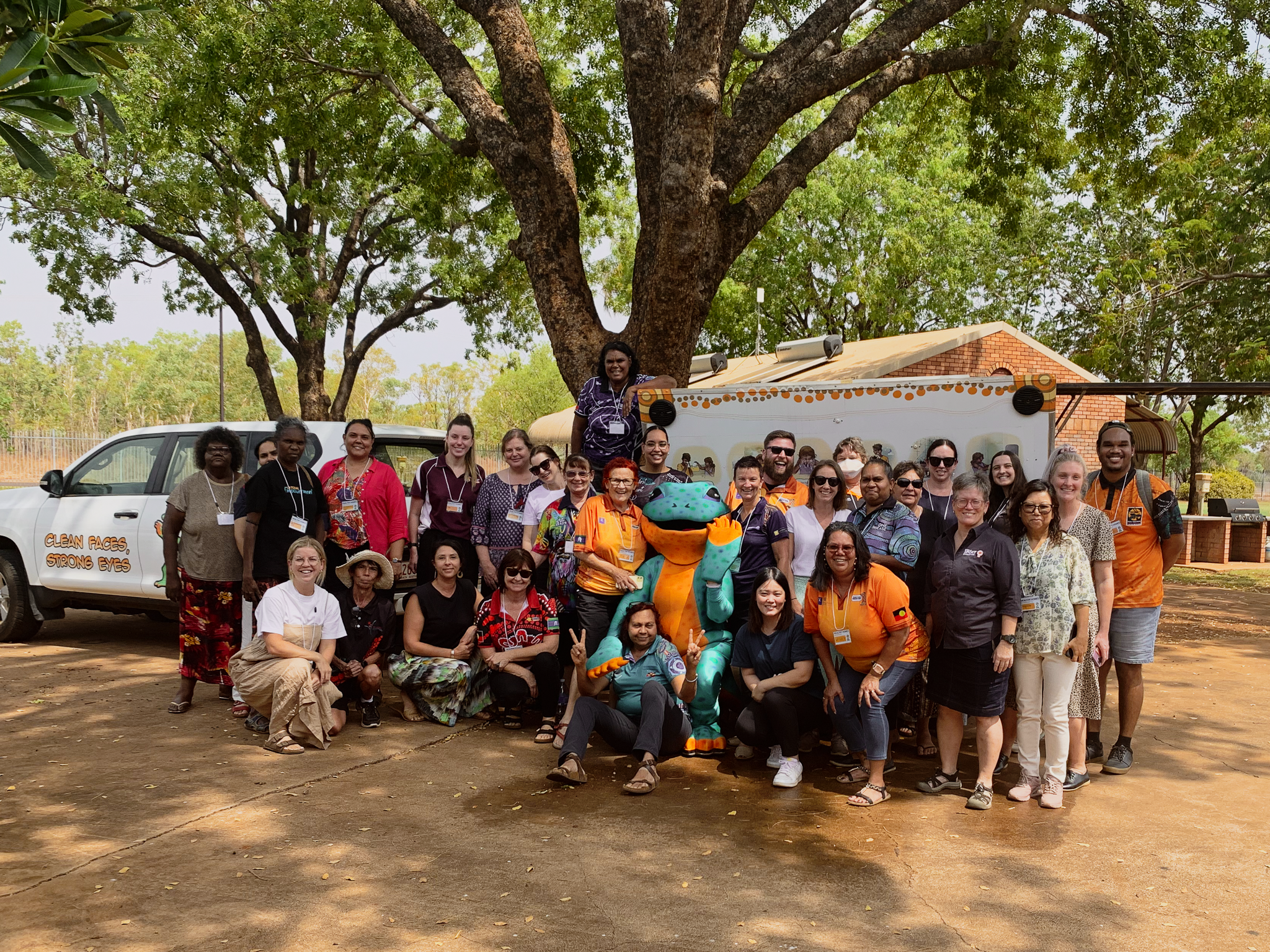
Fiona Lange, Milpa, Nick Wilson, Lesley Martin and Community with the new water trailer in Katherine, Northern Territory, 2023
Minum Barreng considers the elimination of trachoma as a public health problem in Australia as a significant milestone demonstrating the power of community leadership, long-term commitment and genuine partnership. We acknowledge and thank all those involved in this shared effort, and for the continued work required to sustain these gains.
Links
- Australia becomes 30th country to eliminate trachoma as a public health problem – World Health Organization, 29 April 2026
- Australia eliminates trachoma as a public health problem – International Coalition for Trachoma Control, 29 April 2026
- https://ministers.pmc.gov.au/mccarthy/australia-eliminates-trachoma-endemic - Australian Government, 30 April 2026