Healthy Homes Workshop
IEHU partnered with Environmental Health Trachoma Project WA and Katherine West Health board for a two day Healthy Homes Workshop, in Katherine NT.
Inadequate, crowded and poorly maintained housing is a key determinant of trachoma and other infectious disease in remote NT Aboriginal communities. These factors lead to a significant proportion of clinic and hospital attendance and a lifetime of chronic illness and disability for many. Healthy homes are essential for healthy families.
A Healthy Homes Workshop was hosted by Katherine West Health Board who invited people working with families in remote communities to better understand disease risk factors and diseases linked to homes and environmental health. Thirty participants attended including child and family support staff, Aboriginal health practitioners, remote nurses, environmental health practitioners, housing officers, nutritionists and others.
The Workshop was based on comprehensive approach taken by the Environmental Health Trachoma Project in WA. It was tailored to the NT context and included the important principle of ‘no survey without service’. The Workshop was conducted by the Environmental Health Trachoma Project WA Curtin University, Indigenous Eye Health Unit Melbourne University and Katherine West Health board. Staff from Aboriginal Community Controlled Health Services in the NT made up 83% of the participants (25/30).
Participants were fully engaged in two days of learning about the ‘healthy homes approach’ for remote NT Aboriginal communities. WA environmental health program stories provided a close look at non-functional bathrooms and working bathrooms. Interactive activities taught how to match disease risk factors with key parts of the home environment and WA.
Milpa’s Six Steps to Stop Germs resources provide culturally acceptable best practice to help reduce the burden of multiple infectious diseases. These key actions were incorporated throughout the two days, and disease specific treatments showed how to address both common and serious infections. Creating referral pathways between Health and Housing sectors was discussed and some innovative tools and resources were demonstrated.
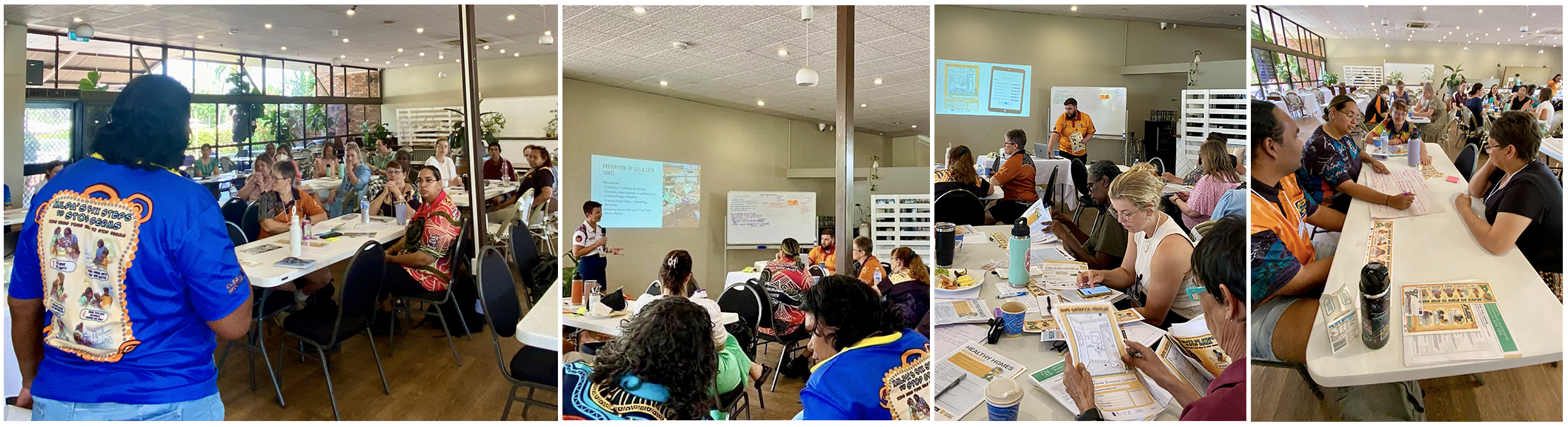
Images (L-R): Maxine Gallagher-Johns Healthy Homes Officer, KWHB welcomed everyone to the Health Homes Workshop. Dr Melissa Stoneham, Environmental Health Trachoma Project WA and Curtin University shares her wide expertise from WA. Nick Wilson Health Promotion & Community Engagement Lead Indigenous Eye Health Unit showing the Bathroom Checklist a great yarning starter. Staff in Aboriginal Community Controlled Health Services made up 83% of participants
TOPICS COVERED
- Why the Healthy Homes Approach is important to promote health
- Six Steps to Stop Germs are the key health message that go hand in hand with healthy homes
- How Six Steps to Stop Germs link to disease risk factors and diseases linked to environmental health
- Matching disease risk factors with key parts of the home environment
- Checking out the existing safe bathroom tool Healthy Home App
- Tips on how to gain entry into homes and why this is important
- The importance of yarning with tenants around the Six Steps to Stop Germs
- Tips on how to get tenants motivated to take action for hygiene behaviour change
- Healthy Home Referral Models
- Making cheap and environmentally safe cleaning products
- Health promotion ideas from participants for Hygiene Bags / Environmental & Healthy Homes Bags
- Resources available including interactive Six Steps to Stop Germs 3D Augmented Reality App
- KWHB’s Trachoma and Germ Interactive Water Trailer for health promotion demonstration
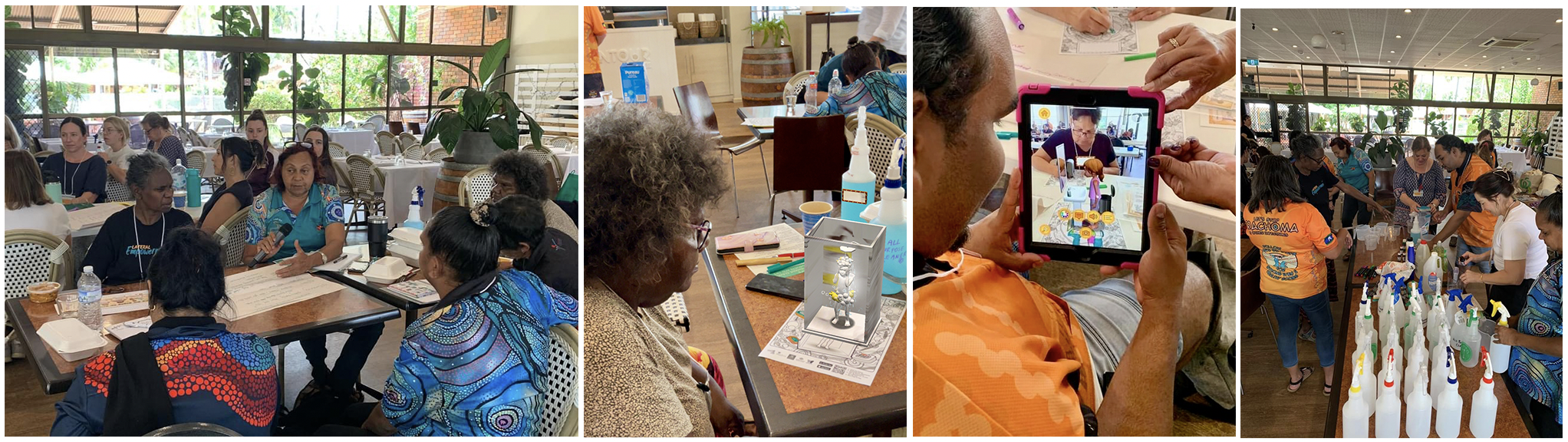
Images (L-R): Sharing local knowledge was a big highlight for everyone. Milpa’s Six Steps to Stop Germs 3D Augmented Reality App to practice for life. Interactive technology teaches how hygiene actions in a way that’s fun for kids and adults alike. Lesley Martin demonstrated home-made, safe and cheap cleaning products which were a huge hit started up fascinating bush medicine yarns.
EVALUATION
Surveys measured the effectiveness of the Healthy Homes Workshop. 80% of participants gave feedback about the relevance of workshop content and approaches to reach workshop training goals.
Over 40% of participants said the content was new and relevant for their work. A further 30% said workshop refreshed their knowledge and could help improve their work.
What participants found most relevant and interesting
- Very engaging and relevant content
- Environmental health video messages
- Healthy home referral models and tools for health hardware assessment
- Making cheap and chemical free cleaning products
- Hearing local stories and bush medicine for soap
- Tips for starting a yarn and ideas for engagement and to influence behaviour change
- Home Audits, practice sessions and sharing
- Yarning re functional health hardware when promoting healthy habits and during health checks
- Six Steps 3D Augmented Reality App Colouring App
- Swapping details and interagency networking ongoing
Other comments from participants
- Understanding helps me be able to support and encourage our mob
- Never knew about approaches to behaviour change and cues to help and empower
- Learned how important yarning with tenants it about Six Steps to Stop Germs actions
- Got tips on how to get tenants motivated for hygiene actions and good health
- Taught me a lot to be a better environmental health officer
- Very interesting to learn about existing initiatives
- Liked the simplicity in wording not big hairy complicated words
- Will definitely use the Six Steps to Stop Germs 3D Augmented Reality App to interact with families
- You mob too deadly, keep up the good work
- Some parts were repetitive and basic
Everyone loved the practical ideas and resources to start a yarn with community members and tenants. Participants were very motivated about the interactive health promotion activities and resources and shared their local ideas and innovations about what works in their communities.
The group wanted to keep in touch via an email group for resource sharing, health promotion ideas to stop trachoma and other infectious disease. There was also some interest in housing and environmental health advocacy.
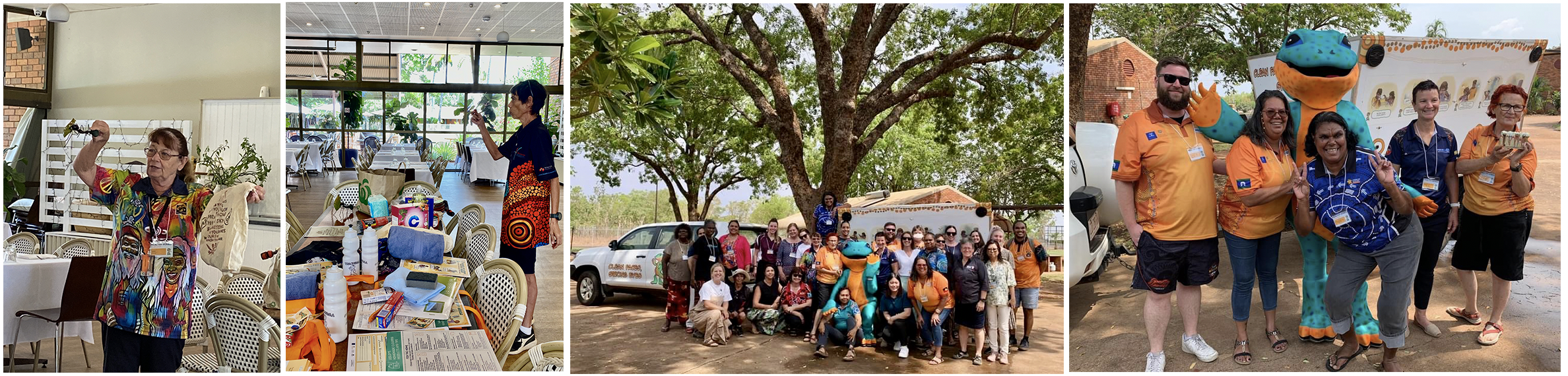
Images (L-R): Experienced health workers incorporate local culture and dreaming stories in Health Promotion resources. The vast expertise of Aboriginal Health Staff was shared, with many different great resource ideas. Everyone loved the KWHB health promotion interactive water trailer: 1,000 litres with taps, squirty games and music to reinforce Milpa’s Six Steps to Stop Germs. Nick Wilson, Lesley Martin, Milpa, Macky Gallagher-Johns, Mel Stoneham, Fiona Lange and the KWHB Rotary Club of Melbourne Interactive Water Trailer.