Building capacities in Health Impact Assessment in East and southern Africa
Countries in the East and Southern African (ESA) region are committed to developing policies to improve health outcomes and more sustainable development. Assessing the effect of policies, strategies, corporate and economic activities on health and distribution of impact (equity) are core capabilities to protect public health.
Health Impact Assessment (HIA) is a structured process to identify health benefits and mitigate risks in design or operation of public or commercial activities, adding economic value and wellbeing. While policy recognition of the need to implement HIA is growing, it is poorly integrated in law, with limited development of HIA capacities.
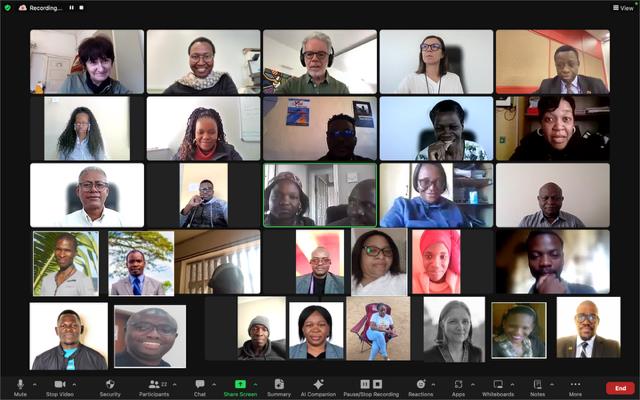
In 2023-2024, the Regional Network on Equity in Health in East and Southern Africa (EQUINET) through Training and Research Support Centre (R Loewenson) with Southern African Trade Union Coordination Council and TalkAB[M]R), the East, Central and Southern African (ECSA) Health Community, and partners in Brazil (C Dora) and Australia (S Simpson, Nossal Institute of Global Health) initiated online training and mentored case study work to build HIA capacities in ESA countries. Applying a learning-by-doing approach, the 2024 course covered theoretical and practical aspects of HIA, including methods, evidence, analysis, and reporting, and considered issues and strategies for scaling up and integrating HIA in key sectors and in public health law. All participants said they would recommend learning how to do an HIA to colleagues.
The 2024 ECSA Regional Health Ministers Conference recommended countries integrate HIA into their national health strategies. To meet the growing demand EQUINET is implementing further training in 2025 to expand capacities in people from different sectors and countries.
The 2025 course builds on the 2024 experience and participant feedback, with revisions of the training programme, manual and increased interactive processes. Applications are being reviewed to include teams from diverse ESA countries, with mentored case studies on a range of economic activities and policies affecting health. Building this critical mass of capacities in key institutions is seen as an important step towards institutionalising HIA in the region to protect public health and address health equity.
Sarah Simpson is a Senior Technical Advisor at the Nossal Institute for Global Health. She has extensive experience in integrating equity and gender considerations in health programs and systems in a range of diverse country/policy contexts.