MHE Seminar Series: A/Prof Dean Regier
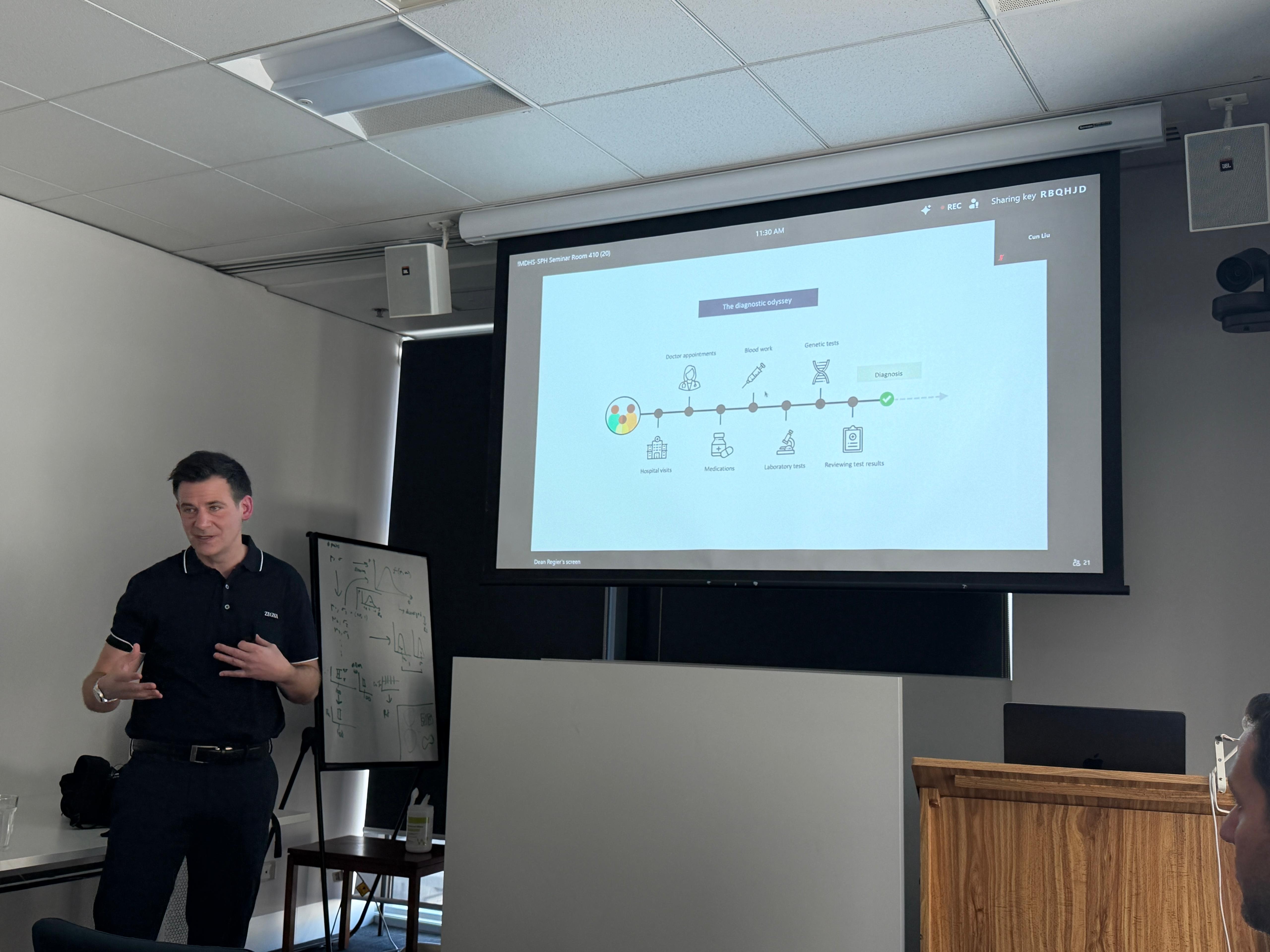
Title: Health Equity in Rare Diseases: The Diagnostic Odyssey and Cost-Effectiveness of Whole-Genome Sequencing for Indigenous Children
Presenter: A/Prof Dean Regier
Bio: Dr. Dean Regier is an Associate Professor at UBC’s School of Population and Public Health, a Senior Scientist at the BC Cancer Research Institute, and Director of the Academy of Translational Medicine in the Faculty of Medicine, UBC. An internationally recognized health economist, he specializes in regulatory science, with research focused on learning healthcare systems and AI-supported real-world evidence generation.
His work has advanced equitable access to genomic technologies in Canada and internationally, particularly in precision oncology and rare diseases. Dr. Regier developed Canada’s first micro-certificate program in regulatory affairs and regulatory science, and chairs UBC’s Faculty of Medicine Regulatory Advisory Council to support researchers navigating complex regulatory pathways.
Abstract:
Introduction: Genetic and genomic sequencing diagnoses childhood rare diseases. Benefits of a diagnosis include a shorter diagnostic odyssey and the value of knowing disease cause. These benefits are not equitably distributed to Indigenous children. Indigenous ancestries are underrepresented in the background variant libraries necessary to establish etiologic diagnoses. We have found that whole genome sequencing (WGS) is not cost-effective in non-Indigenous Canadian populations, but access to research-based WGS may establish additional diagnoses in Indigenous children in Canada. We estimate the diagnostic rate and cost-effectiveness of WGS for Indigenous children with developmental and/or seizure disorders.
Methods: We obtained the diagnostic rate of WGS in Indigenous children from a single-arm Indigenous-partnered clinical trial in Canada. We abstracted real-world standard of care (SOC) outcomes data from British Columbia’s Children’s and Women’s Hospital. Longitudinal and time-to-event analysis characterized key outcomes, including time to diagnosis and cost. We incorporated this evidence into a probabilistic state-transition Markov model examining two strategies. The first strategy is SOC, involving chromosomal microarray followed by second-tier genetic and biochemical testing, with last-tier exome sequencing. The second strategy is first-tier WGS. We calculated incremental cost per additional diagnosis over a 10-year time horizon, from the healthcare payer perspective, using a discount rate of 1.5%.
Results: Our cohort included 63 Indigenous children who underwent WGS. For SOC, we estimated that 24.1% (95% CI: 17.1,31.2) of children would receive a diagnosis at a cost of $11,728 per patient (95% CI: 9,158,14,297). First-tier WGS diagnosed 39.0% (95% CI: 31.3,46.7) of children at a cost of $9,768 (95% CI: 6,296,13,241). Incremental costs and diagnoses were -$1,960 (95% CI: -6,308,2,389) and 14.9% (95% CI: 4.5,25.2), respectively. Mean time to diagnosis among diagnosed patients was 24 weeks for WGS, compared to 50 weeks for SOC. First-tier WGS was dominant (less costly, more effective) in 81% of simulations compared to SOC.
Conclusion: Real-world evidence determined the impacts of research-based WGS for diagnosing genetic causes of rare diseases in Indigenous children in Canada. We find that first-tier access to WGS provides additional diagnoses to Indigenous families, sooner. Access to diagnostic WGS for Indigenous children furthers equity.