Strengthening Capacity in Vaccine Economics for Mongolia’s NITAG
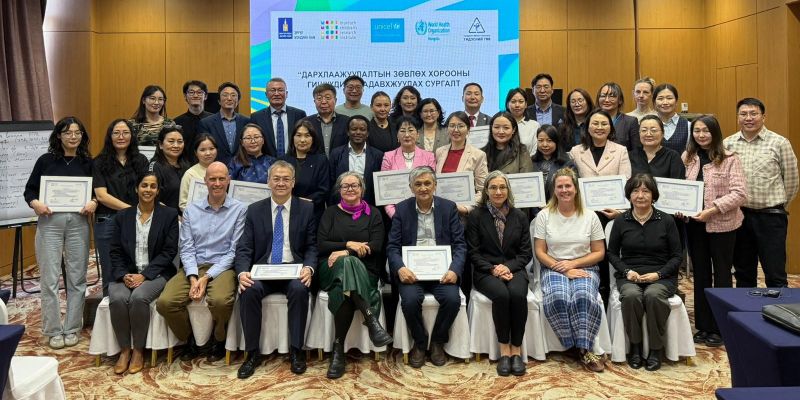
Researchers from the Economics of Global Health and Infectious Diseases Unit, Melbourne Health Economics, recently contributed to a technical workshop in Mongolia aimed at strengthening evidence-informed vaccine policy decision-making for Mongolia’s National Immunization Technical Advisory Group (NITAG).The workshop was delivered in collaboration with Murdoch Children’s Research Institute (MCRI) and hosted by Mongolia’s National Center for Communicable Diseases (NCCD) and UNICEF Mongolia, with funding from the Gates Foundation.As part of the programme, Associate Professor Natalie Carvalho delivered the Beginner and Advanced World Health Organization (WHO) Global NITAG Network (GNN) Vaccine Economics training modules. Developed collaboratively with global experts in vaccine economics worldwide, these modules are designed to strengthen the capacity of NITAGs to interpret and apply economic evidence in vaccine policy decision-making. The training supported practical discussions on vaccine affordability and the consideration of economic evidence to support sustainability and evidence-informed priority setting for immunisation programmes.Fulgence Niyibitegeka presented preliminary findings from ongoing work on budget impact analysis of pneumococcal conjugate vaccine (PCV) optimisation strategies in Mongolia, including reduced-dose schedules and alternative vaccine product options. He also introduced a budget impact analysis tool currently under development to support countries in assessing affordability and sustainability of immunisation programmes under constrained financing environments.
