Fulgence Niyibitegeka Contributes to International Discussions on Sustainable Pneumonia Control in LMICs at ISPPD 2026
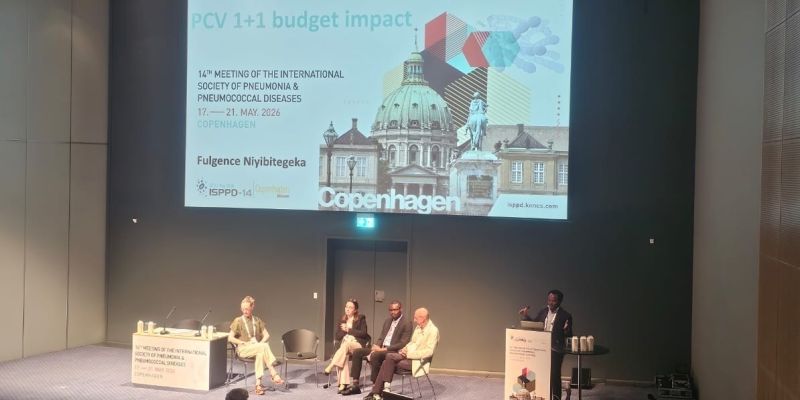
Fulgence Niyibitegeka, PhD student from the Economics of Global Health and Infectious Diseases Unit at Melbourne Health Economics, recently participated as a panellist in an international session on “Sustaining Strong Pneumonia Control Programs in Low- and Middle-Income Countries” held during the 14th Meeting of the International Society of Pneumonia and Pneumococcal Diseases, held from 17-21 May 2026 in Copenhagen.
The session brought together global experts to discuss strategies for sustaining pneumococcal disease control in the context of increasing financial pressure on immunisation programmes in low- and middle-income countries (LMICs).

During the session, Fulgence presented PCV-OPTIMISE, a practical economic and budget optimisation tool being developed in collaboration with Associate Professor Natalie Carvalho and Professor Fiona Russell. The tool is designed to help countries assess pneumococcal conjugate vaccine (PCV) optimisation strategies, including lower-cost PCV products, reduced-dose schedules, and fractional-dose options.
He also shared key lessons from applying the tool in Fiji and Mongolia. Preliminary findings suggest that countries may be able to maintain control of pneumococcal disease while reducing programme costs, potentially creating fiscal space for other immunisation priorities.
In addition to the panel session, Fulgence also presented a research poster on the cost-effectiveness and budget impact of changing from a three-dose to a two-dose PCV schedule in Fiji, which was selected as a finalist for the Young Investigator Award.
The conference provided an important opportunity to exchange ideas with global researchers, policy experts, and immunisation stakeholders, and to strengthen international collaborations on sustainable and evidence-informed vaccine policy in LMICs.
