MHE Seminar: Dr Vivian Reckers-Droog
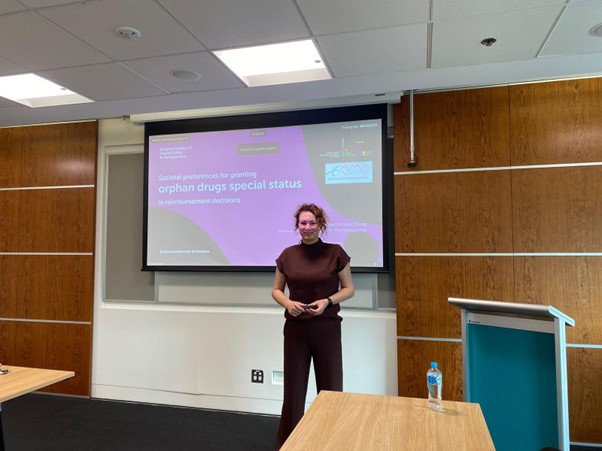
On 29 October 2024, Dr Vivian Reckers-Droog from Erasmus School of Health Policy and Management presented a study that uses a labelled Discrete Choice Experiment (DCE) to examine whether—and why—there would be societal support for differential treatment of orphan drugs in reimbursement decisions, when these drugs do not meet common cost-effectiveness criteria.
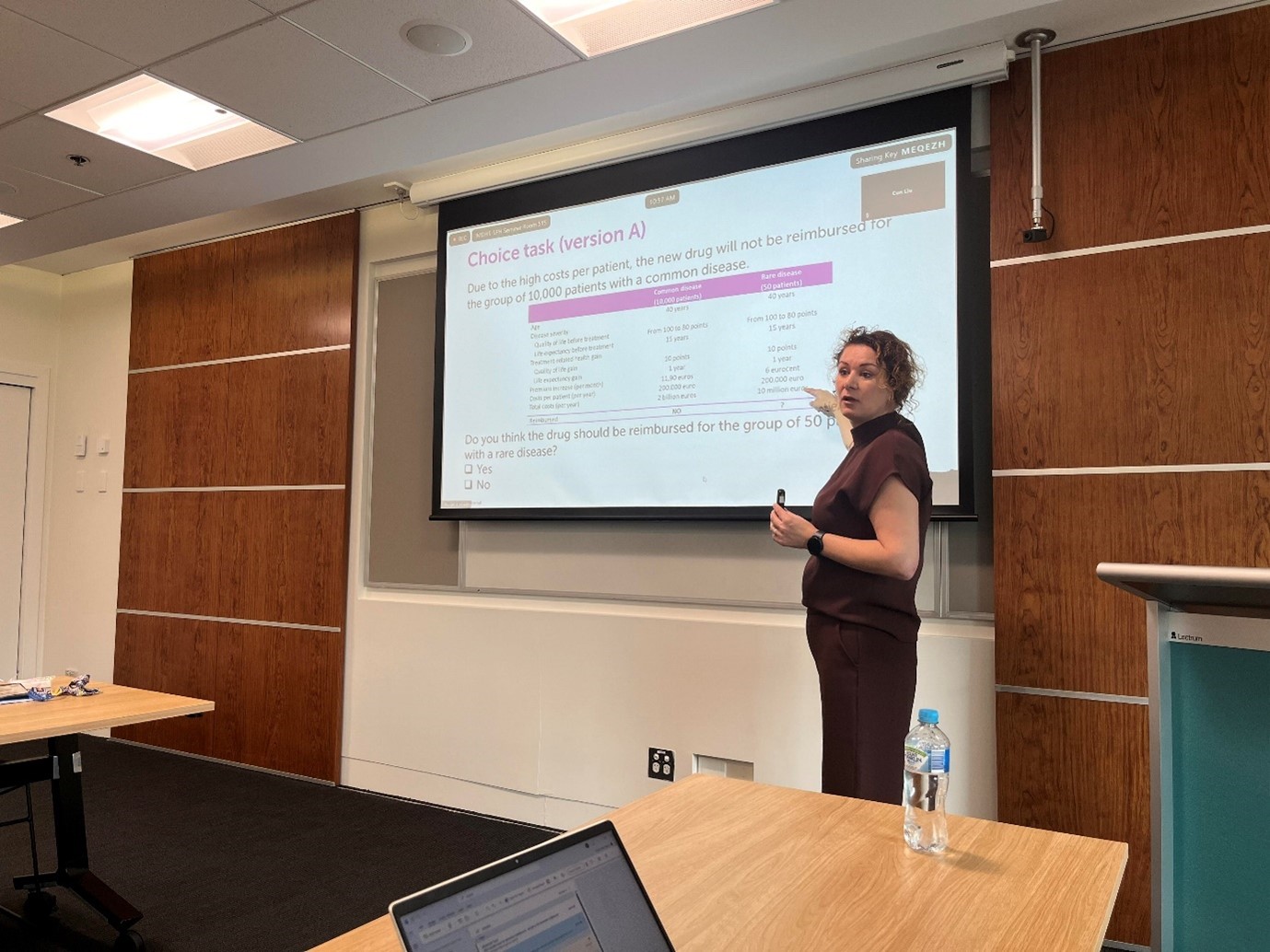
The DCE was conducted in a sample of the adult population (n = 1,172) in the Netherlands. Respondents were presented with ten choices on whether to reimburse an orphan drug given that a non-orphan drug with similar characteristics would not be reimbursed, because it was not cost-effective, and asked to explain their choices. The study finds that of the respondents, 36.4% consistently chose for reimbursing the orphan drug, mostly because “everyone is entitled to live a healthy life and good quality healthcare”, and 17.3% consistently for not reimbursing the orphan drug, mostly because “[this] is unfair to patients with a common disease”. The remaining 46.3% made alternating choices and were more likely to choose for reimbursing orphan drugs when patients were aged between 1 and 70 years, had moderate disease severity, and considerable health gain from treatment. A substantial minority opposes differential treatment, mostly on moral grounds.