Culture, Trauma and COVID-19
Developing a culturally responsive trauma-informed public health emergency response framework for First Nations families and communities during COVID-19.
Developing a culturally responsive trauma-informed public health emergency response framework for First Nations families and communities during COVID-19.
-
About the project
-
Publications
Culture, Trauma, COVID-19 publications
-
Activities
The COVID-19 pandemic highlighted social inequities present in our society, and their compounding effects. Applying an ‘equity lens’ to the public health response is essential, especially for Aboriginal and Torres Strait Islander peoples.
Aboriginal and Torres Strait Islander peoples-led strategies are critical to improving the health of these communities and ‘closing the gap’ in health inequities.
Complex trauma, most commonly associated with adverse childhood experiences, is a major root cause of health inequity. Aboriginal and Torres Strait Islander communities are particularly impacted by complex trauma following a legacy of historical trauma, which includes state-sanctioned removal of children from their families.
This Australian Partnership for Preparedness Research on Infectious Disease Emergencies (APPRISE) Centre of Research Excellence-funded project aims to investigate how public health emergencies may impact Aboriginal and Torres Strait Islander people experiencing complex trauma, and what a trauma-informed public health emergency response might look like.
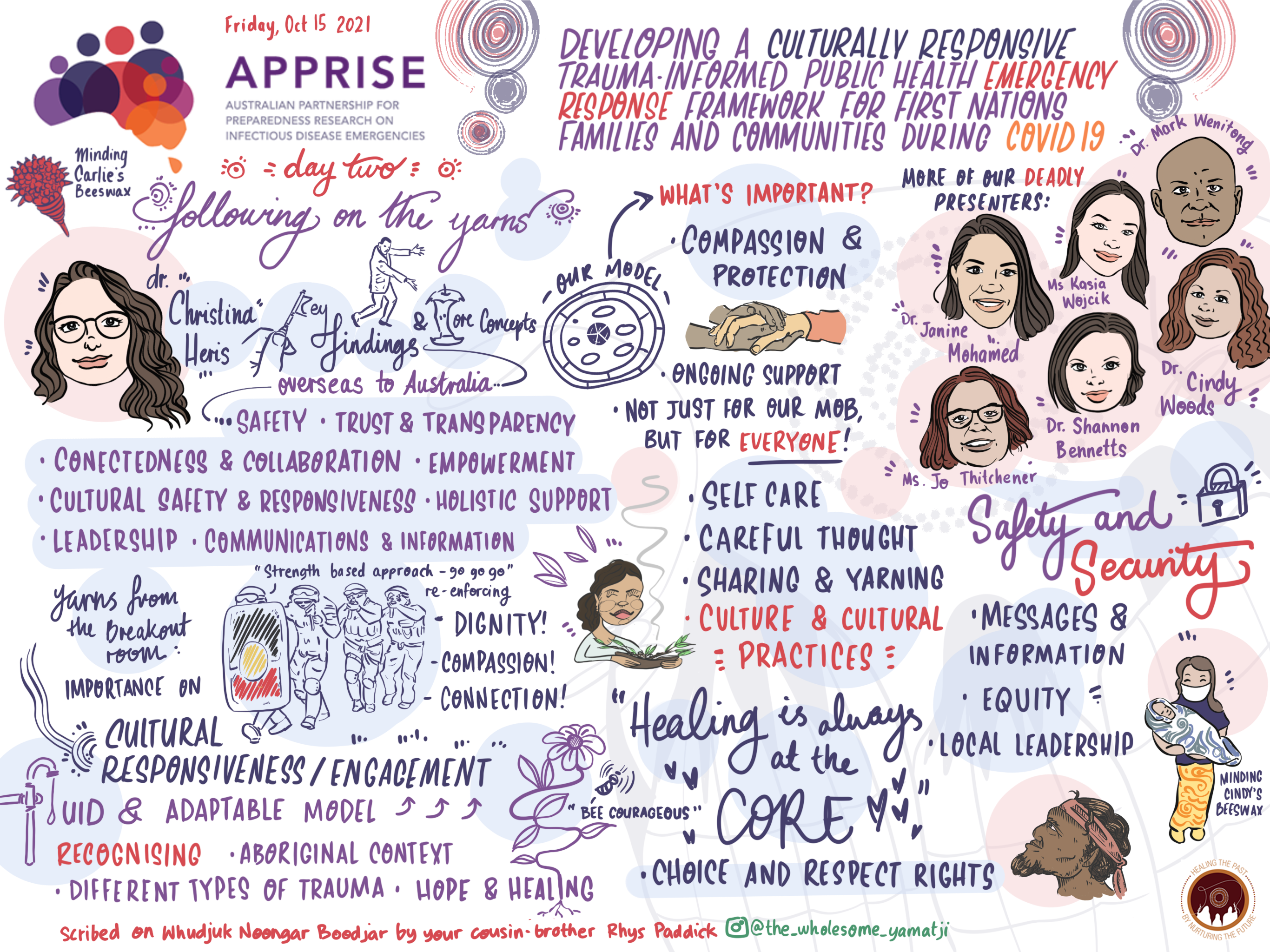
Graphic illustration of community workshop discussion to develop a culturally responsive trauma-informed public health emergency framework